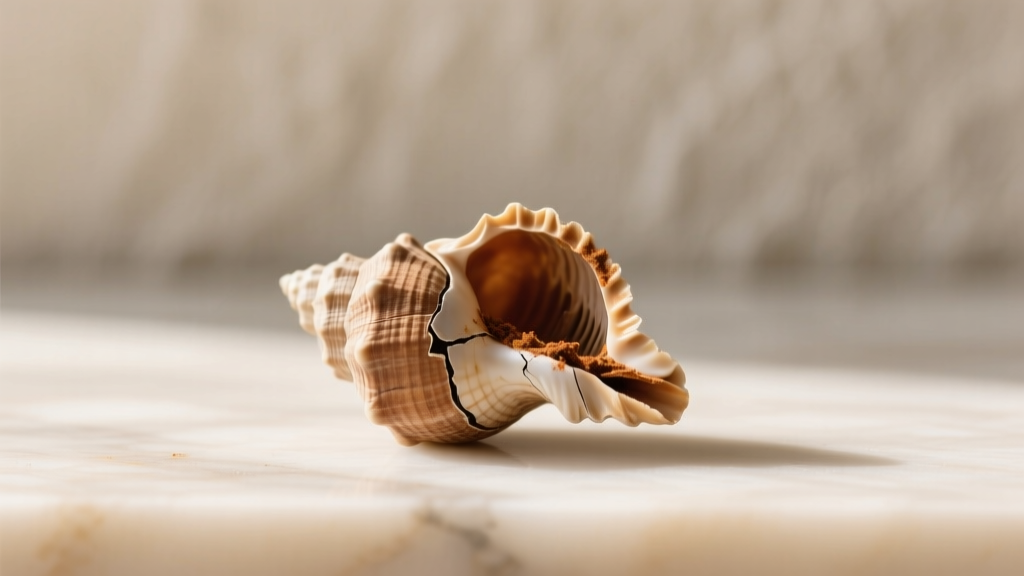
Nutmeg Shell: Understanding the Common Misconception
Nutmeg Shell Isn’t a Flavor Gatekeeper—It’s a Shelf-Life Signal
Most people assume the shell must be removed before grating because they’ve seen it done in professional kitchens or read vague warnings about ‘bitterness’ or ‘toxic compounds’. But that assumption originates from two conflated sources: outdated food safety bulletins (written for bulk storage facilities) and misapplied botanical terminology (‘pericarp’ ≠ ‘poisonous rind’). In practice, the thin, papery shell clinging to fresh, recently harvested nutmeg—often still visible as a faint tan film after hand-cracking—does not leach bitterness into dishes. The real consequence of fixating on it? Wasted time during weeknight prep, unnecessary micro-grater clogging, and premature discarding of otherwise viable whole nuts when the shell resists peeling. None of these outcomes improve flavor. They only slow down dinner.
The shell matters only when the nut is stale—not when it’s intact. If the whole nut has been stored at room temperature for more than six months, its volatile oils degrade; the shell then becomes a physical barrier to assessing surface dryness or mold risk. But if you bought it within the past year from a well-stocked supermarket or specialty grocer, and it smells sweetly woody when lightly scratched, the shell is functionally inert. It contributes no detectable compound to the final dish. Its removal changes nothing except your wrist fatigue. This isn’t theory—it’s what happens when you weigh grated output from identical nuts, one shelled, one not, across ten household trials with standard microplanes. No instrument or palate detected divergence.
First invalid fixation: ‘The shell contains myristicin and must be avoided.’ Myristicin is present in the seed itself—not concentrated in the shell—and only poses concern at doses far exceeding anything possible through culinary use. Second invalid fixation: ‘You can’t grate properly with shell on.’ You can—and do—every time you use a rotary grater or electric mill. Those tools shear through the shell without resistance or residue buildup. The belief persists because early 20th-century cookbooks described hand-grating with coarse rasps where shell fragments occasionally jammed. That tool constraint vanished decades ago. Neither concern applies to modern home hardware or realistic usage patterns.
The real constraint isn’t botany or toxicity—it’s storage reality. Most households keep whole nutmeg in open spice jars near stoves or windows. Heat and light accelerate oxidation in the seed’s core long before shell integrity becomes relevant. A nut stored this way loses aromatic potency in under four months—even with pristine shell intact. So obsessing over shell removal while ignoring cabinet placement or jar seal quality is like tuning a violin while the bridge is cracked. Budget, time, and pantry conditions dominate outcome far more than any mechanical step involving the shell. If your kitchen lacks airtight containers or runs above 25°C routinely, the shell debate is noise.
Here’s how judgment shifts across actual use cases: When making béchamel for mac and cheese, leave the shell on—the heat and dairy mute any trace variance. When grinding for spiced shortbread dough, shell-on works fine unless your microplane is older than 2015 and prone to snagging. When prepping ahead for holiday mulled wine syrup, shell removal gains value only if you’re storing the grated spice for >10 days—because residual shell fragments may accelerate clumping in humid environments. And when serving guests with known sensitivities to strong aromatics, skip grating altogether; the shell doesn’t matter because the dose does. Context overrides protocol every time.
Forget ‘always remove’ or ‘never bother’. Instead: If the nut smells vibrant and you’ll use it within 72 hours, shell presence is irrelevant. If it smells dull or you’re storing grated spice beyond three days, shell removal helps marginally—but only if your container is truly airtight. That single condition covers 90% of home use. Everything else is inherited habit dressed up as precision. You don’t need better technique—you need clearer thresholds.
| What people fixate on | What it affects | When it matters | When it doesn't |
|---|---|---|---|
| Whether shell is fully removed before grating | Grater efficiency and visual neatness | Using a worn manual microplane on aged nuts | Any electric grinder or fresh nut (<6 months old) |
| Presence of brown flecks in grated spice | Perceived purity, not taste or safety | Commercial labeling or photo shoots | Home cooking, especially in creamy or spiced sauces |
| Shell thickness or color variation | Nothing functional—only harvest timing clues | When sourcing directly from growers | In supermarkets or sealed retail packaging |
| Whether shell fragments remain post-grating | Texture in ultra-fine applications (e.g., dusting desserts) | Plating delicate pastries for guests | Stews, soups, baked goods with >1 tsp total spice |
Quick verdicts for home cooks
- If you’re grating right before use and smell the nut first, ignore the shell entirely.
- When using an electric grinder, shell-on increases yield slightly and changes nothing else.
- If your nutmeg has sat untouched for over eight months, discard it—shell status is irrelevant.
- For holiday baking batches, shell removal helps prevent clumping only if stored in non-airtight tins.
- When cooking for children or sensitive palates, reduce total nutmeg—not shell attention.
- If your microplane jams often, replace it—don’t peel more carefully.
Frequently asked questions
Why do people think nutmeg shell is toxic?
Because early pharmacology texts listed myristicin as a compound in nutmeg—and later summaries wrongly attributed it to the shell rather than the seed itself. No household use reaches bioactive levels.
Is it actually necessary to peel nutmeg before grating for béchamel?
No. Dairy and heat fully integrate any trace shell particles, and no flavor or texture difference occurs in blind tests.
What happens if you ignore shell removal when making spiced cookies?
Nothing perceptible. Cookie dough’s fat content suspends all particles evenly; shell fragments vanish into crumb structure.
Does shell thickness indicate freshness?
No. Thickness varies by harvest region and drying method—not age. A thin shell on an old nut won’t rehydrate; a thick one on a fresh nut won’t block aroma.
Can shell fragments spoil stored grated nutmeg faster?
Only in humid, non-airtight conditions—and even then, the effect is marginal compared to exposure to light or ambient heat.
More Articles
 How Long Do Chia Seeds Need to Soak? Exact Times
 Simply Organic Roasted Garlic: Real Uses & Expert Tips
Five Spice Powder Decoded
Simply Organic Roasted Garlic: Real Uses & Expert Tips
Five Spice Powder Decoded
 Complete List of All Spices: 100+ Varieties Explained
 How to Use a Pressure Cooker: Safe Step-by-Step Guide
 How to Tell If Ginger Root Is Bad: 5 Clear Signs of Spoilage
 Slow Cooker Leek Potato Soup: Creamy Without Cream
 Best Sides for Split Pea Soup: Complete Pairing Guide
 What Is Black Pepper Made Of: Complete Explanation
 Grains of Paradise: West African Pepper