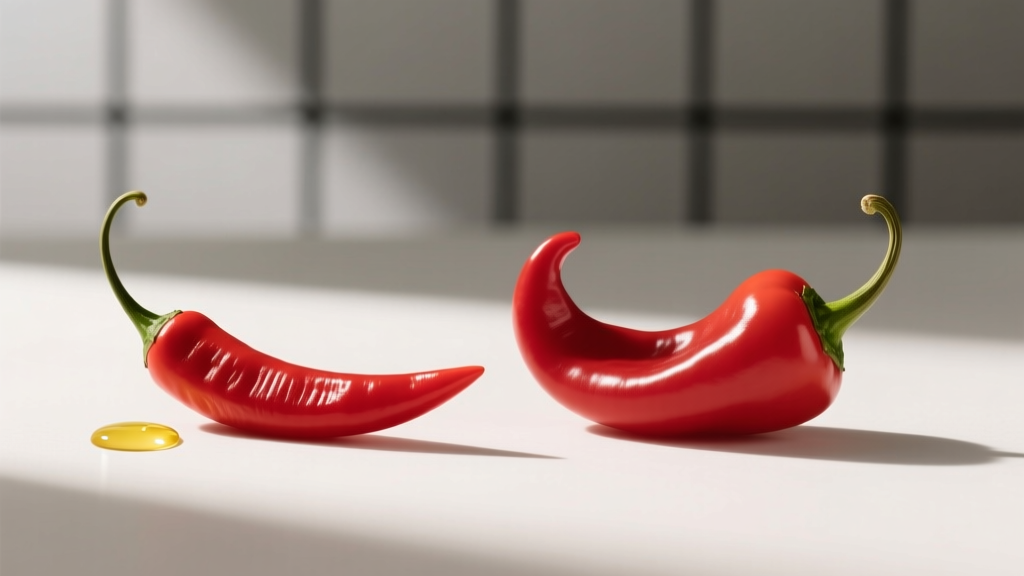
Cayenne Pepper vs Chili Pepper: Key Differences Explained
Cayenne Pepper Is Not a Chili Pepper Substitute—And That’s Usually Fine
Most people assume ‘chili pepper’ is a category with clear boundaries: dried, ground, medium-heat, vaguely red. They reach for cayenne because it’s labeled ‘chili’ on supermarket shelves and sits beside paprika and chipotle powder. The consequence? A sauce that tastes sharp and one-dimensional instead of layered and earthy; a marinade that stings the tongue but leaves no warmth behind. This isn’t failure—it’s mismatched intention. Home cooks rarely taste-test heat levels before adding spice; they rely on label familiarity. When cayenne enters a recipe calling for ‘chili powder’, what breaks isn’t the chemistry—it’s the flavor architecture built around regional chili blends: ancho’s raisin sweetness, guajillo’s tang, pasilla’s smoke. The dish holds together structurally, but loses its tonal center.
Cayenne vs. chili pepper matters only when heat delivery must be decoupled from flavor delivery. In dishes where chili’s role is purely thermal—like a quick stir-fry needing instant kick or a vinaigrette requiring clean burn—cayenne works cleanly. Its narrow profile (almost pure capsaicin + minimal volatile oils) makes it predictable in those moments. But in slow-simmered beans, dry-rubbed meats, or tomato-based stews, where chili powder contributes color, depth, and aromatic complexity, cayenne becomes functionally redundant. It adds heat, yes—but subtracts nuance. That gap doesn’t register in a 10-minute weeknight dinner. It does register when leftovers taste flatter the next day, or when guests ask, ‘Is something missing?’ without naming it.
First invalid fixation: whether cayenne is ‘stronger’ than chili pepper. Strength is irrelevant here—what matters is how heat integrates. Cayenne hits fast and fades fast. Traditional chili powders release heat gradually, often peaking mid-chew or even after swallowing. Second invalid fixation: grinding your own dried chilies to ‘match authenticity’. In a home kitchen, unless you’re using a dedicated spice grinder (not a coffee mill shared with cinnamon), particle size variation introduces more inconsistency than origin does. You’ll get uneven dispersion—not better fidelity. Neither debate changes the outcome: if your goal is reliable, repeatable flavor—not botanical precision—neither fix solves the real problem.
The real constraint isn’t heat level or origin—it’s shelf life under typical home storage. Cayenne retains potency longer than most blended chili powders because it contains no added cumin, garlic, or oregano—ingredients that oxidize within months. In many homes, the ‘chili powder’ in the cabinet is two years old and has lost 60–70% of its aromatic compounds, while the cayenne remains sharp. So when a recipe calls for ‘1 tsp chili powder’ and you substitute cayenne, you’re not substituting heat—you’re substituting stability. That’s why the swap sometimes works better than the original: not because cayenne is superior, but because it’s less degraded.
When making chili con carne with canned tomatoes and dried beans, use a fresh blend—not cayenne. When seasoning roasted cauliflower for immediate serving, cayenne gives cleaner control. When adjusting a store-bought salsa that tastes flat but not mild, skip both—add lime and raw onion instead. When reviving leftover lentil soup that’s lost brightness, a pinch of cayenne cuts through dullness faster than re-toasting stale chili powder. When cooking for someone with mild oral sensitivity but strong flavor preference, cayenne’s predictability lets you dose precisely—no guessing whether ‘mild chili powder’ means New Mexico or California style. When doubling a recipe for a potluck, default to cayenne only if you’ve already tested the base version and confirmed the blend’s age and consistency.
Here’s the quieter truth: in a home kitchen, flavor memory—not botanical accuracy—guides success. You don’t need to know whether your chili powder contains arbol or puya. You need to know whether it still smells like anything at all. If it doesn’t, cayenne isn’t a substitute—it’s a reset button. That’s not compromise. It’s calibration.
| What people fixate on | What it affects | When it matters | When it doesn't |
|---|---|---|---|
| Heat unit (Scoville) comparison | Perceived burn intensity | When serving heat-sensitive eaters or children | In slow-cooked dishes where capsaicin disperses and mellows |
| ‘Authentic’ regional origin | Aromatic complexity and mouthfeel | When replicating specific regional dishes (e.g., Tex-Mex vs. Oaxacan) | In weeknight meals where flavor layering is secondary to speed |
| Whether it’s ‘pure’ or ‘blended’ | Consistency across batches | When scaling recipes for meal prep or freezing | In single-use applications like finishing salts or garnishes |
| Grind fineness | Dissolution rate in liquids | In thin sauces or dressings where graininess is noticeable | In dry rubs or baked goods where texture isn’t tasted directly |
Quick verdicts for home cooks
- If your chili powder smells faint or dusty, cayenne is safer than stale blend.
- For last-minute heat in soups or eggs, cayenne gives faster, cleaner control.
- When reheating leftovers that taste muted, cayenne cuts through flatness better than old chili powder.
- If you’re doubling a recipe and unsure of your chili powder’s age, use cayenne and add smoked paprika separately.
- For kids’ meals where heat must be adjustable per bowl, cayenne lets you season individually.
- When grilling meats over charcoal, skip cayenne—it burns and turns bitter faster than whole-chili blends.
Frequently asked questions
Why do people think cayenne pepper is just ‘hot chili powder’?
Because packaging uses overlapping terms—‘ground red pepper’, ‘chili’, ‘cayenne’—and supermarkets group them visually. No botanical distinction appears on labels, so users infer equivalence.
Is it actually necessary to distinguish them in everyday cooking?
No—unless you’re relying on chili powder for aroma or color, not just heat. Most weeknight dishes tolerate substitution if heat level is adjusted.
What happens if you ignore the difference in a slow-simmered stew?
You’ll get heat, but lose background warmth and fruitiness. The stew won’t fail—it will simply taste narrower, less grounded.
More Articles
 Gordon Ramsay's Authentic French Onion Soup Recipe
 Spice History: Origins & Trade Routes
 Black Pepper: Tellicherry vs Malabar Grades
 Garlic Parmesan Roasted Carrots: Simple Recipe Guide
 Spice Safety Buying Guide
Real vs Fake Saffron: How to Tell (2026)
Spice Safety Buying Guide
Real vs Fake Saffron: How to Tell (2026)
 Sesame Oil Shelf Life: Does It Go Bad? (How to Tell)
 Beet Ginger Turmeric Juice: Benefits, Recipe & Science
 Kitchen Trends 2026: Smart Integration
 Sumac Spice: Tangy Uses & Health Perks