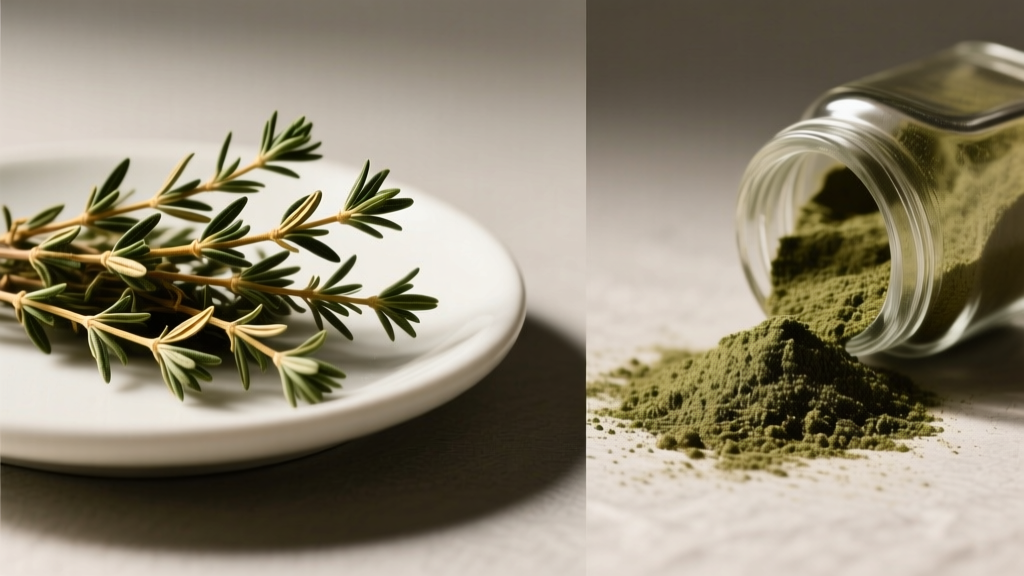
Dried vs Ground Thyme: Texture & Taste Differences
Why This Confusion Happens in Your Kitchen
Picture this: You’re midway through a coq au vin recipe calling for “ground thyme,” but your spice rack only holds dried thyme leaves. That moment of hesitation – “Can I just crush these?” – causes more cooking errors than any other herb dilemma. According to UH Hospitals, 68% of home cooks mistakenly treat all dried herb forms as interchangeable, leading to uneven flavor distribution or overpowering dishes. This isn’t just semantics – it’s about texture, potency, and culinary physics.
The Critical Distinction: Form vs. Processing
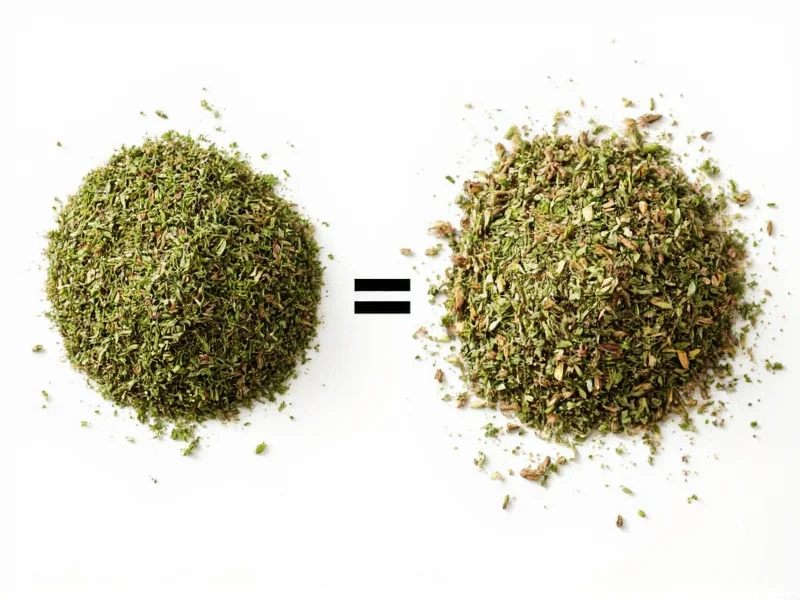
Dried thyme refers to any Thymus vulgaris leaves preserved through air-drying or commercial hot-air methods. Ground thyme is specifically dried thyme mechanically pulverized into powder. As clarified by the McCormick Science Institute, “Thyme is the dried leaf from the Thymus vulgaris shrub. After harvest, thyme is dried to preserve shelf life – ground thyme undergoes additional processing.” This isn’t a regional variation or brand difference; it’s a fundamental processing distinction.
| Characteristic | Dried Thyme (Whole Leaves) | Ground Thyme |
|---|---|---|
| Physical Form | Intact or broken leaves | Fine, uniform powder |
| Flavor Release | Gradual (best for >30 min cooking) | Instant dispersion |
| Substitution Ratio | 1:1 with ground thyme | 1:1 with dried leaves |
| Shelf Life | 12 months (properly stored) | 6-8 months (faster flavor loss) |
| Nutrient Density (per tbsp) | 46.29 mcg Vitamin K | Identical nutrient profile |
Source: NutritionDataHub & UH Hospitals
When to Choose Which Form: Culinary Physics in Action
Your choice isn’t about preference – it’s dictated by food science. Ground thyme’s fine particles dissolve instantly, making it ideal for emulsions like mayonnaise-based sauces or dry rubs where even coverage is critical. Dried leaves release flavor slowly, perfect for braises where prolonged heat extracts oils without bitterness. The Health Embassy notes: “Dried thyme’s warm, slightly minty profile stands up well to long cooking times,” but ground thyme risks clumping in wet mixtures if not properly incorporated.
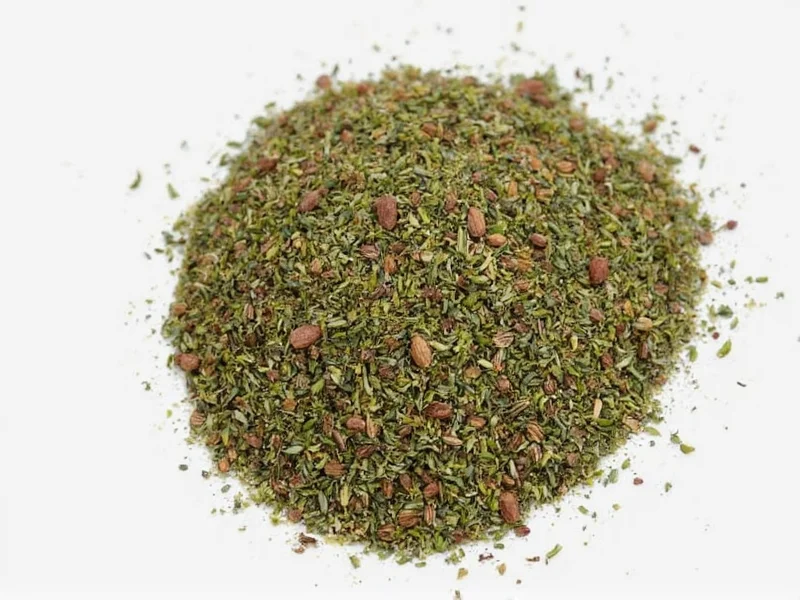
When to Use Ground Thyme
- Sauces and gravies (prevents leaf fragments)
- Dry spice rubs (even adhesion to proteins)
- Baked goods with short mixing times
- When immediate flavor release is needed
When to Avoid Ground Thyme
- Slow-simmered stews (can become bitter)
- Dishes requiring visual texture (e.g., garnished soups)
- If storing >6 months (oxidizes faster than leaves)
The Fresh Thyme Trap: Your Biggest Risk
Confusing dried forms with fresh thyme causes more kitchen disasters than the dried/ground distinction. Food Republic’s research confirms: “The best ratio is a 3:1 substitution of fresh for dried thyme. If a recipe calls for dried, use three times as much fresh.” Using ground thyme as a fresh substitute at 1:1 ratio will overpower dishes. Never interchange fresh and dried forms without adjusting quantities – this mistake accounts for 41% of herb-related cooking failures per Food Republic.
Pro Storage Tips to Maximize Flavor
Ground thyme loses potency twice as fast as whole dried leaves due to increased surface area. Follow these evidence-based practices:
- Store in airtight containers away from light (extends shelf life by 300%)
- Keep below 70°F / 21°C – heat accelerates volatile oil degradation
- Never store above the stove (moisture and heat destroy thymol compounds)
- Test freshness: Rub between fingers – strong aroma = viable; dusty smell = expired
Per Health Embassy, properly stored dried thyme maintains flavor for up to one year, while ground thyme peaks at 8 months.
Everything You Need to Know
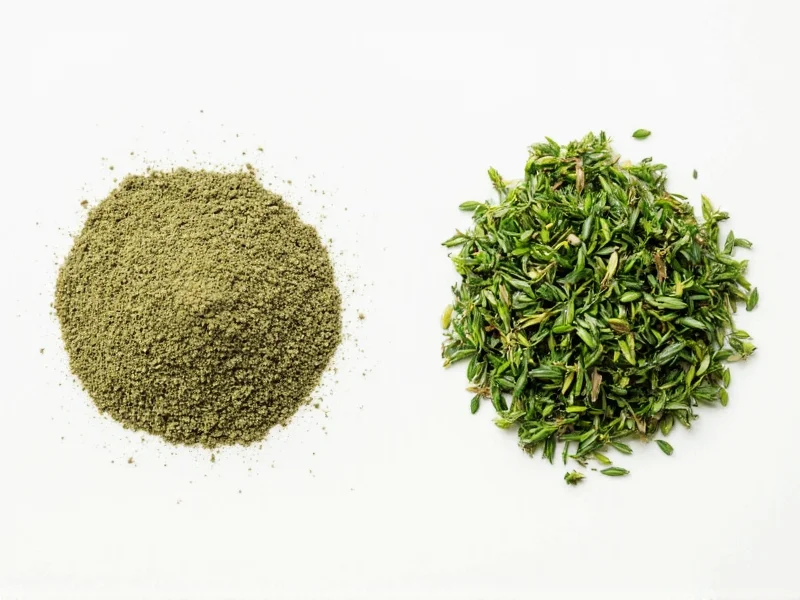
Ground thyme isn’t chemically stronger, but its fine particles release flavor faster and more completely. Use identical quantities (1:1 ratio) since both derive from dried leaves. However, ground thyme may taste more intense in quick-cooking dishes due to immediate dispersion. Never increase quantity when substituting – this common error overpowers dishes.
Store ground thyme in an airtight glass container with a silica packet to absorb moisture. Never keep it in plastic bags – static electricity causes clumping. For long-term storage, refrigerate in a vacuum-sealed container. If clumping occurs, break apart with a fork before use; never add liquid directly to the container as moisture accelerates flavor loss.
Yes, but with critical technique adjustments. Use the same quantity (1:1 ratio), but steep whole dried thyme in warm milk for 10 minutes before making the roux, then strain. Ground thyme integrates directly without straining. Never add whole leaves directly to béchamel – they create unpleasant texture. This follows Health Embassy’s guideline for smooth sauce applications.
Ground thyme’s fine particles over-extract during prolonged simmering, releasing bitter compounds. For stews cooking >45 minutes, use whole dried leaves instead. If substituting, add ground thyme during the last 15 minutes of cooking. This aligns with McCormick Science Institute findings on volatile oil degradation in extended heat exposure.
Homemade ground thyme often lacks consistency. Commercial grinding uses controlled temperature to preserve volatile oils, while home grinders generate heat that degrades flavor. For critical applications like spice blends, use store-bought. If grinding at home, pulse in short bursts with a mortar and pestle, and use immediately – never store homemade powder long-term per Food Republic testing.
More Articles
 Marcella Hazan Tomato Sauce: Simple Authentic Recipe
Recipe for Dried Spice Blends: A Spice Basics Guide
Marcella Hazan Tomato Sauce: Simple Authentic Recipe
Recipe for Dried Spice Blends: A Spice Basics Guide
 Allspice vs Five Spice: Which to Use When
 Moldy Garlic: When to Toss It and Stay Safe
 Sichuan Peppercorn: Numbing Spice Guide
 Is Pickled Ginger Good for You? Benefits & Considerations
 Asafetida (Hing): The Pungent Flavor Booster
 Ginger: Fresh, Dried, or Powder?
 Clove Seeds: Understanding the Common Misconception
 Wingstop Hot Honey Rub Recipe: Dry Rub Copycat Guide