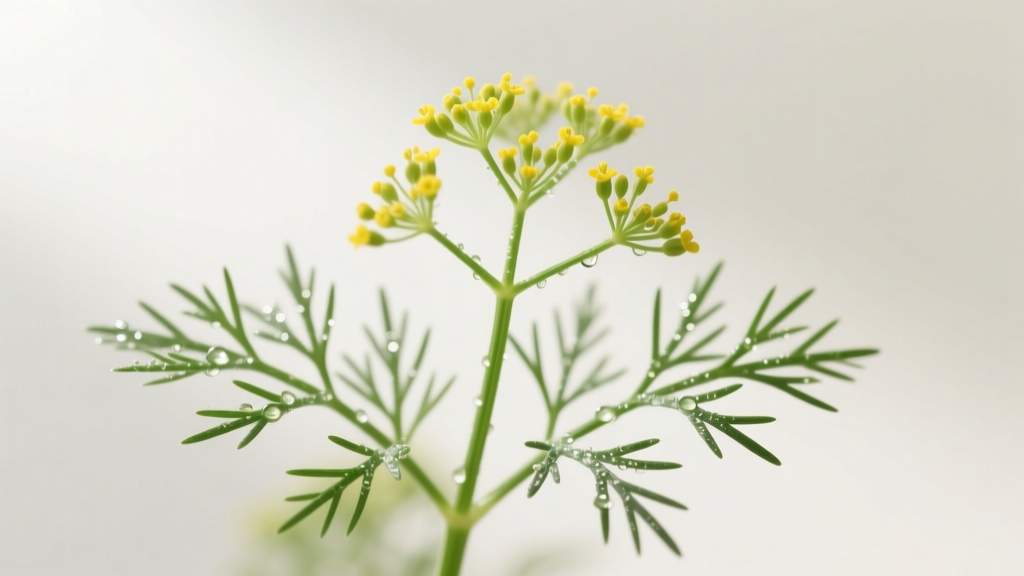
What Does Fresh Dill Look Like: Visual Identification Guide
What Fresh Dill Actually Looks Like — Not What You’ve Been Told
In most homes, the first encounter with fresh dill happens at the supermarket produce aisle, where a single bunch sits beside parsley and cilantro — limp, slightly yellowed, sometimes dusted with condensation. People reach for it assuming they’re checking for ‘vibrancy’, but what they’re really reacting to is a visual echo of herb packaging from food magazines: bright green, uniformly fine, upright stems, no browning at all. That image has nothing to do with how dill behaves in real kitchens. The consequence? A home cook discards half a bunch because one stem bent sideways or a leaf curled at the tip — not because flavor is compromised, but because appearance mismatched an unspoken standard. That discard isn’t waste of herb; it’s waste of confidence. It trains people to distrust their own judgment before they even chop.
The visual strictness around fresh dill matters only when it’s being used raw, as a garnish, or in cold preparations like tzatziki or potato salad — where texture and color are immediately visible and contribute directly to perception. In every other context — simmered in soups, folded into warm dressings, blended into sauces, or baked into breads — leaf structure, stem rigidity, and even slight discoloration vanish as functional concerns. Heat, moisture, and time erase the very traits people obsess over. In a home kitchen, dill’s aromatic oil release depends far more on whether it was stored away from ethylene-producing fruit than whether its fronds were symmetrical. Appearance doesn’t govern potency — storage history does.
Two fixations consistently misdirect attention: ‘uniform frond length’ and ‘absence of tiny flower buds’. Neither affects usability. Fronds grow unevenly — that’s botany, not spoilage. A few tight, pale green buds mean the plant matured naturally; they’re milder than leaves and add subtle complexity, not off-flavor. No home cook needs to pluck them out. Similarly, ‘stiff vs. floppy stems’ is irrelevant unless you’re arranging dill on a charcuterie board. In cooking, stems soften completely within minutes of heat exposure — and their oils diffuse more slowly than leaf oils, which can be useful in long-simmered broths. Judging dill by stem posture confuses presentation logic with functional logic.
The real constraint isn’t visual — it’s refrigerator humidity control. Most home fridges cycle between dry and damp air, and dill wilts fastest when exposed to fluctuating moisture. A loosely sealed bag with a paper towel inside works better than airtight containers (which trap condensation) or open crisper drawers (which desiccate). This isn’t about idealism — it’s about physics and appliance design. If your fridge lacks adjustable humidity drawers, or if you store dill next to apples or bananas, visual decline will accelerate regardless of how ‘perfect’ the bunch looked on day one. That’s the actual bottleneck — not your eye for greenness.
Here’s where intuition fails most often: substituting dried dill for fresh isn’t just a flavor downgrade — it changes the dish’s structural role. Dried dill delivers monotone aroma; fresh dill contributes brightness *and* textural contrast. So when deciding whether to use dill that looks ‘off’, ask not ‘Is this still fresh?’ but ‘What job does dill do here?’ For cold cucumber salad: yes, appearance matters — limp leaves lack snap. For lentil soup simmered 45 minutes: no, appearance is noise. For scrambled eggs cooked 90 seconds: moderate — mild wilting won’t hurt, but browned tips signal diminished volatile oils. For yogurt dip served immediately: high sensitivity — visual freshness signals safety and freshness to guests, even if flavor remains intact.
Forget ‘identifying fresh dill’. Start with ‘what does dill need to survive until it hits the pan?’ That’s the only question that aligns with how people actually use it. If it smells green, cool, and faintly grassy — not sour, musty, or fermented — it’s functionally fresh. Color variation, minor curling, stem softness: all permissible. Your nose, not your eyes, sets the boundary. And if you’re using it within 48 hours of purchase, almost any supermarket bunch qualifies — provided it wasn’t sitting under fluorescent lights for three days before you bought it.
| What people fixate on | What it affects | When it matters | When it doesn't |
|---|---|---|---|
| Uniformly bright green color | First impression, perceived freshness | Raw garnishes, chilled salads, social sharing | Simmered soups, baked goods, blended sauces |
| Straight, rigid stems | Structural integrity for plating | Charcuterie boards, cocktail garnishes | Stir-fries, stews, egg scrambles |
| Absence of tiny green flower buds | Subtle flavor shift (milder, sweeter) | When precise herbal sharpness is critical | Most cooked applications, especially with garlic/onion base |
| No brown or yellow leaf tips | Oil volatility and shelf life remaining | If storing >3 days or using raw | If using same-day or within 48 hours, cooked |
Quick verdicts for home cooks
- If dill smells clean and snaps slightly when bent, it’s fine for scrambled eggs — even if stems droop.
- For tzatziki, skip bunches with >20% yellowed fronds — visual trust outweighs flavor retention.
- Wilted dill works in broth-based soups, but avoid it if you smell fermentation near the stem base.
- Don’t discard dill with tight green buds — they’re milder, not spoiled, and blend well into dressings.
- If your fridge runs dry, prioritize bunches with thicker stems — they hold moisture longer than fine-frond types.
- For weeknight pasta tossed with lemon and olive oil, dill’s appearance matters less than whether it was refrigerated within 2 hours of purchase.
Frequently asked questions
Why do people think fresh dill must be perfectly feathery?
Because food photography favors uniformity — and most home cooks learn herb standards from images, not kitchens.
Is it actually necessary to remove dill stems before cooking?
No — stems soften fully in heat and contribute deeper aroma; only remove them if serving raw or if texture feels coarse to your family.
What happens if you ignore slight browning on dill tips?
Flavor remains intact for cooked uses; for raw applications, it may signal reduced brightness but not spoilage.
Why does dill wilt faster than parsley or cilantro?
Its thin fronds have higher surface-area-to-mass ratio and thinner cuticles — making it more sensitive to ambient dryness, not inherent fragility.
Can you revive limp dill in ice water?
Temporarily — it restores turgor for garnishing, but doesn’t restore volatile oils lost during prior storage.
More Articles
 Black Pepper Explained: Origin, Uses & Why It's Essential
 Turmeric for Masala: Science & Techniques for Blends
Matching Ground Spices: A Practical Guide
Turmeric for Masala: Science & Techniques for Blends
Matching Ground Spices: A Practical Guide
 Leek and Mushroom Pasta: Simple Recipe & Pro Tips
 How to Store Turmeric Root: 3 Best Methods for Freshness
 Barefoot Contessa Turkey Chili: Authentic Recipe & Tips
 How to Cook Okra Without Slime: Practical Methods
 Chia Seeds Nutrition: Facts for 1 Tablespoon (2026)
 Annatto Seeds: Natural Color and Mild Flavor
 Oven Beef Brisket Guide: Tender Results Every Time