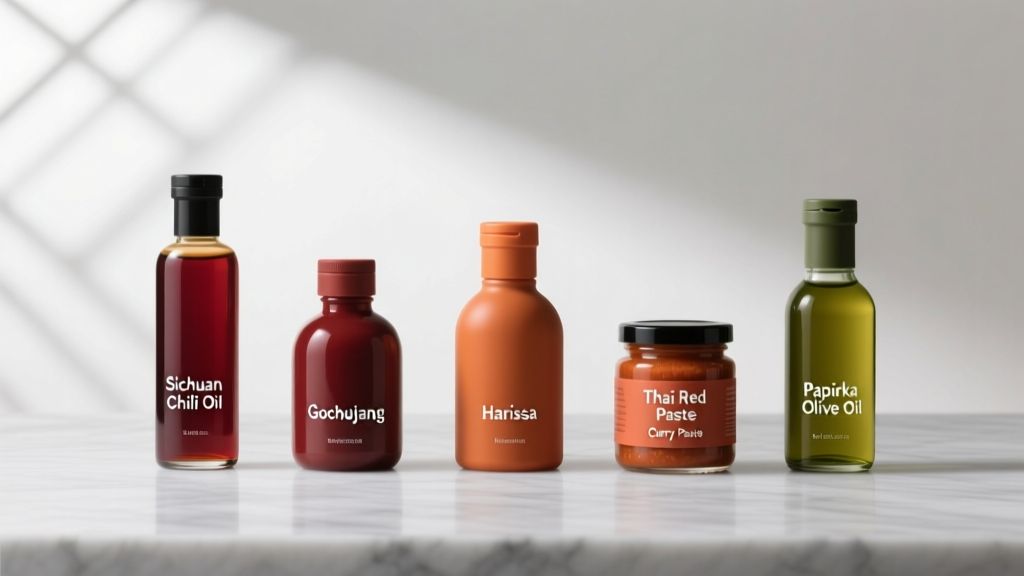
Best Substitutes for Chili Garlic Sauce: 5 Practical Options
Chili Garlic Sauce Has No True Substitute—And That’s Usually Fine
In most homes, the idea of a ‘substitute for chili garlic sauce’ starts with panic: a recipe calls for it, the jar is empty, and the pantry offers only sriracha, gochujang, or a half-used tube of sambal oelek. People reach for those because they’re red, spicy, and vaguely Asian-coded—but that’s where the logic collapses. The real consequence isn’t mild disappointment; it’s a stir-fry that clumps instead of glazes, a marinade that pools oil instead of clinging, or a dipping sauce that tastes sharp but leaves no lingering warmth. None of those failures come from missing capsaicin or garlic alone. They come from ignoring how chili garlic sauce behaves—not just what it tastes like. In many homes, this confusion leads to doubling up on sauces, then blaming the soy sauce for ‘off balance,’ when the real issue was viscosity misalignment in the final 90 seconds of cooking.
The core judgment isn’t about flavor fidelity—it’s about functional equivalence in low-stakes, high-speed home cooking. And that equivalence disappears entirely outside two narrow conditions: when you’re reheating pre-marinated proteins (where texture is already set), or when you’re serving raw as a condiment alongside dumplings or spring rolls. In both cases, heat level and garlic presence matter less than mouthfeel and oil separation behavior. If the substitute separates into oily slicks while the original stays emulsified, even identical Scoville units won’t save the bite. But if you’re tossing cold noodles or dressing a chopped cucumber salad? Texture matters far less—and here, the ‘no true substitute’ rule simply doesn’t apply. It’s not wrong to swap; it’s irrelevant.
First invalid fixation: whether the substitute contains fermented garlic. Fermentation adds depth, yes—but in a home kitchen, garlic powder + rice vinegar + a pinch of sugar mimics that effect more reliably than store-bought ‘fermented’ sambal with inconsistent aging. Second invalid fixation: whether the substitute matches the original’s red-orange hue. Color rarely affects taste perception in everyday meals—unless you’re plating for Instagram or serving guests who associate ‘authentic’ with visual cues. Neither affects whether your kids will eat the tofu, or whether the sauce holds on grilled shrimp. Both fixations distract from what actually shifts outcomes: oil content, particle size, and pH-driven thickening under heat. Those aren’t listed on labels. They’re learned by watching how the sauce behaves—not how it’s marketed.
The one reality constraint that overrides all theory is refrigerator shelf life after opening. Most homemade or small-batch substitutes lack preservatives, so they sour or separate within 7–10 days—even if refrigerated. Meanwhile, commercial chili garlic sauce often lasts 6 months unopened and 3 months opened. In homes where meals are batch-cooked weekly or where someone cooks only twice a week, that gap forces trade-offs no flavor chart can resolve. A ‘perfect-tasting’ blend made from fresh chilies and roasted garlic may win on paper—but if it molds before Friday’s takeout-style noodles, it fails the only test that matters: reliability across real weeks, not ideal hours. Budget, allergy, or device limits (e.g., no food processor) matter—but none constrain choice as concretely as spoilage timing does.
Here’s where intuition flips: using sriracha works better than gochujang for quick pan-seared scallops—but only because its thinner body coats without steaming the surface. Gochujang wins for braised short ribs, not for its sweetness, but because its starch content stabilizes the sauce during long simmering. And sambal oelek? It’s the only acceptable stand-in when you need raw heat with zero sweetness—but only if you add a drop of neutral oil to prevent graininess in dressings. These aren’t preferences. They’re physics-based adjustments: viscosity response to heat, starch gelation thresholds, and emulsion collapse points. None require tasting notes—just observing how the sauce moves in your wok or bowl.
Stop asking ‘What tastes closest?’ Ask instead: ‘What behaves like it *at the moment I need it*?’ That means matching three things: how fast it heats through, how it clings (or slides off), and whether it stays stable when mixed with soy, lime, or fish sauce. Everything else—brand name, fermentation claim, chili variety—is noise. In a home kitchen, texture consistency is rarely ruined by wrong heat level. It’s ruined by wrong thickness at wrong temperature. And thickness isn’t measured—it’s observed mid-stir. That observation, not label reading, is the only calibration you’ll ever need.
| What people fixate on | What it affects | When it matters | When it doesn't |
|---|---|---|---|
| Fermented garlic presence | Background umami depth | Dishes simmered >15 min (e.g., stews) | Stir-fries, cold noodles, quick marinades |
| Exact Scoville range | Immediate heat sensation | Serving raw as dip or garnish | Any cooked application where sauce reduces or blends |
| Red-orange color match | Visual expectation alignment | Takeout-style plating or guest-facing dishes | Weeknight family meals, meal prep containers |
| Brand authenticity (e.g., 'Huy Fong') | Consistency across batches | Repeating a trusted recipe exactly | Adapting based on what's in pantry now |
| Vinegar vs. lactic acid base | pH-dependent thickening with soy/fish sauce | Long-cooked braises or fermented marinades | Quick sautés, dressings, finishing drizzles |
Quick verdicts for home cooks
- If you’re tossing hot rice noodles, use sriracha plus minced raw garlic—not gochujang, even if it’s ‘closer’ in origin.
- For marinating chicken thighs overnight, skip fermented substitutes; plain chili paste with toasted sesame oil works more predictably.
- When serving raw with dumplings, prioritize oil suspension over garlic intensity—sambal oelek beats ‘garlic-forward’ sriracha every time.
- If your fridge space is tight and you cook infrequently, choose shelf-stable bottled versions over fresh-made blends—even if flavor is milder.
- For kids’ meals, reduce heat first, then adjust texture: thin gochujang with water beats thick sambal diluted with vinegar.
- When reheating last night’s stir-fry, add chili garlic sauce at the very end—never substitute mid-reheat, regardless of what’s available.
Frequently asked questions
Why do people think fermented garlic is irreplaceable in chili garlic sauce?
Because label language conflates fermentation with complexity—but in practice, raw garlic + vinegar + time achieves similar depth in under 48 hours, and most home cooks never taste the difference in cooked applications.
Is it actually necessary to match the exact chili variety (e.g., jalapeño vs. bird’s eye)?
No. Heat modulation happens faster and more controllably with sugar or acid than by swapping chilies—and particle size matters more than species for cling and mouthfeel.
What happens if you ignore oil separation behavior in a substitute?
The sauce pools instead of coating, leading to uneven seasoning and greasy residue on proteins or noodles—especially noticeable in high-heat, short-duration cooking.
Lately, more home cooks are abandoning ‘substitute shopping lists’ and instead scanning their pantry for anything with visible oil suspension and fine chili pulp—regardless of name or origin. That shift isn’t driven by trends or tutorials. It’s the quiet result of burning one too many batches where ‘close enough’ looked right on the spoon but failed in the wok. The signal isn’t louder voices—it’s fewer discarded jars.
More Articles
 Long Pepper: The Forgotten Ancestor of Black Pepper
 Cauliflower Fried Rice Recipe: Quick Healthy Dinner
 Coriander vs Cilantro: Same Plant, Two Spices
 Star Anise: How to Cook With This Licorice Spice
Recipe for Dried Spice Blends: A Spice Basics Guide
Star Anise: How to Cook With This Licorice Spice
Recipe for Dried Spice Blends: A Spice Basics Guide
 Cayenne Pepper vs Chili Pepper: Key Differences Explained
 History Cooking: Flavors from Rome to Colonial Era
 Does Minced Garlic Go Bad? Shelf Life & Storage Guide
 Cheesy Potato Casserole: Your Essential Recipe Guide
 Best Dipping Sauces for Sausage Balls: 5 Perfect Pairings