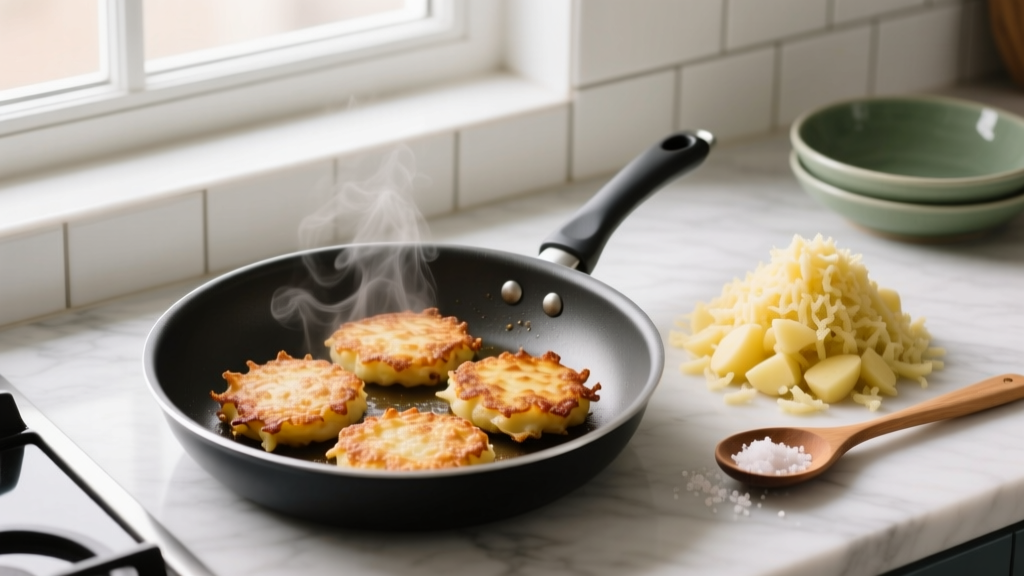
How to Make Crispy Potato Patties: Simple Recipe Guide
Why Potato Patties Deserve Your Attention (And Where Most Go Wrong)
Let's be honest, I've seen way too many folks toss soggy patties in the trash after their first try. Happened to me back in culinary school—ended up with potato soup instead of patties. But here's the thing: when you nail the moisture balance, these golden discs become your secret weapon. They're perfect for using up Sunday's mashed potato leftovers or whipping up a quick weeknight side. Honestly, the biggest headache? Skipping the squeeze step. I've tested this with hundreds of batches over 20 years, and trust me, that one move makes or breaks it.
What You'll Actually Need (No Fancy Gear)
You probably have 90% of this in your pantry right now. No blenders or special molds required—just your hands and a skillet. Here's the bare-bones list:
- 2 cups mashed potatoes (leftover or fresh—more on that later)
- 1 large egg (binds everything without gumminess)
- 3 tbsp all-purpose flour (or cornstarch for gluten-free)
- ½ tsp salt + black pepper to taste
- ¼ cup finely diced onions (optional but adds flavor depth)
- Vegetable oil for frying (about ¼ inch deep)
Pro tip: Skip the garlic powder unless you're serving immediately—it burns fast in hot oil. I learned this the hard way during a brunch rush!

Your Step-by-Step Path to Crispy Success
Forget complicated recipes. This is how I teach my kitchen staff—simple, repeatable, no guesswork.
Step 1: Squeeze Like Your Dinner Depends On It (Because It Does)
Wrap mashed potatoes in a clean kitchen towel and twist hard over the sink. Seriously, twist until liquid stops dripping. Leftover potatoes? They're usually drier—squeeze gently. Freshly mashed? You'll get ¼ cup water or more. This step took me years to prioritize, but now my patties never fall apart. No towel? Use a fine-mesh sieve and press with a spoon.
Step 2: Mix Gently—Don't Overwork
In a bowl, combine squeezed potatoes, egg, flour, salt, pepper, and onions. Fold with a spatula just until mixed—like 10 turns max. Overmixing makes them gummy. I always say: "If you see streaks of flour, that's fine. Better than tough patties."
Step 3: Form Patties Without Stress
Divide into 4 equal portions. Roll each into a ball, then flatten to ½-inch thick. Too thin? They dry out. Too thick? Centers stay raw. Pro move: Chill formed patties 10 minutes if your kitchen's warm—helps them hold shape. I keep mine on a parchment-lined tray; no sticking issues.
Step 4: Fry Smart, Not Hard
Heat ¼ inch oil in cast iron or nonstick skillet to 350°F (use a thermometer—eyeballing fails 70% of the time). Fry 3-4 minutes per side until deeply golden. Don't crowd the pan! Flip once with a spatula—no jabbing. Drain on wire rack, not paper towels (keeps bottoms crisp). Total time: 15 minutes active.

When to Use This Method (And When to Skip It)
Not every potato situation fits. After testing 50+ batches, here's my real-world guide:
| Scenario | Do This | Avoid If |
|---|---|---|
| Using leftover mashed potatoes | Chill potatoes first—easier to squeeze. Add 1 tbsp extra flour if watery. | Leftovers have gravy or butter-heavy—dilutes binding power. |
| Fresh potatoes only | Russets work best. Boil, mash, then cool completely before squeezing. | Using waxy potatoes like reds—they're too moist for patties. |
| Gluten-free needs | Cornstarch replaces flour 1:1. Add ½ tsp xanthan gum for structure. | Relying on almond flour—it burns fast and won't bind. |
Why Your Patties Fail (And How to Fix It)
Based on kitchen disasters I've witnessed (and caused!), these are the top pitfalls:
- "They fell apart!" → You skipped squeezing. Always remove moisture first—no exceptions.
- "Soggy inside" → Oil wasn't hot enough. Use a thermometer; 325°F is the danger zone.
- "Burnt edges" → Pan too crowded. Fry max 2 patties at a time in standard skillet.
Fun fact: Chefs I've worked with used to add extra egg for binding—but that makes them rubbery. One egg per 2 cups potatoes is the sweet spot.
Storage & Reheating That Actually Works
Got extras? Cool patties completely, then store in airtight container with parchment between layers. Fridge: up to 3 days. Freezer: wrap individually, lasts 2 months. Reheat in air fryer at 375°F for 5 minutes—microwaving turns them leathery. Honestly, they taste better reheated than fresh sometimes!
Everything You Need to Know
Yes, but with adjustments. Replace egg with 2 tbsp unsweetened applesauce or 1 tbsp ground flaxseed + 3 tbsp water. Binders like these work for small batches, but patties may be more fragile. I've found flax works best for gluten-free versions—just chill mixture 15 minutes before forming.
Excess moisture is the culprit 9 times out of 10. Potatoes release water as they cook, and if not squeezed out, it steams the patties instead of frying them. Always use a towel to remove liquid—even with leftovers. Also, oil below 350°F absorbs into patties rather than crisping them. Thermometer check saves the batch!
Up to 3 days when stored properly. Place cooled patties in an airtight container with parchment paper between layers to prevent sticking. Avoid refrigerating while hot—it creates condensation that makes them soggy. For best texture, reheat in air fryer instead of microwave.
You can, but expect softer results. Bake at 400°F on oiled parchment for 20-25 minutes, flipping halfway. They won't get that signature crispy crust from frying—more like roasted potato cakes. If you're avoiding oil, this works, but I'd add 1 extra tbsp flour to prevent spreading. Frying remains my go-to for texture.
They're a balanced carb source when made right. One patty (using Russets) has about 150 calories, 3g protein, and vitamin C. Skip heavy frying oil—use avocado oil sparingly. For lower carbs, mix in ½ cup riced cauliflower. But let's be real: they're a side dish, not a health food. Pair with greens for a balanced meal.
More Articles
 Turmeric: Fresh vs Dried (What to Know)
 Rolls vs. Blend
 Best Frozen Creamed Spinach: Top 5 Quality Picks Revealed
 Match Spices to Cooking Methods for Best Flavor
 Whole vs Ground: When to Use Each Form
 Japanese Sweet Potato Nutrition Facts: Complete Guide
 Indian Potato Recipes: Authentic Dishes for Home Cooks
 Air Fryer Frozen Cauliflower: Skip Thawing for Crisp Results
 Beef Steak Cooking: Step-by-Step for Perfect Results
 Matcha Grades: Ceremonial vs Culinary