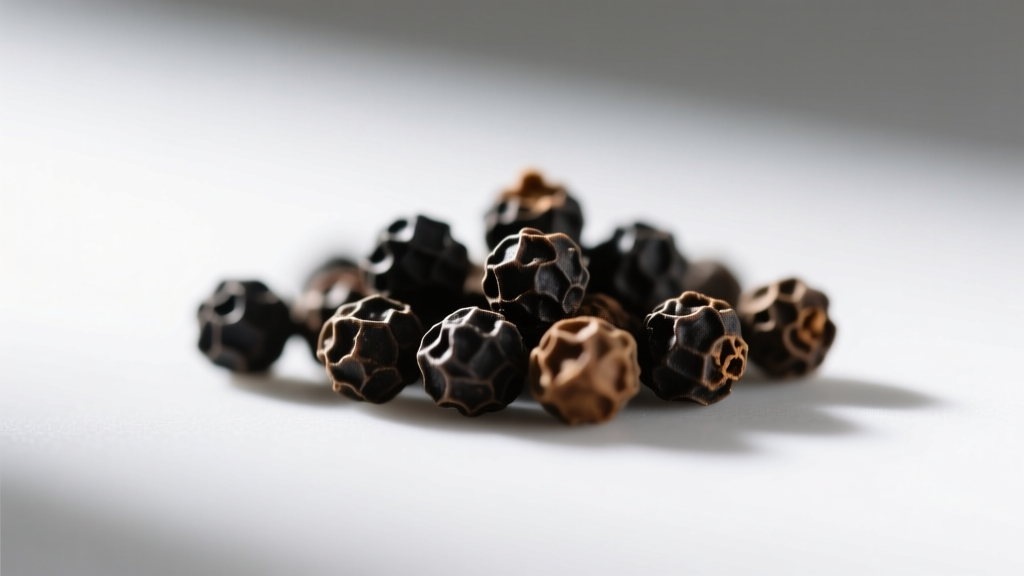
What Black Pepper Is Made Of: The Complete Guide
Black pepper isn’t ground spice — it’s dried, unripe fruit
Most home cooks assume black pepper is ‘just ground peppercorns’ — a neutral, interchangeable base ingredient. That assumption quietly warps daily decisions: buying pre-ground in bulk to save money, storing it in clear jars near the stove, or assuming freshness is signaled by sharpness on the tongue. In reality, those choices don’t just erode flavor — they erase the compound that defines black pepper’s function in cooking: piperine. Piperine isn’t stable. It degrades fast when exposed to air, light, or ambient heat — and its loss isn’t tasted as ‘mildness’. It’s felt as flatness beneath salt, as dishes failing to hold depth across bites, as sauces that taste complete on first spoonful but vanish by the third. This isn’t about ‘weak spice’. It’s about losing the molecular anchor that makes black pepper interact with fat, acid, and protein — a role no other seasoning replicates.
The question what is black pepper made out of becomes irrelevant in two common situations: when the pepper sits unused for over three weeks after grinding, and when it’s added late in high-heat sautéing. In both cases, piperine volatility overrides origin or cultivar. A freshly cracked Tellicherry behaves identically to a supermarket blend if either spends 20 minutes in a hot pan — both lose >90% of their functional impact before serving. The distinction collapses not because the source material changed, but because the active compound exited the equation. This isn’t theoretical. It’s observable in home kitchens where ‘pepper-forward’ dishes (like steak au poivre or black pepper crab) consistently underperform unless the grind happens after heat drops below 120°C — a threshold most stovetops exceed during searing. No label, no origin story, no price point compensates for crossing that line.
Two fixations distract home cooks without altering outcomes. First: ‘Is it single-origin?’ — irrelevant unless you’re comparing batches within the same harvest window and identical storage. Most households store pepper for months, often in conditions that erase terroir differences before the jar is half-empty. Second: ‘Should I use a ceramic or steel grinder?’ — a mechanical detail that matters only if your grinder retains >30% residual heat after 10 cranks. Few home models do; fewer users crank enough to trigger thermal degradation. What does matter is whether the grinder seals tightly. A loose-fitting plastic mill lets humidity in — and humidity hydrolyzes piperine faster than oxygen alone. But that’s a seal issue, not a material one. Obsessing over origin or grinder type delays attention from the real failure point: exposure time post-grind.
The real constraint isn’t sourcing or equipment — it’s household humidity control. In many homes, especially coastal or humid-climate regions, ambient moisture averages 60–75% RH year-round. At that level, even whole peppercorns stored in glass jars lose measurable piperine within four weeks — not gradually, but in a nonlinear drop after week two. Refrigeration helps, but only if the container is truly airtight; condensation inside the jar accelerates degradation more than room-temperature storage. Budget, time, and allergy concerns rarely interfere here — but the physical reality of local climate does. No amount of ‘premium’ labeling offsets this. It’s why families in Singapore or New Orleans report ‘bland pepper’ despite rotating jars monthly — while those in Denver or Madrid see six-month shelf life from the same product. The constraint isn’t behavior. It’s geography acting on chemistry.
Recent shifts in home cooking habits reveal a quiet correction: more cooks now grind pepper at the table, not at the stove. Lately, this isn’t about ritual — it’s a functional response to repeated failures with pre-ground versions in quick-cook meals. You’ll see it in meal-prep containers labeled ‘add pepper last’, in stainless-steel mills appearing beside dinner plates instead of in spice racks, and in online searches shifting from ‘best black pepper brand’ to ‘how long does ground pepper last’. The change isn’t driven by food media — it’s emergent, practical, and tied directly to observed flavor collapse in everyday dishes. No tutorial prompted it. Just the cumulative weight of dinners where pepper ‘disappeared’ mid-bite.
Here’s how to resolve ambiguity across real situations — not ideals:
| What people fixate on | What it affects | When it matters | When it doesn't |
|---|---|---|---|
| Peppercorn origin (e.g., Malabar vs. Lampong) | Aromatic nuance in raw sniff test | When grinding immediately before cold dishes (e.g., avocado toast, ceviche) | When added to simmering soups or baked casseroles |
| Grinder material (ceramic vs. stainless) | Heat retention during rapid grinding | When grinding >2 tsp continuously for restaurant-style service | In home use — most grinds are <1 tsp, with pauses |
| Whole vs. pre-ground packaging date | Piperine retention baseline | When buying >100g and storing >4 weeks in humid climates | When using <30g within 2 weeks in dry, cool storage |
| Color variation (black vs. greenish-black) | Harvest timing and drying consistency | When used raw or in vinegar-based dressings | When toasted or cooked above 140°C |
Quick verdicts for home cooks
- If you’re making scrambled eggs, grind pepper straight into the pan after turning off the heat — origin and grind size won’t compensate for thermal loss.
- For weekday pasta tossed in olive oil and garlic, skip the fancy mill — a $5 twist grinder works if sealed tightly and used within 10 days.
- When hosting guests, use whole peppercorns in a sturdy mill at the table — not for theater, but because piperine survives 3x longer in air than in heat.
- If your kitchen stays above 70% humidity, buy small tins of whole peppercorns every 6 weeks — no brand upgrade fixes ambient moisture damage.
- For marinades with acidic ingredients like lemon or yogurt, add pepper after marinating — acidity accelerates piperine breakdown even in whole form.
- When reheating leftovers, skip adding fresh pepper until the final plate — reheating destroys piperine regardless of initial quality.
Frequently asked questions
Why do people think black pepper is just ‘dried and ground’ — not a specific fruit stage?
Because packaging rarely states ‘unripe Piper nigrum berries, sun-dried until wrinkled and darkened’. Instead, labels say ‘ground black pepper’, collapsing botany into processing — making the raw material invisible.
Is it actually necessary to buy whole peppercorns instead of pre-ground?
Only if you use pepper more than twice weekly and store it longer than 10 days — otherwise, the piperine loss is functionally identical by the time it hits your food.
What happens if you ignore the difference between black and white pepper in terms of composition?
Nothing — for black pepper’s core function. White pepper comes from the same fruit, but with outer layer removed; its piperine content is similar, though volatility differs slightly. Confusing them doesn’t break dishes — mis-timing the grind does.
More Articles
 Black Seeds vs Black Sesame: Key Differences (2026)
 Fennel Seeds vs Anise Seeds: Clear Differences Explained
 Garlic Powder to Clove Ratio: When ⅛ tsp Is Enough
 Ginger Lemon Tea Recipe: Simple Steps & When to Drink It
 Buffalo Cauliflower Wings: Crispy Vegan Appetizer Guide
Fenugreek: Leaves and Seeds as Dual Spice
Buffalo Cauliflower Wings: Crispy Vegan Appetizer Guide
Fenugreek: Leaves and Seeds as Dual Spice
 How to Tell If Honey Is Bad: 5 Clear Warning Signs
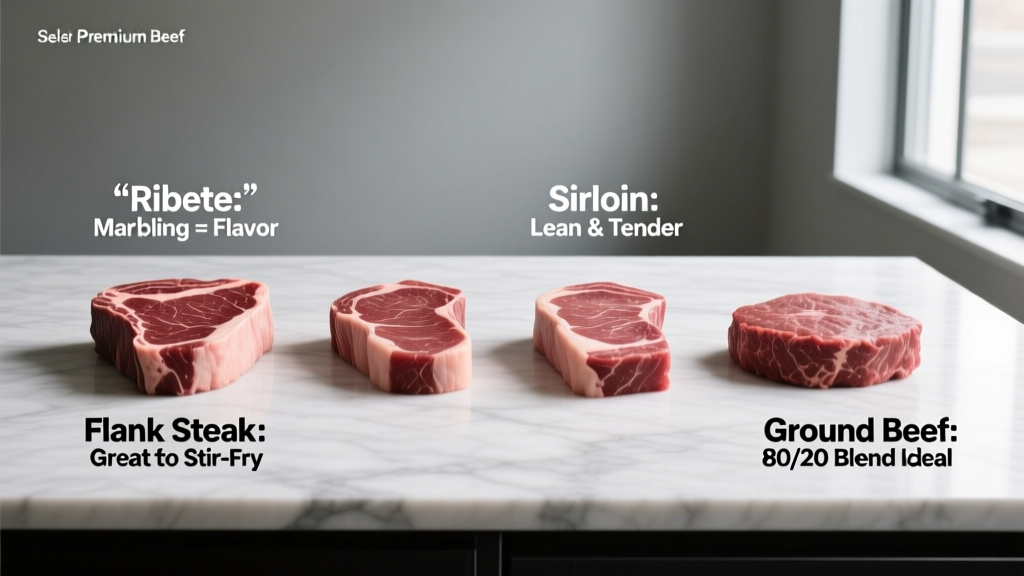 How to Choose Beef: A Science Guide