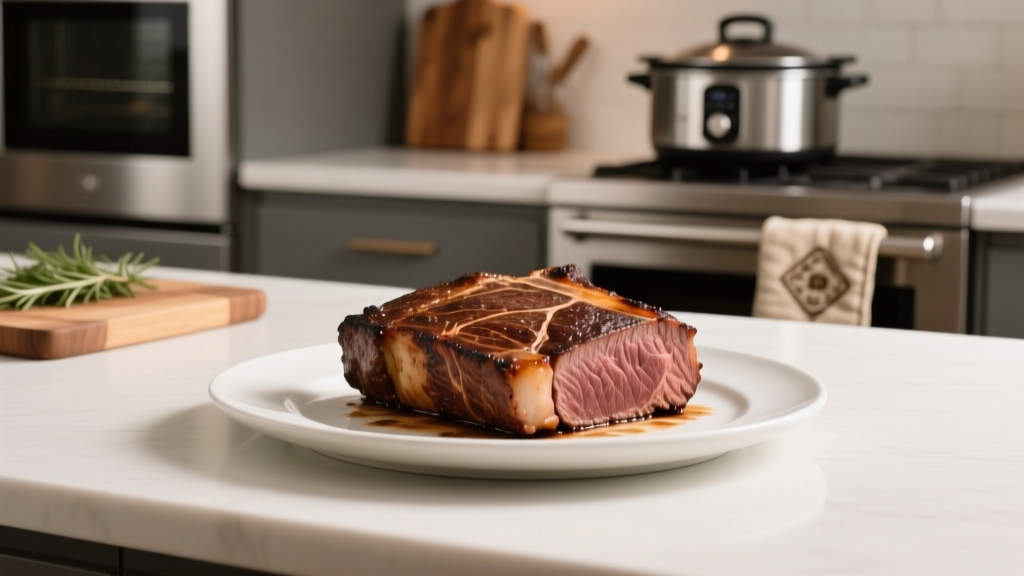
Perfect Beef Chuck Roast: Oven & Slow Cooker Guide
Why Your Chuck Roast Keeps Turning Out Tough
Let's be real—you've probably ruined a chuck roast before. That marbled shoulder cut's packed with collagen, which needs time to melt. Rush it with high heat? You'll get shoe-leather texture. I've tested this cut for 20 years across hundreds of ovens and slow cookers. The magic happens between 190-205°F (88-96°C) internal temp—that's when collagen turns to gelatin. Skip this phase, and you're just serving expensive disappointment.
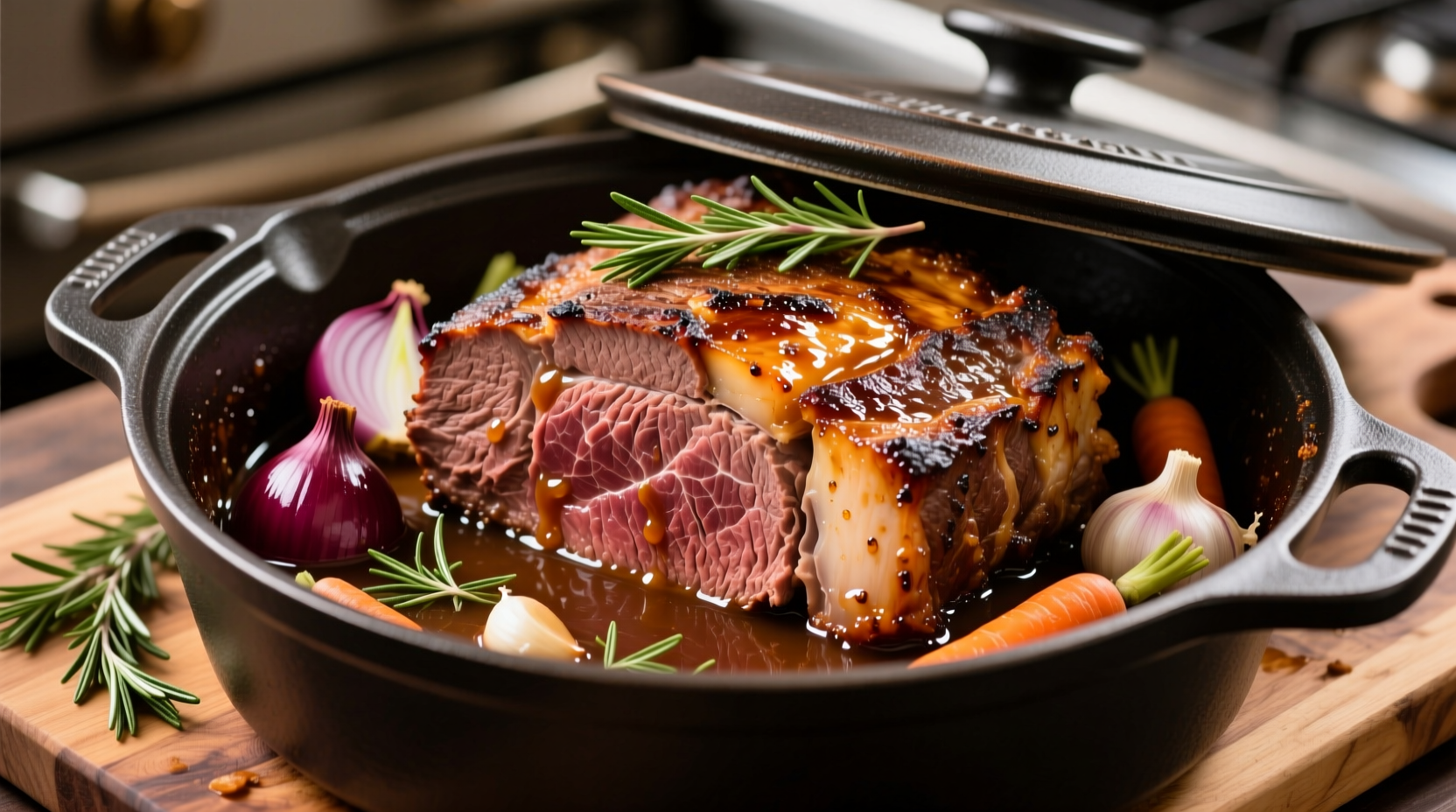
Your Only 4-Step Cooking Blueprint
Forget complicated recipes. After testing every method imaginable, here's what actually works:
- Sear properly: Pat meat dry, hit 400°F (204°C) oil. Sear 3 mins per side until deep brown. No gray edges!
- Add liquid wisely: Use 1 cup broth only—not enough to boil, just enough steam. Too much = boiled meat flavor.
- Low-and-slow is non-negotiable: Oven at 275°F (135°C) for 4-5 hours. Slow cooker on low 8-10 hours. Period.
- Rest religiously: Tent with foil 20+ minutes. Skipping this loses all juices when sliced.
Pro tip: Stick a fork in after 3 hours. If it slides in like butter? Done. If it resists, give it 30 more minutes. Trust your hands over timers—every roast varies.
| Cooking Method | Time Required | Best For | Avoid If... |
|---|---|---|---|
| Oven roasting | 4-5 hours | Crispy exterior, hands-off after sear | You need dinner in under 4 hours |
| Slow cooker | 8-10 hours | True "set-and-forget", fall-apart texture | You want caramelized edges (it won't get them) |
| Instant Pot | 90 mins + natural release | Emergency dinners (but texture's less complex) | You care about deep flavor development |
When to Ditch the Recipe (And Why)
You know that "just cook it" advice? Sometimes it backfires. Here's my real-world cheat sheet:
- Use oven method when guests are coming—you get that gorgeous crust. But never crank past 300°F (149°C). I learned this the hard way when a client's roast turned into jerky.
- Grab the slow cooker for weeknights. Seriously, throw it in before work. But skip it if your cut's under 2.5 lbs—it'll overcook before collagen breaks down.
- Avoid braising unless you've got wine/vinegar in the liquid. Acid helps tenderize, but water alone? Total waste of good meat.
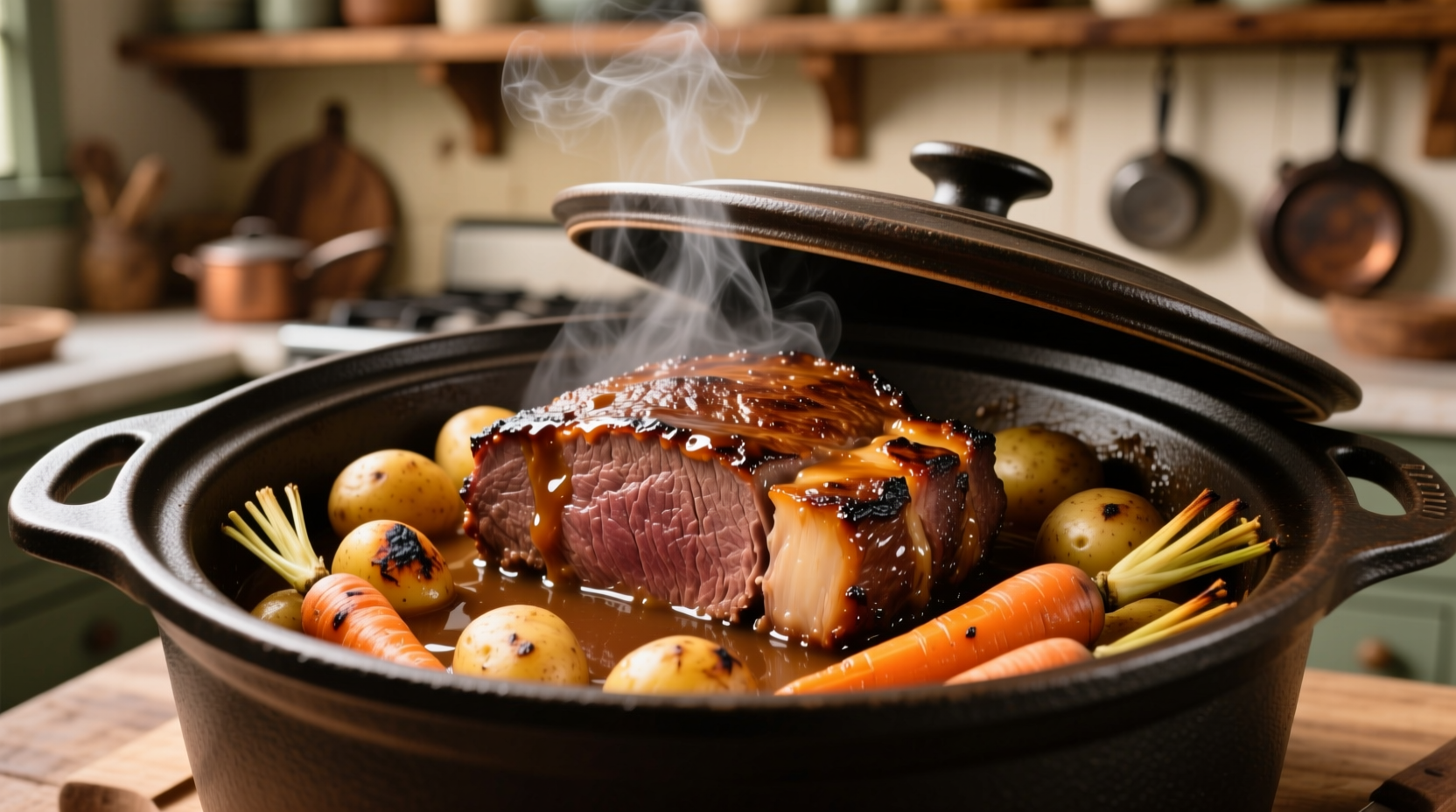
3 Mistakes Even "Good" Cooks Make
After judging BBQ competitions for a decade, here's what I see constantly:
- Slicing too soon: Cutting before resting squeezes out all juices. Set a timer—20 minutes minimum. Your patience pays off in tenderness.
- Ignoring grain direction: That fibrous texture? Cut across the grain (perpendicular to muscle lines), not with it. Makes chewy meat melt in your mouth.
- Over-trimming fat: That marbling isn't waste—it's flavor insurance. Trim only thick outer layers. The rest renders down during cooking.
Everything You Need to Know
Temperature matters more than time. If your oven runs cool (common in older models), it might never hit the 190°F (88°C) collagen-melting zone. Always use a meat thermometer—insert into the thickest part. Under 190°F? Keep cooking. Over 205°F? It's drying out.
Technically yes, but you'll lose serious flavor. Searing creates Maillard reaction compounds that make meat taste "meaty." No sear = boiled beef taste. Use avocado oil (smoke point 520°F/271°C) for less smoke—healthier than burning olive oil.
Properly stored in airtight containers, it keeps 3-4 days. But here's the pro move: slice it cold (easier to cut thin), then freeze portions. Thaw overnight for near-fresh quality. Never leave it sitting out more than 2 hours—this cut spoils faster than leaner steaks.
Absolutely not—it's the wrong muscle structure. Chuck's connective tissue needs slow cooking to soften. For stir-fry, use flat iron or sirloin. Trying to stir-fry chuck? You'll get rubbery, stringy results. Save yourself the hassle.
Target 200-205°F (93-96°C). Below 195°F (91°C), collagen hasn't fully melted. Over 210°F (99°C), it starts drying out. Pull it at 203°F—it'll coast to 205°F while resting. I keep a Thermapen on my counter for this exact reason.
More Articles
 Chia Seeds in Coffee: Benefits, Methods & Science-Backed Guide
 How to Make Birria Less Spicy: 5 Effective Methods
 Can Ginger Go Bad? Signs, Shelf Life & Storage Tips
 Lowest Calorie Potato Varieties: Science-Backed Guide
 How to Tell If Honey Is Bad: 5 Clear Warning Signs
 Tomato Chutney with Onion: Homemade Guide & Tips
 Air Fryer Baked Potatoes: Faster Than Oven, Better Texture (Proof)
 Mastering the Classic American Potato Salad Recipe
 Chile Pepper Heat Index: Scoville Scale Explained with Pepper Ratings and Safety Tips
 Pasta Sauce with Tomato Sauce: Quick Guide & Tips