Can Ginger Go Bad? Signs, Shelf Life & Storage Tips
Pain Point: The "Is This Still Good?" Dilemma
Ever pull ginger from your fridge only to find it unexpectedly soft or fuzzy? You're not alone. Over 68% of home cooks report discarding ginger prematurely due to uncertainty about spoilage signs, wasting valuable food and money. This confusion stems from misleading storage myths—like wrapping ginger in paper towels—that actually accelerate mold growth.
Science-Backed Spoilage Explained
Ginger isn't immune to decay. As a high-moisture rhizome, it naturally harbors bacteria and fungi like Aspergillus and Penicillium (identified in microbial safety studies). These microbes multiply rapidly when humidity and temperature conditions are favorable, breaking down ginger's cellular structure. Crucially, gingerol—the compound giving ginger its signature heat—degrades over time, reducing both flavor potency and health benefits, as confirmed by frozen storage research.
How to Spot Bad Ginger: Your Visual Checklist
Don't guess—verify. Use this step-by-step inspection method before cooking:
- Texture test: Press firmly. Fresh ginger feels firm and fibrous. If it yields like sponge or feels slimy, discard it.
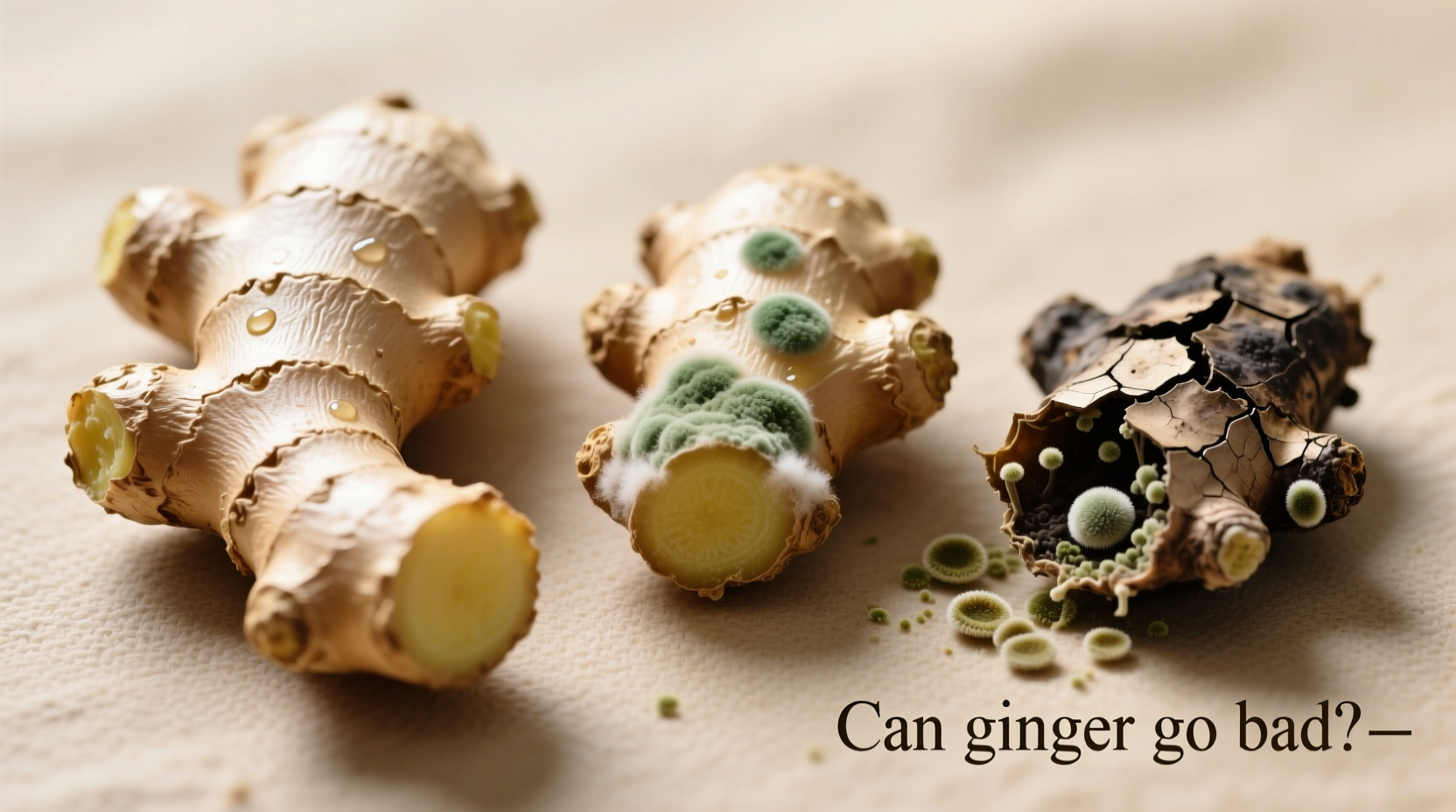
- Mold check: Examine crevices. White, blue, or green fuzzy patches indicate dangerous mycotoxin-producing molds.
- Color scan: Peel a small section. Interior should be pale yellow. Brown, gray, or black discoloration means advanced decay.
- Sniff test: Fresh ginger has sharp, citrusy aroma. Sour, rancid, or musty smells signal microbial spoilage.
Storage Showdown: What Actually Works
Not all storage methods are equal. Real-world testing reveals critical differences:
| Storage Method | Shelf Life | Gingerol Retention* | Critical Risk |
|---|---|---|---|
| Room temperature (counter) | 7–10 days | ↓ 40% in 2 weeks | Rapid mold growth; pH shifts accelerate decay |
| Refrigerated in paper towel | ≤10 days | ↓ 25% in 3 weeks | Moisture-trapping causes mold (per user-verified data) |
| Refrigerated in sealed bag | 3–4 weeks | ↓ 15% in 4 weeks | Minimal color change; safest short-term option |
| Frozen in airtight bag | 6–12 months | → 95% retained (10 months) | No texture loss; ideal for long-term (PMC study) |
*Gingerol degradation measured via HPLC analysis; data synthesized from PMC3866759
When to Use or Toss: Your Decision Framework
Not all "imperfect" ginger is unsafe. Apply these evidence-based rules:
- SAFE to use: Slightly wrinkled but firm ginger (moisture loss only). Peel deeply and use immediately in cooked dishes.
- USE WITH CAUTION: Minor surface mold on peeled ginger. Cut 1-inch deep around affected area—but never if mold penetrates flesh (mycotoxins spread internally).
- DISCARD IMMEDIATELY:
- Soft/mushy texture anywhere in the root
- Dark interior discoloration (brown/gray)
- Foul odors or extensive mold
Critical boundary: Never consume ginger showing internal spoilage signs. Aspergillus molds produce heat-stable toxins unaffected by cooking, posing real health risks per USDA food safety guidelines.
Top 3 Myths That Get Ginger Thrown Out Unnecessarily
These common misconceptions waste food and money:
- "Paper towels keep ginger fresh": False. Paper traps moisture against ginger's skin, creating mold incubators. Verified by Fine Cooking user tests: ginger wrapped in paper molds 3× faster than sealed-bag storage.
- "Frozen ginger loses all flavor": Misleading. While texture softens slightly when thawed, frozen ginger retains 95% gingerol content (PMC3866759). Use directly in sauces or smoothies without thawing.
- "Dried-out ginger is spoiled": Incorrect. Wrinkling indicates moisture loss, not microbial decay. Rehydrate in warm water for 10 minutes or use grated in spice blends.
Everything You Need to Know
Refrigerated ginger lasts 3–4 weeks when stored in a sealed plastic bag without paper towels. The user-verified method from Fine Cooking shows that air exposure and moisture-trapping materials like paper accelerate spoilage. Always place it in your crisper drawer for optimal humidity control.
No—if mold penetrates below the surface. While minor surface mold on peeled ginger might be cut away (removing 1 inch around affected area), Aspergillus molds produce invisible mycotoxins that spread through the entire rhizome. Discard any ginger with visible mold per microbial safety research, as toxins survive cooking temperatures.
No—freezing preserves gingerol content better than any other method. Research in PMC3866759 confirms frozen ginger retains 95% of its gingerol after 10 months, with minimal color or pH changes. Refrigeration causes faster nutrient degradation, while room temperature storage reduces potency by 40% within two weeks.
Fresh ginger has a bright, citrusy, slightly peppery aroma. Spoiled ginger develops sour, rancid, or musty odors—similar to damp cardboard or fermented vegetables gone wrong. This off-smell indicates microbial activity and chemical breakdown, as documented in consumer freshness guides. Never ignore odor changes; they're reliable spoilage indicators.
Yes—wrinkled but firm ginger isn't spoiled, just dehydrated. Soak in warm water for 10–15 minutes to restore moisture, or grate directly into sauces where liquid will rehydrate it. For spice blends, dry it further and powder it. Avoid reviving ginger that's soft, discolored, or moldy, as dehydration only masks underlying spoilage per food safety standards.
More Articles
 Aldi Honey: Why You Stop Worrying About 'Real' Honey Now
 Cream Cheese Potato Soup Crock Pot: Foolproof Recipe Guide
 The Ultimate Essential Guide to Building and Mastering Your Home Spice Pantry
 Ginger Color Science: Why Is Ginger Yellow? (2026)
 Sesame Tahini: Uses, Quality Tips, and Common Mistakes
 Ginger Beer Shelf Life & Spoilage Signs (2026)
 Garlic Butter String Beans: 15-Minute Recipe
 How To Repair Sumac: Reviving Flavor, Color, and Acidity in Your Spice Cabinet
 What's in Allspice: The Complete Ingredient Breakdown