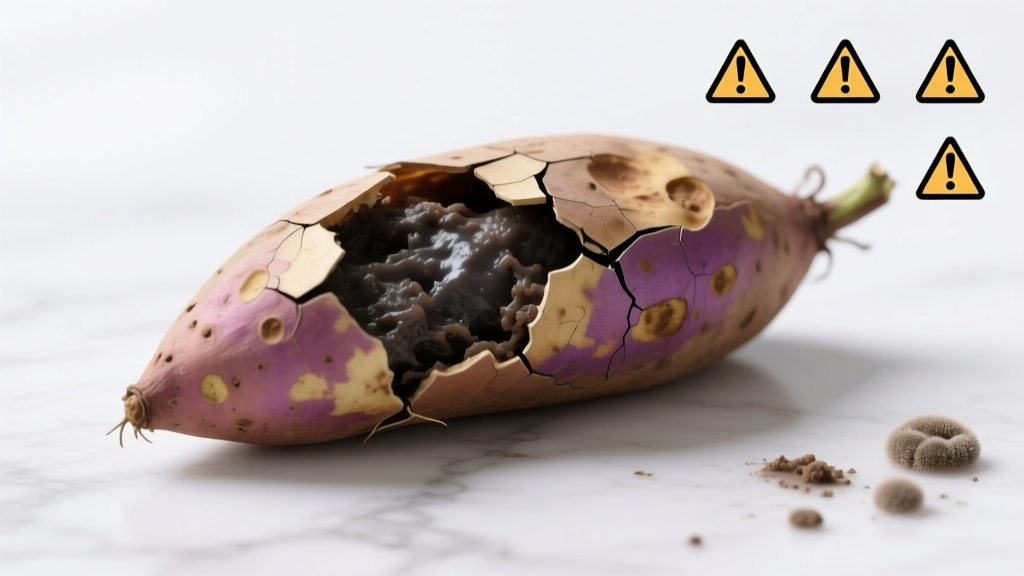
How to Identify a Bad Sweet Potato: 5 Clear Warning Signs
Why Identifying Bad Sweet Potatoes Matters
Knowing how to spot spoiled sweet potatoes isn't just about avoiding an unpleasant meal—it's crucial for food safety and reducing waste. According to USDA food safety guidelines, consuming spoiled root vegetables can lead to foodborne illnesses, while prematurely discarding still-good produce contributes to the 40% of food waste in American households. This guide provides clear, science-backed indicators so you can confidently determine when a sweet potato has passed its prime.
Visual Inspection: What to Look For
Your eyes are your first line of defense against spoiled sweet potatoes. While minor surface imperfections are normal, certain visual cues signal spoilage. Understanding the difference between harmless characteristics and dangerous spoilage prevents unnecessary waste while keeping you safe.
| Normal Characteristics | Signs of Spoilage |
|---|---|
| Light tan skin with occasional small brown spots | Large dark brown or black areas covering more than 25% of surface |
| Small white or clear liquid when cut | Thick, cloudy, or colored liquid oozing from surface |
| Occasional small sprouts (1-2 inches) | Multiple long sprouts with visible roots |
| Orange flesh with possible white streaks | Flesh with green, black, or gray discoloration |
Texture Tells the Truth
How a sweet potato feels often reveals more than how it looks. Gently press different areas to assess firmness:
- Fresh sweet potato: Firm throughout with slight give when pressed
- Beginning to spoil: Soft spots in isolated areas (can often be cut away)
- Definitely bad: Mushy or soggy texture throughout, wet spots, or slimy surface
Professional chefs like Antonio Rodriguez note that "sweet potatoes should feel dense and heavy for their size—lightweight specimens often indicate internal dehydration or rot that isn't visible externally."
Spoilage Timeline: How Bad Sweet Potatoes Develop
Sweet potatoes don't spoil overnight. Understanding this progression helps you catch problems early:
- Days 1-7: Minor surface blemishes may appear; small sprouts might emerge
- Days 8-14: Soft spots develop; liquid may seep from damaged areas
- Days 15-21: Significant discoloration spreads; texture becomes uniformly soft
- Day 22+: Mold growth appears; strong unpleasant odor develops
This timeline assumes room temperature storage. Properly stored sweet potatoes in cool, dark conditions typically last 3-5 weeks according to FDA food handling guidelines.
When Smell Confirms Spoilage
Your nose provides critical information that sight and touch might miss. A fresh sweet potato has an earthy, slightly sweet aroma. Warning signs include:
- Sour or vinegar-like smell (indicates fermentation)
- Musty or moldy odor
- Generally unpleasant, rancid smell
Food safety experts emphasize that if you detect any off-odors, the sweet potato should be discarded immediately—even if visual signs seem minor.
Common Misconceptions Clarified
Several myths about sweet potatoes lead to unnecessary waste. Let's clarify:
- Myth: All sprouts mean the sweet potato is bad
Fact: Small sprouts can be cut off; the remaining portion is safe if firm and properly stored - Myth: Black spots inside mean it's moldy
Fact: Some varieties naturally have darker spots; only discard if accompanied by foul odor or mushiness - Myth: Refrigeration extends shelf life
Fact: Cold temperatures cause hard spots and convert starches to sugars prematurely
Proper Storage for Maximum Freshness
Following these storage guidelines prevents premature spoilage:
- Store in a cool, dark, well-ventilated place (55-60°F ideal)
- Never refrigerate uncooked sweet potatoes
- Keep away from onions which emit gases that accelerate spoilage
- Don't wash before storage—moisture promotes mold growth
- Check stored potatoes weekly and remove any showing spoilage
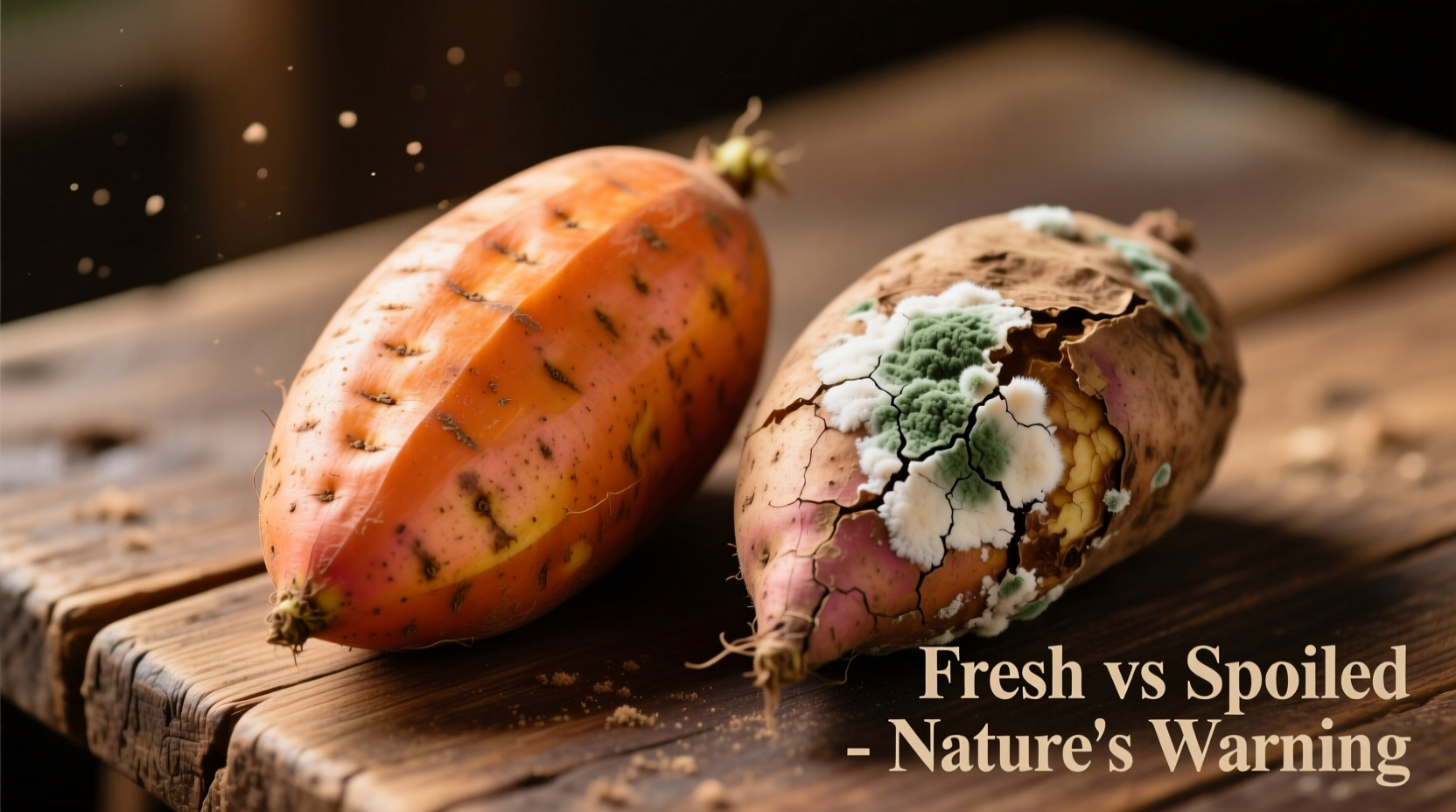
When to Definitely Discard a Sweet Potato
While minor imperfections can be cut away, certain conditions mean the entire sweet potato should be thrown out:
- Visible mold in any quantity (mold roots penetrate deeper than visible)
- More than 30% of surface shows discoloration
- Consistently soft or mushy texture throughout
- Strong unpleasant odor
- Signs of insect damage or infestation
The USDA Food Safety and Inspection Service warns that "when mold appears on dense foods like sweet potatoes, invisible threads penetrate below the surface, potentially producing harmful toxins that aren't destroyed by cooking."
Food Safety First: Risks of Consuming Spoiled Sweet Potatoes
Eating spoiled sweet potatoes isn't just unpleasant—it can make you sick. Potential risks include:
- Fungal toxins that survive cooking temperatures
- Bacterial contamination leading to food poisoning
- Digestive upset from fermented sugars
When in doubt, throw it out. The minor cost of replacing a spoiled sweet potato pales in comparison to potential medical expenses from foodborne illness.
Extending Sweet Potato Life: Practical Tips
Maximize your sweet potato investment with these professional techniques:
- Cure newly harvested sweet potatoes at 85-95°F for 4-7 days to heal surface wounds
- Store in mesh bags or cardboard boxes (never plastic bags)
- Keep away from heat sources like stoves or direct sunlight
- For long-term storage, freeze cooked sweet potato puree for up to 12 months
Frequently Asked Questions
More Articles
 Oven-Baked Tuna Steaks: Foolproof Method & Timing
Sumac: The Tangy Mediterranean Spice
Oven-Baked Tuna Steaks: Foolproof Method & Timing
Sumac: The Tangy Mediterranean Spice
 Chia Seeds Nutrition: Facts for 1 Tablespoon (2026)
 Rolls vs. Blend
 How to Make Pumpkin Seeds: Simple Roasting Guide
 Spice Shelf Life Chart: When to Throw Away Old Spices (2026 Guide)
 Spice Comparison: Flavor, Sourcing & Performance
 Chili Selection Guide: Heat and Varietal Tips
 Saffron Grading: How to Spot Real Quality
 Potato Croquettes: Crispy Outside, Fluffy Inside