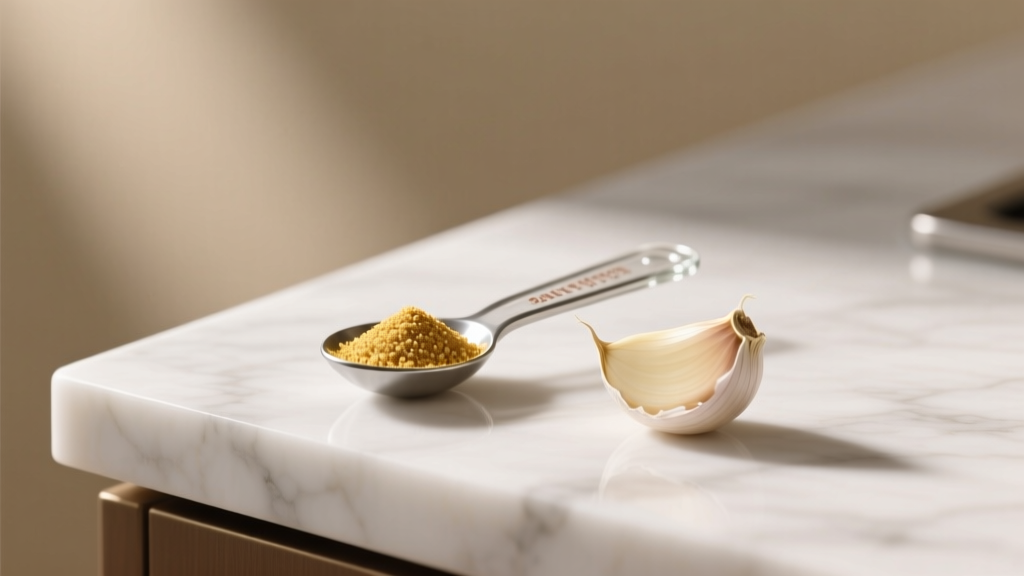
Garlic Powder to Clove Ratio: When ⅛ tsp Is Enough
Why Garlic Powder Ratios Confuse Home Cooks
Most people assume garlic powder and fresh garlic are interchangeable drop-for-drop, but the drying process concentrates flavor compounds. When garlic loses its 60% water content during dehydration, the remaining solids intensify—making powder significantly stronger by volume. This explains why using ½ teaspoon (a common myth) creates bitter, one-dimensional results.
The Critical Factor Everyone Overlooks
Garlic powder isn't standardized. Industrial-grade powder (like McCormick) uses ultra-fine grinding that doubles concentration versus coarser artisanal blends. This only matters when precision affects outcome—think mayonnaise-based dips where garlic flavor must balance acidity, or when scaling recipes commercially. For most home cooks stirring powder into chili? The difference between ⅛ and 3/16 teaspoon won't register.
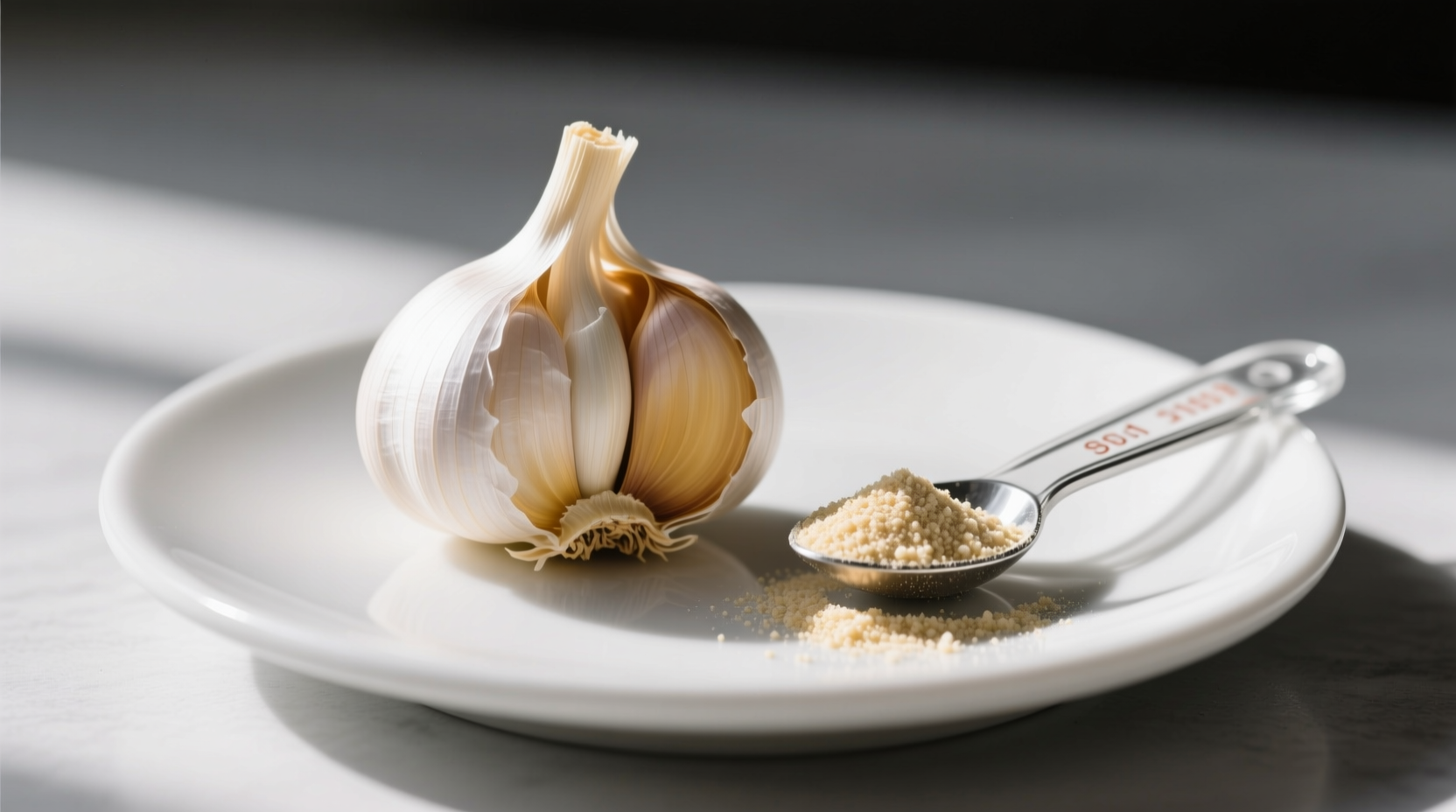
When Substitution Works (and When It Fails)
Garlic powder shines in dry rubs or long-simmered dishes where fresh garlic would burn or disintegrate. But it lacks the enzymatic complexity of raw garlic—meaning it won't replicate the sharp, floral notes in uncooked applications like salad dressings or pesto. This is why chefs never use powder for aioli: the missing allicin compound creates flat, dusty flavor.
For casual users making soups or casseroles, ⅛ tsp powder per clove works reliably. For enthusiasts crafting raw garlic sauces or fermentation projects, fresh cloves are non-negotiable—no powder substitution exists. If you only remember one rule: add powder early in cooking to mellow its intensity, never at the end like fresh garlic.
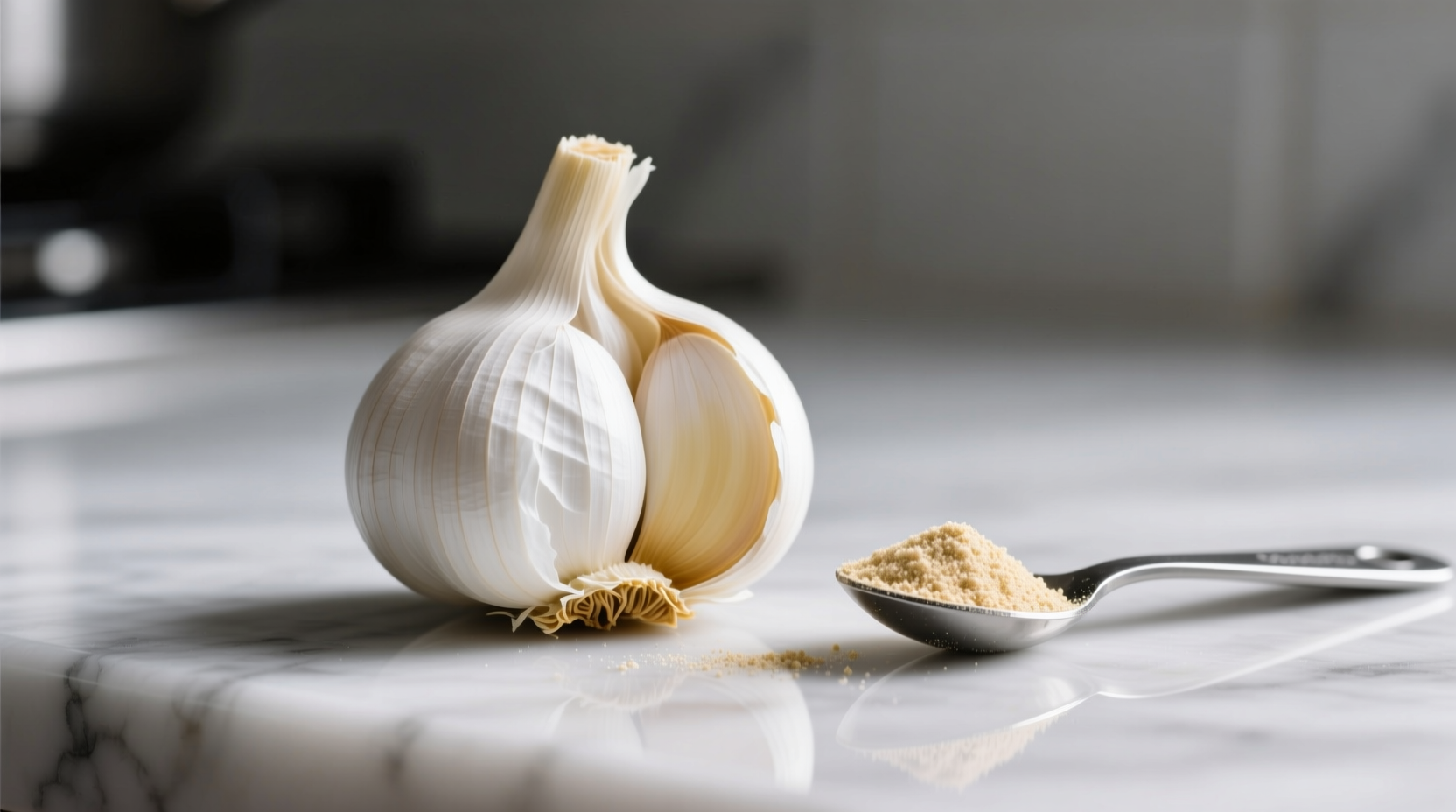
3 Reality-Tested Guidelines From Recipe Testing
- Garlic salt isn't powder: Using it as 1:1 substitute adds 6x the intended sodium—always choose pure powder.
- Freeze-dried granules behave differently: They require ¼ tsp per clove since they rehydrate, unlike true powder.
- Batch consistency varies: If your powder smells faint, use 3/16 tsp; if pungent, stick to ⅛ tsp.
Everything You Need to Know
No. Garlic salt contains 3 parts salt to 1 part garlic. Using it as powder substitute adds excessive sodium—per Clean Green Simple, you'd need to reduce other salt by ½ tsp per ⅛ tsp used.
Fully Healthy explains this applies only to coarse, low-concentration powders (rare in supermarkets). Standard fine powder requires ⅛ tsp—using ¼ tsp creates bitter, overpowering results in 90% of recipes.
Standard ratios assume medium cloves (4-7g). For jumbo cloves (>10g), use 3/16 tsp powder—but this only matters in garlic-forward dishes like aglio e olio. In tomato-based sauces, even double cloves won't register distinctly.
No. Powder lacks allicin—the compound created when fresh garlic is crushed. Julie Blanner's tests confirm powder creates flat, dusty flavor in dressings or pesto. Always use fresh for uncooked applications.
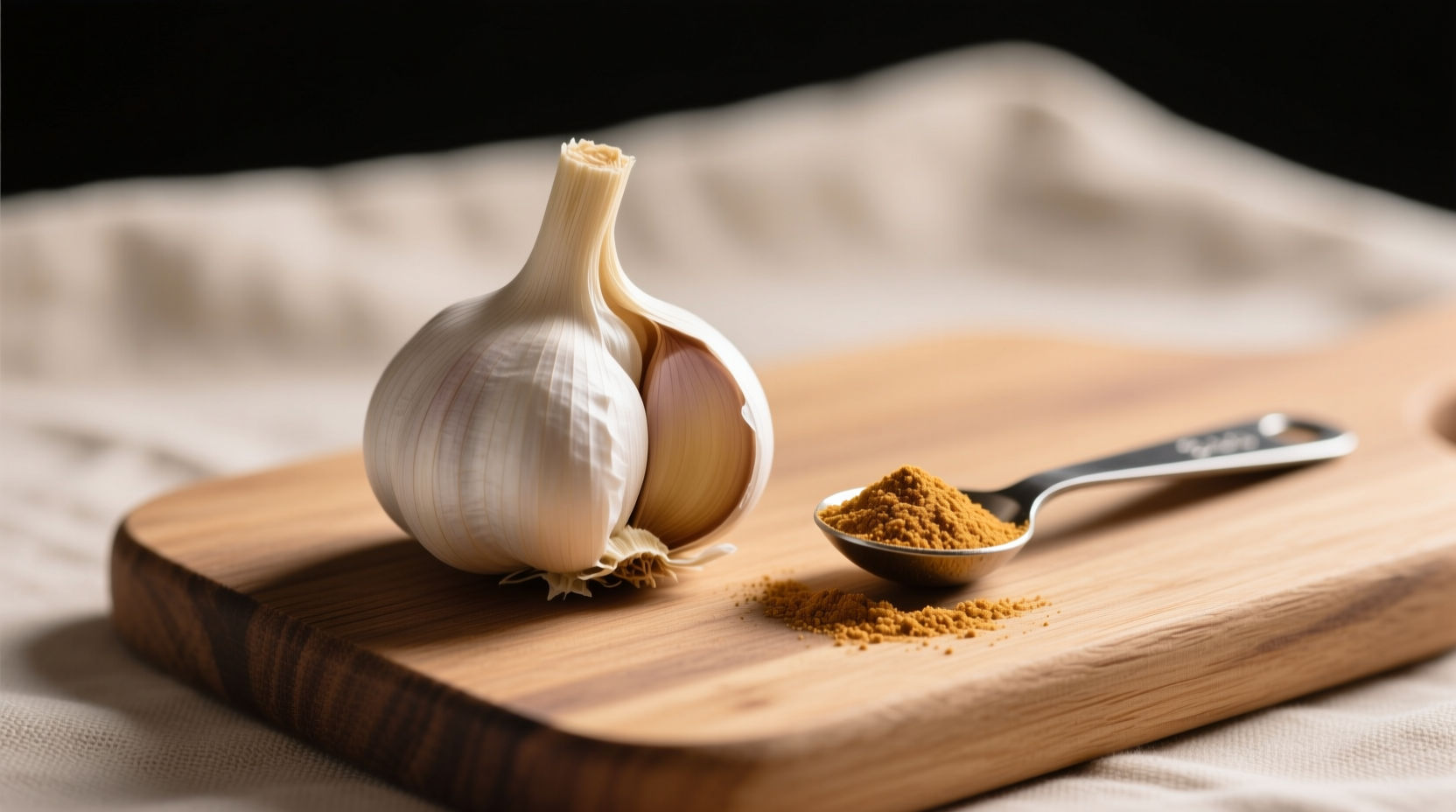
The Only Rule You Need
Use ⅛ teaspoon of pure garlic powder per standard clove in cooked dishes—but skip it entirely for raw applications. Check your powder's intensity by rubbing a pinch between fingers; if the scent lingers strongly, stick to ⅛ tsp. For 95% of home cooking, this prevents waste without compromising flavor. Save fresh cloves for dishes where garlic is the star, and keep powder for pantry-friendly weeknight saves.
More Articles
 Cumin vs Coriander: Key Differences
 What Spices to Put in Chili: Top 7 Must-Haves & Expert Tips
 Japanese Sweet Potato vs Sweet Potato: Key Differences
 Potato Soup: Why Russets Beat Red Potatoes (2026)
 What Does Fresh Dill Look Like: Visual Identification Guide
 Tokyo Spinach Meaning: What It Really Is (Not Spinach!)
 Celery Soup Guide: Recipes, Tips & Common Mistakes
 Easy Hash Brown Potato Casserole Recipe: Quick & Crispy
 Fresh Ginger to Ground Ginger Conversion: Ratios & Tips
 Potato Recipes: Simple Dishes for Any Meal