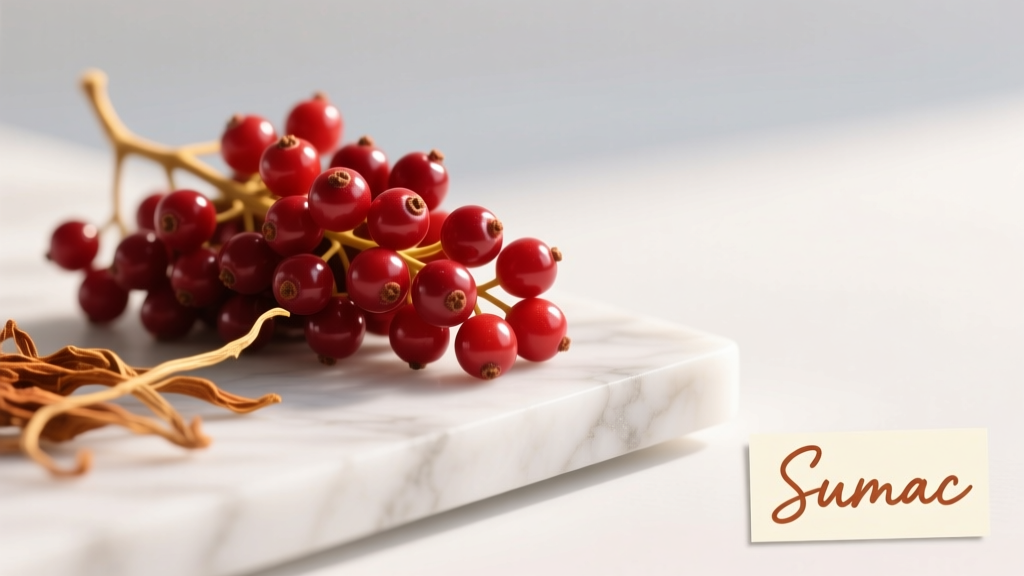
Sumac Spice: Taste, Uses & Why Chefs Love It
What Is Sumac?
Sumac is a deep red-purple spice made from the dried, ground berries of the Rhus coriaria shrub, native to the Mediterranean and Middle East. Don't confuse it with poison sumac (Toxicodendron vernix) — the culinary variety is completely safe and has been used in cooking for thousands of years.
Flavor Profile
Sumac tastes like a milder, fruitier lemon. The primary flavor notes are:
- Tart and tangy — similar to lemon juice but less acidic
- Fruity — with subtle berry-like undertones
- Astringent — creates a pleasant dryness on the tongue, like red wine or strong tea
- Slightly earthy — not as sharp as pure citric acid
It's essentially a dry acid — use it anywhere you'd squeeze lemon but don't want added moisture.
How to Use Sumac in Cooking
As a Finishing Spice
Sumac's flavor fades with prolonged heat. Sprinkle it on food just before serving:
- Hummus and baba ganoush — the classic pairing
- Fattoush salad — sumac is the defining flavor
- Grilled fish and chicken — a vibrant alternative to lemon
- Fresh fruit (especially watermelon and strawberries) — the tartness amplifies sweetness
- Avocado toast — adds color and tang
In Marinades and Rubs
Mix sumac into dry rubs for lamb, chicken, or fish. It pairs beautifully with cumin, coriander, garlic, and mint. A simple rub: 2 parts sumac, 1 part cumin, 1 part garlic powder, salt to taste.
In Dressings and Sauces
Whisk sumac into olive oil and lemon juice for a vibrant vinaigrette. It's also excellent in yogurt-based sauces — mix 2 tablespoons sumac into 1 cup Greek yogurt with minced garlic and salt.
In Za'atar Blend
Sumac is a key component of za'atar (along with thyme, sesame seeds, and salt). This Middle Eastern staple is sprinkled on flatbreads, labneh, and roasted vegetables.
Health Benefits
Sumac is rich in antioxidants, particularly flavonoids and polyphenols. Research suggests it may help:
- Reduce inflammation (high in vitamin C and tannins)
- Support blood sugar regulation (studies show modest effects on insulin sensitivity)
- Fight harmful bacteria (traditional use as a food preservative has scientific backing)
How to Buy and Store
- Color: Look for deep burgundy-red. Pale or brownish sumac is old or poorly processed.
- Texture: Should be slightly coarse, not powdery-fine. Some brands add salt — check the label.
- Source: Turkish and Lebanese sumac tends to be highest quality.
- Storage: Airtight container, cool and dark. Keeps its flavor for about 6 months (longer than most ground spices because the berry particles are relatively large).
Sumac Substitutes (In a Pinch)
- Lemon zest + a pinch of salt — closest flavor match
- Lemon pepper seasoning — works in rubs and marinades
- Tamarind paste — for sauces and dressings (much more intense, use sparingly)
- Amchur (dried mango powder) — similar fruity tartness, common in Indian cooking
Is Sumac the Same as "Poison Sumac"?
No. Culinary sumac (Rhus coriaria) has red berries and is safe. Poison sumac (Toxicodendron vernix) has white berries and causes severe skin reactions. They're different plants entirely. The sumac you buy at a grocery store or spice shop is always the safe, culinary variety.
Bottom Line
If you've never cooked with sumac, start by sprinkling it on hummus or a salad — you'll immediately understand why it's been a staple in Middle Eastern kitchens for millennia. It's one of those spices that makes you wonder how you ever cooked without it.
More Articles
 Spinach Orzo: Simple Weeknight Dinner Done Right
 Feta Cheese & Tomato Pasta: Authentic Greek (2026)
 Celery Soup Guide: Recipes, Tips & Common Mistakes
 How Long to Cook Standing Rib Roast: Exact Timing Guide
 New Orleans Turtle Soup: History & Modern Recipes
 Italian Pizza Sauce Recipe: 3-Ingredient Simplicity
 Oven Beef Brisket Guide: Tender Results Every Time
 How to Use a Pressure Cooker: Safe Step-by-Step Guide
 How to Cook Perfect Garlic Bread: Simple Recipe & Pro Tips
 Star Anise: Flavor Profile and Uses