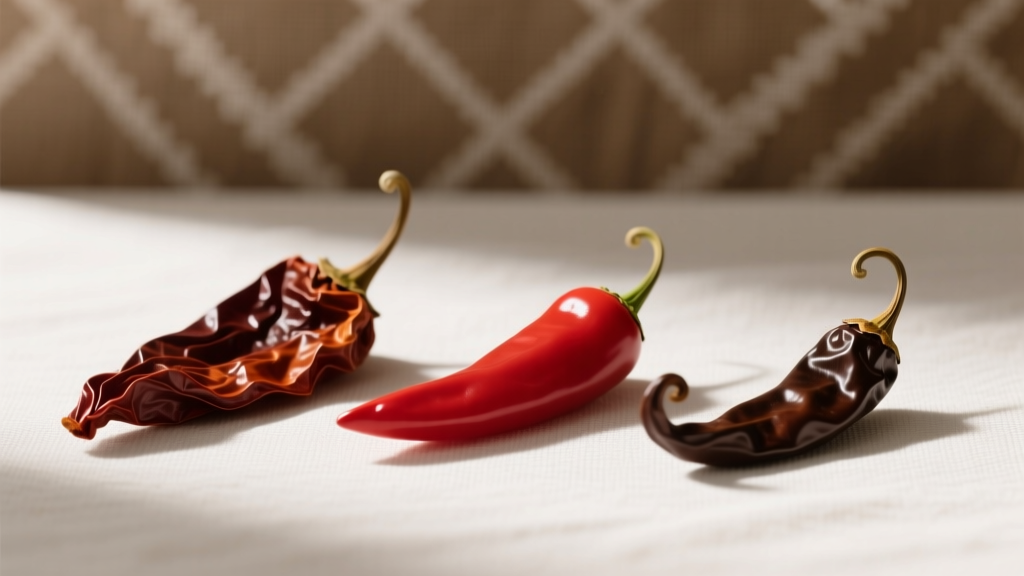
Ancho vs Guajillo vs Chipotle: Chile Guide
The Big Three of Mexican Dried Chiles
In Mexican cooking, dried chiles are the foundation of moles, salsas, adobos, and stews. The three most essential dried chiles — ancho, guajillo, and chipotle — form what many Mexican cooks call the "holy trinity." Understanding their differences transforms your cooking from good to authentic.
Ancho Chile (Dried Poblano)
- Heat level: Mild (1,000-2,000 Scoville units)
- Flavor: Sweet, fruity, with notes of dried plum, raisin, and chocolate
- Color: Deep burgundy to nearly black when dried
- Best uses: Mole poblano, enchilada sauces, adobo marinades
- Preparation: Remove seeds, toast lightly, soak in hot water 20 minutes
Guajillo Chile (Dried Mirasol)
- Heat level: Medium (2,500-5,000 Scoville units)
- Flavor: Bright, tangy, with berry-like fruitiness and green tea notes
- Color: Deep red, smooth glossy skin
- Best uses: Salsas, pozole, tamale sauces, carne asada marinades
- Preparation: Has tough skin — blend after soaking and strain for smooth sauces
Chipotle (Smoked Jalapeño)
- Heat level: Medium-hot (5,000-10,000 Scoville units)
- Flavor: Smoky, sweet, with deep tobacco and chocolate undertones
- Color: Brown, wrinkled, leathery texture
- Best uses: Salsa macha, barbacoa, bean dishes, any recipe needing smoke
- Two varieties: Chipotle meco (tan, smokier) and chipotle morita (dark red, sweeter)
Using Them Together
The magic of Mexican cooking often lies in combining chiles. A classic mole might use all three: ancho for sweetness and body, guajillo for brightness and color, and chipotle for depth and smokiness. Toast them on a dry comal, soak, blend, and strain for an incredibly complex sauce base.
More Articles
 Mastering the Classic American Potato Salad Recipe
Understanding the Pepper Scoville Scale
Mastering the Classic American Potato Salad Recipe
Understanding the Pepper Scoville Scale
 How To Repair Spices: Reviving Flavor, Aroma, and Potency in Your Pantry
 Orange Clove Pomander: Simple Holiday DIY Guide
 Bell Pepper Colors: Nutrition, Taste & Uses (2026)
 How to Cook Perfect Garlic Bread: Simple Recipe & Pro Tips
 Spaghetti with Tomato Sauce: 20-Minute Recipe (2026)
 What Are Sesame Seeds? Definition, Types, Uses & Benefits
 Allspice: Not a Blend But a Single Spice
 Spinach Ounces per Cup: Raw vs Cooked (2026)