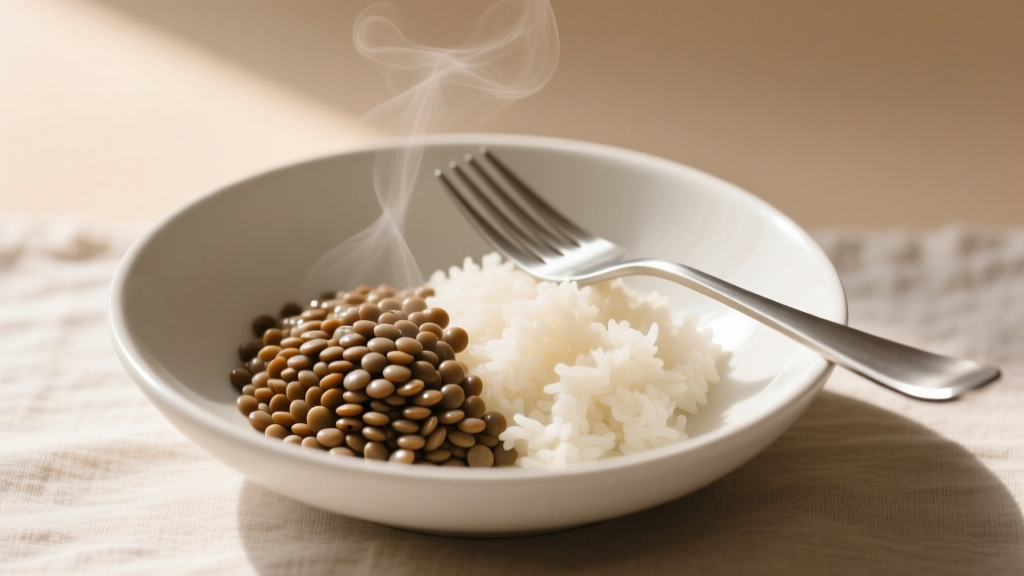
Lentils and Rice: Complete Protein Meal Guide
Why This Ancient Pairing Solves Modern Nutrition Challenges
Most home cooks treat lentils and rice as separate ingredients, missing their synergistic potential. When combined in a 1:1 ratio, they compensate for each other's amino acid deficiencies—lentils lack methionine while rice lacks lysine. This isn't just tradition; it's biochemistry validated by modern science. The University of Guelph study confirms this combination improves protein quality by reducing phenylalanine oxidation by up to 16%.
| Nutrient (per 1 cup) | Cooked Lentils | Cooked White Rice | Difference |
|---|---|---|---|
| Protein | 17.9g | 4.3g | +316% |
| Fiber | 15.6g | 0.63g | +2376% |
| Potassium | 730.6mg | 55.3mg | +1257% |
| Folate | 358mcg | 6mcg | +5867% |
Source: MyFoodData Nutrition Comparison. Folate data extrapolated from 100g values in PMC article PMC7073932
The Blood Sugar Revolution You're Missing
Replacing just half a serving of rice with lentils triggers measurable metabolic benefits. The National Post reports this simple swap lowers blood glucose by 20%—a finding replicated in ScienceDirect research showing 35% reduction when substituting potatoes. This isn't theoretical; it directly impacts daily meal planning for prediabetic individuals.
Cultural Wisdom Validated by Science
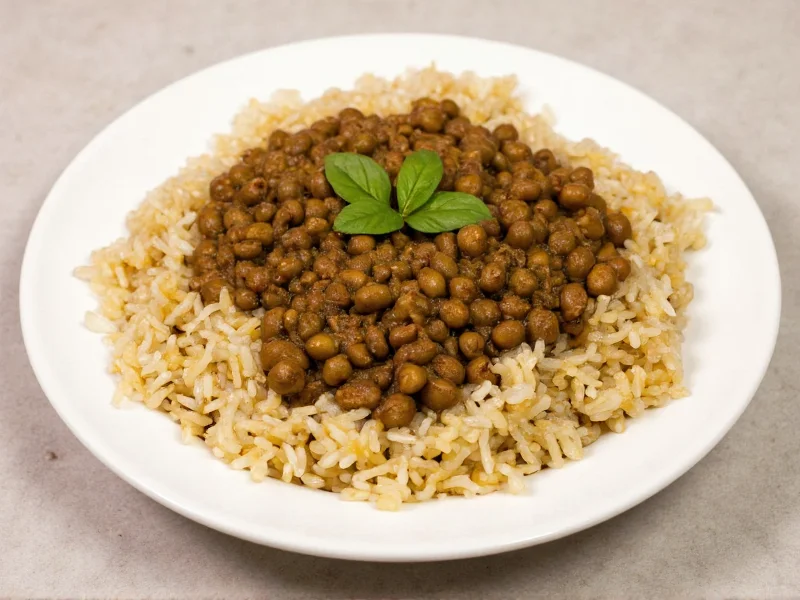
Mujadara, the Middle Eastern lentil-rice dish with caramelized onions, dates to a 1226 Iraqi cookbook. Its "pockmarked" appearance (lentils on rice) earned the Arabic name. Similarly, Indian khichdi evolved into British kedgeree when colonists added fish. These aren't just historical footnotes—they're early applications of protein complementation. The Hindu documents how these dishes provided complete nutrition during food scarcity.
When to Use (and When to Avoid) This Power Pair
Use this combination when:
- You need sustained energy for physical work (slow-digesting resistant starch)
- Managing blood glucose levels (per University of Guelph studies)
- Following plant-based diets (complete protein profile)
Avoid or modify when:
- Requiring rapid post-exercise glycogen replenishment (use rice alone)
- Managing irritable bowel syndrome (soak lentils 12+ hours to reduce oligosaccharides)
- Using canned lentils (sodium content negates potassium benefits)
Mastering the Technique: Beyond Basic Boiling
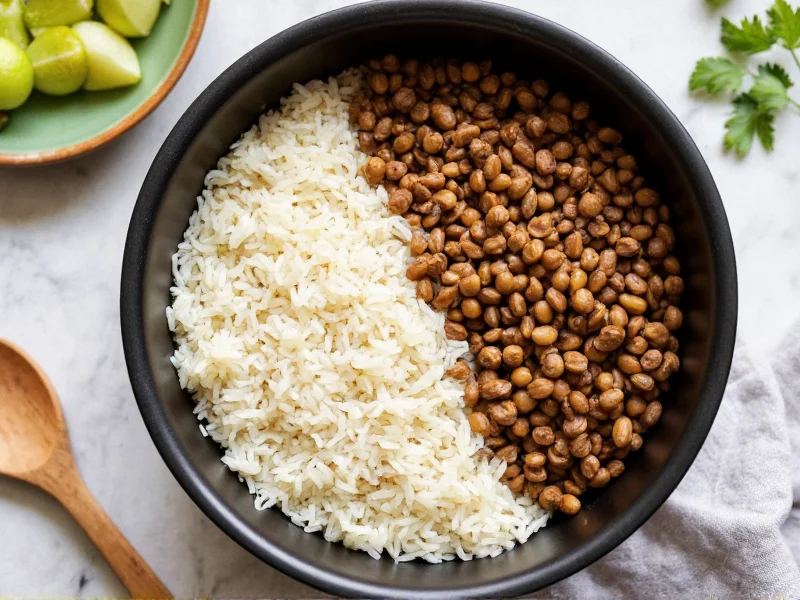
Professional chefs universally reject cooking lentils and rice separately. The Memoriediangelina method—sautéing aromatics first, adding pre-soaked lentils to the soffritto, then incorporating rice—creates superior flavor integration. Key adjustments:
- Liquid ratio: Use 2.5 cups liquid per 1 cup dry ingredients (not 3:1 like rice alone)
- Lentil selection: Black beluga lentils hold shape better than red varieties
- Critical step: Caramelized onions must reach deep amber color before adding to dish
For rice cooker adaptation, reduce liquid by 25% and add lentils after rice has absorbed initial moisture—prevents mushiness documented in Yummy Toddler Food testing.
Three Costly Mistakes Even Experienced Cooks Make
- Skipping the soak: Unsoaked lentils increase cooking time by 40%, causing rice to overcook (verified by Toriavey's Mujadara guide)
- Using the wrong rice: Long-grain white rice requires different timing than brown rice—substituting creates texture failure
- Ignoring acid balance: Adding tomatoes before lentils cook fully inhibits softening (pH sensitivity confirmed in PMC research)
Everything You Need to Know
Yes. Lentils lack methionine while rice lacks lysine. When combined in a 1:1 ratio, they provide all nine essential amino acids. Research in The Journal of Nutrition confirms this combination improves protein quality by reducing phenylalanine oxidation by up to 16%, making it comparable to animal proteins for vegetarians.
Replacing half a serving of rice with lentils lowers blood glucose levels by approximately 20%, according to University of Guelph research published in National Post. The resistant starch in lentils modulates postprandial glucose response, making this ideal for prediabetic individuals seeking stable energy.
Cool cooked lentils and rice within 2 hours and store in airtight containers. USDA Food Safety guidelines state it remains safe for 4-6 days refrigerated. For longer storage, freeze in portion-sized containers—thaw overnight in refrigerator. Never store at room temperature beyond 2 hours due to rapid bacterial growth in the starch-protein matrix.
Mushiness occurs from three errors: 1) Not soaking lentils (increases cooking time by 40%), 2) Using incorrect liquid ratios (requires 2.5:1 not 3:1), 3) Adding acid too early. As documented by Toriavey, soak lentils 8-12 hours, use 2.5 cups liquid per cup dry ingredients, and add tomatoes after lentils are half-cooked to maintain texture.
Yes, but with adjustments. Reduce liquid by 25% compared to standard recipes. Add rice first, let it absorb initial moisture, then add pre-soaked lentils. The Yummy Toddler Food tests show this prevents lentils from overcooking. Brown rice requires 45 minutes on 'white rice' setting; white rice needs 30 minutes. Never use 'quick cook' settings—they destroy lentil texture.
More Articles
 Tokyo Spinach Meaning: What It Really Is (Not Spinach!)
 Why Coriander Tastes Like Soap: Science & Solutions
 How Long to Cook a Poached Egg: Timing Guide
 New Orleans Turtle Soup: History & Modern Recipes
 Sumac: The Lemon-Like Spice Guide
 How Long Cooked Sweet Potato Lasts in Fridge: 3-5 Days
 What Is Fenugreek? Uses and Benefits
 Air Fryer Potatoes: When Technique Beats the Hype
 Fresh Ginger to Ground Ginger Conversion: Ratios & Tips
 Clove Seeds: Understanding the Common Misconception