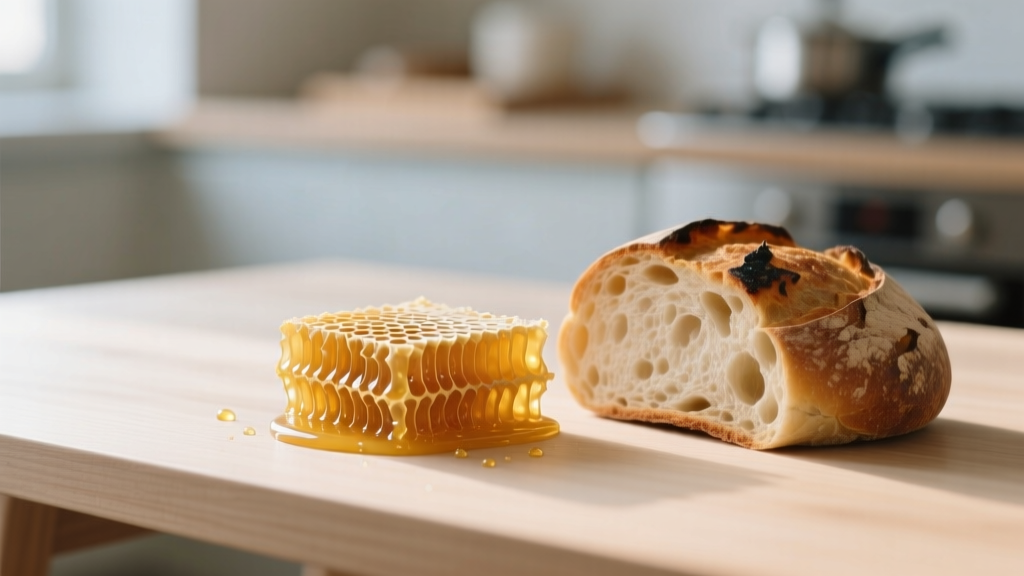
Honey and Bread: Safe Pairing Tips & Common Mistakes
Why the "Toxic Honey" Myth Persists (And Why It Doesn't Apply to Your Breakfast)
For decades, wellness circles have claimed heating honey creates "poisonous" compounds. The truth? Only extreme conditions matter. Honey develops trace hydroxymethylfurfural (HMF) above 250°F—but your toaster maxes out at 300°F for seconds, while bread surfaces stay under 150°F. For 99% of home use, honey temperature on bread is irrelevant to safety—only industrial caramelization matters. This misconception stems from misreading food chemistry studies where honey was boiled for hours.
Science vs. Sensation: What Actually Happens to Honey on Bread
Honey's composition changes minimally below 120°F. Above 140°F, enzymes deactivate—but this affects raw honey's minor pollen benefits, not safety. Crucially, HMF levels in properly stored honey stay under 10mg/kg (well below FDA's 40mg/kg safety limit per FDA Food Code 2022, Section 4-501.110) even when spread on warm bread. No credible health agency warns against this practice.
| Misconception | Scientific Reality | Everyday Relevance |
|---|---|---|
| "Heated honey becomes toxic" | HMF forms only above 250°F after prolonged heating | Toast surfaces hit 140-150°F max—nowhere near the threshold |
| "Raw honey loses all benefits when warm" | Enzymes degrade above 140°F, but nutritional value remains | Taste and calories unchanged; minor pollen loss irrelevant for most |
| "All honey is identical" | Floral source affects flavor, color, and trace compounds | Clover honey suits mild breads; buckwheat pairs with rye |
When Honey and Bread Actually Work Well Together
The magic happens at moderate temperatures. Warm bread (100-120°F) lets honey seep into crevices without altering chemistry. Avoid these pitfalls:
- Do: Spread on bread cooled 2 minutes after toasting
- Do: Pair mild honeys (acacia, orange blossom) with sourdough
- Avoid: Mixing with steaming-hot porridge (>160°F)
- Avoid: Using ultra-processed "honey blends" with corn syrup
Spotting Quality Honey: Skip the Hype, Check These Signs
"Raw" labels don't guarantee purity. Real red flags:
- Crystallization test: Pure honey granulates over time; fake versions stay liquid for years
- Water check: Drop in water—adulterated honey dissolves instantly; pure forms a bead
- Label traps: "Honey blend" or "honey-flavored" often means <50% real honey
Trusted producers list floral sources (e.g., "Manuka from New Zealand"). Price matters—true single-origin honey costs $10+/lb. If it's suspiciously cheap, it's likely cut with syrups.
When to Pause: Rare but Real Limitations
Two scenarios warrant caution:
- Baby safety: Never give honey (heated or not) to infants under 12 months due to botulism risk
- Extreme cooking: Avoid adding honey before broiling bread—it can burn above 350°F, creating bitter compounds
For everyone else? Enjoy freely. Professional bakers confirm honey-bread pairings in recipes from Greek melomakarona to Russian medovik cakes—none require "cool" application.
Everything You Need to Know
No credible evidence supports this. Honey develops harmful compounds only above 250°F after hours of heating—far beyond toast temperatures (max 150°F). Major health agencies like the FDA confirm normal use is safe.
Mild varieties like clover or wildflower work universally. For sourdough, try orange blossom; for hearty rye, use buckwheat honey. Avoid "honey blends"—check labels for "100% pure honey" to ensure no added syrups.
Perform the water test: Pure honey sinks as a bead; adulterated versions dissolve. Also, check for crystallization—real honey granulates within months. Trusted brands list floral sources and origin; prices under $5/lb often indicate syrup cuts.
Nutritional differences are minimal. Raw honey contains trace pollen (lost when heated), but no studies prove significant health impacts. Focus on flavor—raw versions offer nuanced tastes, but regular pure honey provides identical calories and sweetness for bread.
More Articles
 Air Fryer Frozen Cauliflower: Skip Thawing for Crisp Results
 Fresh vs Dried Turmeric: Which to Use When
 Can You Eat Cinnamon Sticks? Safety Guide
 Honey Garlic Pork: Reliable Recipe & Pro Tips
 Perfect Crock Pot Honey Garlic Chicken Thighs Recipe
 Star Anise vs Anise Seed: Key Differences (2026)
 Spice Strength and Shelf Life Guide
 Chipotle Meats Spicy Level Guide: Heat Ratings Explained
 Sesame Seed Types: White, Black & Golden Compared
 Garlic Butter Sauce: Simple Uses & Pro Tips