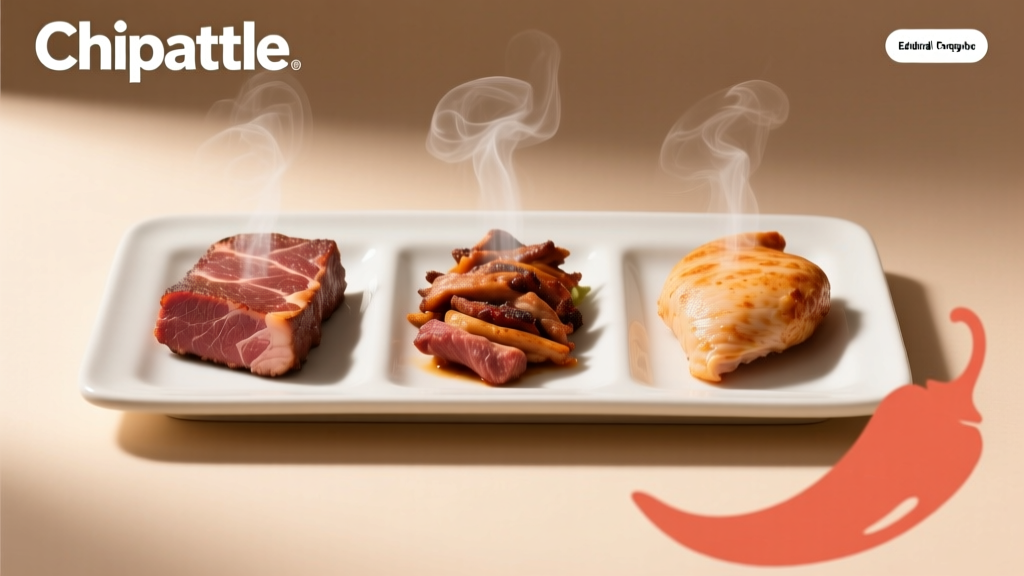
Chipotle Meats Spicy Level Guide: Heat Ratings Explained
Chipotle Meats Are Not Defined by Heat—They’re Defined by Smoke and Fat Absorption
In most homes, the perceived spiciness of chipotle-seasoned meats isn’t determined by the chile itself. It’s determined by how much rendered fat stays in contact with the meat during storage and reheating. Chipotle powder or adobo sauce doesn’t ‘infuse’ heat evenly; it coats surfaces and migrates slowly through lipids—not water. So when someone pulls pre-marinated chipotle chicken from the fridge and reheats it in a dry pan, they’re tasting concentrated capsaicin trapped in residual oil—not the original spice level on the label. That mismatch explains why dinner guests say ‘this is way hotter than last time,’ even though the package hasn’t changed. The error isn’t in measurement—it’s in assuming heat behaves like seasoning, not like a lipid-soluble compound.
The chipotle heat threshold becomes irrelevant when the meat is served within two hours of cooking and eaten hot. In those cases, surface capsaicin hasn’t had time to migrate deeper or concentrate at the interface between fat and muscle fibers. But that same irrelevance vanishes if the dish sits overnight—or gets frozen and thawed—because capsaicin redistributes across fat layers during temperature shifts. This isn’t theoretical: it’s observable in any home fridge where chipotle braised pork sits beside leftover carnitas. The former tastes sharper the next day; the latter mellows. Not because of added sugar or acid—but because fat crystallization slows migration, while slow thawing creates micro-channels for capsaicin to pool near the surface.
First invalid fixation: comparing chipotle heat to jalapeño Scoville units. That number applies only to dried, ground chiles—not to adobo sauce, smoked meat marinades, or rehydrated paste used in home prep. Second invalid fixation: adjusting marinating time to ‘control heat.’ In practice, marinating beyond 4 hours rarely increases perceived burn in lean cuts—because capsaicin penetration plateaus once surface fat saturates. What changes instead is tang and smoke depth, not capsaicin load. Neither metric correlates with final mouthfeel intensity. Both distract from what actually shifts heat perception: reheating method, fat ratio, and serving temperature—not chile quantity or soak duration.
The real constraint isn’t spice tolerance or recipe fidelity—it’s refrigerator humidity. Most home fridges run at 35–40% relative humidity, which dries exposed meat surfaces while leaving fat intact. That creates a moisture gradient: dry outer fibers pull capsaicin outward as water evaporates, concentrating burn at the bite point. Meanwhile, the interior remains milder. This effect disappears in vacuum-sealed or oil-covered storage—but those aren’t typical in daily use. So the same chipotle beef taco filling can deliver sharp, sudden heat when scooped from a shallow bowl left uncovered overnight, yet feel balanced when portioned into oiled ramekins. No ingredient changed—just ambient moisture behavior.
When serving kids or guests with low tolerance, skip dilution or dairy pairing—and instead serve the meat warm (not hot) and cut against the grain. That reduces fiber length and capsicum release per bite. When meal-prepping for five days, freeze portions in single-layer oil films—not stacked or wrapped—so capsaicin doesn’t accumulate at shared interfaces. When using canned chipotle in adobo, discard the sauce’s top 1/4 inch: that’s where capsaicin concentrates due to evaporation during storage, not fermentation. None of these are ‘rules.’ They’re pressure-release points where heat perception detaches from ingredient labels and reattaches to physical behavior.
Here’s the quieter truth: in a home kitchen, chipotle heat is rarely ruined by over-spicing. It’s undermined by inconsistent fat handling—whether from using lean ground turkey instead of chuck, skipping resting time before slicing, or reheating in a nonstick pan without added oil. Those choices alter capsaicin mobility more than doubling the chipotle dose ever could. You don’t need to ‘tame’ the chile—you need to stop pretending it behaves like cumin or garlic powder. It doesn’t diffuse. It drifts. And drift depends on medium, not minutes.
| What people fixate on | What it affects | When it matters | When it doesn't |
|---|---|---|---|
| Chipotle Scoville rating on packaging | Label compliance, not mouthfeel | When comparing raw chile powders for dry rubs | When using canned adobo or pre-marinated meats |
| Marinating time (e.g., 2 hrs vs. 12 hrs) | Smoke depth and acidity, not capsaicin load | In sous-vide applications below 140°F | In standard fridge marination of whole cuts |
| Number of chipotle peppers added | Fat-soluble concentration ceiling | When using lean proteins (<10% fat) | When cooking fatty cuts like brisket or pork shoulder |
| Adobo sauce viscosity | Surface adhesion, not total capsaicin | When grilling or air-frying without oil | When simmering in broth or braising liquid |
Quick verdicts for home cooks
- If reheating leftovers in a microwave, add 1 tsp oil before heating—it prevents capsaicin pooling at the surface.
- For weeknight tacos, use chipotle adobo paste—not whole peppers—to avoid uneven heat distribution in small batches.
- When serving elders or sensitive eaters, slice chipotle beef thinly across the grain—even if it’s already cooked.
- Don’t rinse chipotle marinade off before cooking—it removes surface capsaicin but leaves deeper, slower-releasing heat intact.
- If using ground chipotle instead of canned, mix it into melted fat first—not dry spices—to anchor capsaicin mobility.
- Freeze chipotle meats flat in oil-covered sheets, not stacked—prevents inter-layer capsaicin migration during thaw.
Frequently asked questions
Why do people think chipotle heat scales linearly with pepper count?
Because capsaicin is measured in isolation—but in meat, it binds to fat, migrates unevenly, and expresses differently depending on cut, cook method, and storage. More peppers ≠ more burn if fat content or reheating changes.
Is it actually necessary to remove seeds before using chipotle peppers?
No. Seeds carry negligible capsaicin—the burn lives in the placenta and inner membranes. Removing them does almost nothing to reduce heat in cooked meats.
What happens if you ignore adobo sauce consistency when swapping brands?
You’ll get unpredictable surface adhesion: thin sauce slides off during roasting; thick sauce chars and concentrates capsaicin at contact points—altering bite-level intensity without changing total dose.
More Articles
 Calories in 1 Tsp Chia Seeds: Exact Count & Nutrition Facts
 Potato Soup: Why Russets Beat Red Potatoes (2026)
 Kitchen Trends 2026: Smart Integration
Sumac Spice: Tangy Flavor Guide and Uses
Kitchen Trends 2026: Smart Integration
Sumac Spice: Tangy Flavor Guide and Uses
 Japanese Sweet Potato Calories: Complete Nutritional Guide
 Cardamom: Types, Benefits & Cooking Uses
 Poblano vs Pasilla Pepper: Key Differences Explained
 What Is Fenugreek? Uses and Benefits
 Chinese Five Spice Powder: What's in It and How to Make It
 Pink Peppercorn: Flavor, Uses & Cooking Tips