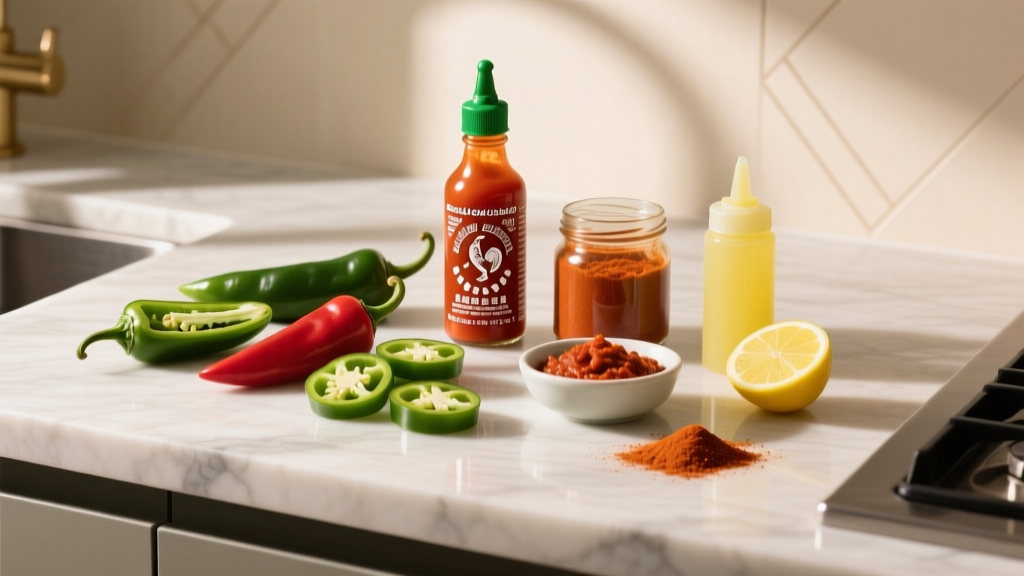
Best Chili Sauce Substitutes When You're Out
Chili Sauce Substitute Isn’t About Heat — It’s About What Stays Unchanged When You Swap
In most homes, the idea that chili sauce substitute means matching Scoville units or replicating ‘spiciness’ comes from restaurant menus, cooking shows, and ingredient labels that shout ‘spicy!’ in bold font. That framing sticks because it’s simple — but it misfires in practice. When a parent swaps sriracha for gochujang in a quick stir-fry for picky kids, or when someone grabs sambal oelek instead of chili garlic sauce while rushing dinner after work, the real friction isn’t capsaicin levels. It’s texture collapse in the pan, unexpected sweetness overwhelming soy marinade, or fermented funk clashing with mild cheese in a dip. These aren’t ‘mistakes’. They’re predictable outcomes of applying a heat-first logic to a function-first ingredient.
The core judgment is narrow and absolute: Chili sauce substitute only matters when the sauce contributes non-heat structure — viscosity, acidity, umami depth, or fermentation-derived complexity — to the final dish’s mouthfeel or balance. Outside those conditions, almost any red-chili condiment works. In many homes, this boundary is crossed less than once per week — often only during weekend meal prep or when hosting. On weekday tacos, frozen dumpling dipping, or scrambled eggs with chili crisp, heat delivery alone is sufficient. The sauce functions as flavor punctuation, not architectural support. That’s why ‘substitute fails’ rarely happen on Tuesday night — they cluster around moments where texture or pH shifts visibly alter what the dish *is*, not just how hot it feels.
Two common fixations are actively unhelpful. First: ‘Is it fermented?’ — irrelevant unless you’re layering into braises or long-simmered stews where microbial acidity stabilizes other flavors. Second: ‘Does it contain garlic or vinegar?’ — only consequential if your base dish already has dominant allium or acid notes (e.g., a vinaigrette-based slaw or garlic-heavy marinade). In most everyday cases, these components either vanish into background noise or get masked by stronger seasonings. Neither factor changes outcome unless the dish is structurally minimalist — like a three-ingredient noodle toss or raw vegetable dip — where every element carries weight.
The real constraint isn’t heat level or origin story — it’s fridge shelf life post-opening. Most chili sauces degrade in viscosity and brightness within 3–4 weeks once exposed to air, especially low-sugar or no-preservative versions. In homes without consistent weekly usage, this means the ‘substitute’ you buy ‘just in case’ often sits idle until its texture thickens unpredictably or its sharpness dulls. That shift — not ingredient pedigree — determines whether your ‘swap’ delivers expected consistency or surprises you with gumminess or flatness mid-recipe. Budget, time, and allergy concerns rarely trigger substitution failure; inconsistent usage patterns do.
Over the past year, more home cooks have quietly stopped checking ‘chili sauce substitute’ guides before shopping — not because they’ve mastered the category, but because they’ve noticed their own patterns: they reach for whatever’s open, use it up fast, and adjust seasoning at the end. There’s less cross-referencing of labels and more direct tasting before adding. This isn’t expertise — it’s adaptation to real-world rhythm. The signal isn’t rising search volume or trending alternatives. It’s quieter: fewer abandoned jars, more single-brand loyalty across meals, and recipes being modified *after* tasting rather than pre-planned around sauce specs.
Here’s where judgment splits — not by brand or region, but by dish architecture:
• If the sauce goes into a simmering broth or slow-cooked braise, swap only within same fermentation family (e.g., gochujang ↔ doubanjiang, not ↔ sambal).
• If it’s stirred into cold noodles or used as a finishing drizzle, viscosity and oil separation matter more than origin — sambal oelek and chili crisp behave similarly here.
• If it’s mixed into mayo or cream cheese for a dip, sugar content and pH dominate — low-acid, high-sugar sauces (like some Thai sweet chilis) destabilize dairy faster.
• If it’s brushed onto grilled meat minutes before serving, volatile aromatics (garlic, lime, fish sauce) define success — not capsaicin concentration.
• If it’s added to baked goods (e.g., chili-chocolate brownies), only dried chili powders or pastes with neutral fat profiles work reliably.
• If it’s used in a child’s lunchbox dip, stability and absence of fish/shellfish derivatives outweigh all other traits.
| What people fixate on | What it affects | When it matters | When it doesn't |
|---|---|---|---|
| Scoville rating / heat level | Perceived spiciness intensity | When serving heat-sensitive eaters (e.g., young children, elderly) | In dishes with dominant fat, sugar, or acid (e.g., fried rice, satay marinade, mango salsa) |
| Fermentation status | Umami depth & acidity persistence | In long-simmered stews or fermented-based dressings | In flash-fried dishes, cold dips, or quick sautés under 90 seconds |
| Garlic or ginger presence | Aromatic layering & freshness perception | In raw applications (dips, garnishes, uncooked dressings) | In dishes with strong competing aromatics (cumin-heavy curries, smoked paprika rubs) |
| Sugar content | Browning behavior & dairy compatibility | In glazes, baked goods, or dairy-based dips | In soups, broths, or high-fat stir-fries where sugar caramelizes invisibly |
Quick verdicts for home cooks
- If you’re making dumpling dipping sauce and only have sambal oelek: thin it with rice vinegar — skip the sugar debate entirely.
- If your gochujang jar ran dry mid-braise: use doubanjiang, but reduce added salt — don’t chase ‘similar heat’.
- If you’re swapping sriracha into a Thai-style dressing: expect sharper acidity — add palm sugar, not more chili.
- If you’re using chili crisp in place of chili garlic sauce for noodles: drain excess oil first — texture trumps heat here.
- If your child refuses anything ‘too spicy’: choose low-ferment, no-fish-sauce options — heat level is secondary to aroma shock.
- If you’re baking with chili: avoid pastes with vinegar or fish sauce — dried ancho or chipotle powder gives cleaner integration.
Frequently asked questions
Why do people think chili sauce substitute is about matching heat first?
Because packaging, recipe blogs, and YouTube thumbnails emphasize ‘spicy’ as the primary trait — obscuring how viscosity, acidity, and fat content shape real-world performance.
Is it actually necessary to match fermentation type when substituting?
No — unless the dish relies on slow-developing umami or pH-driven tenderizing, like Korean braises or Vietnamese pho broths.
What happens if you ignore sugar content in chili sauce substitution?
You risk burnt glazes, split dairy dips, or cloying balance in savory dishes — especially noticeable in baked or grilled applications.
More Articles
 Spice History: Origins & Trade Routes
 How Long to Cook a Poached Egg: Timing Guide
 How to Cook Tofu in a Pan: Crispy Results Every Time
 Turmeric Health Benefits: Updated Guide
 How to Store Turmeric Root: 3 Best Methods for Freshness
 Half Sweet Potato Calories: Exact Count + Tips
 Where to Find Chia Seeds in Grocery Stores: Aisle Guide
 Lentils and Spinach: Iron Absorption Boost Guide
 Cinnamon vs Cassia: Know the Difference
 Fenugreek: Sweet Maple Aroma for Savory Dishes