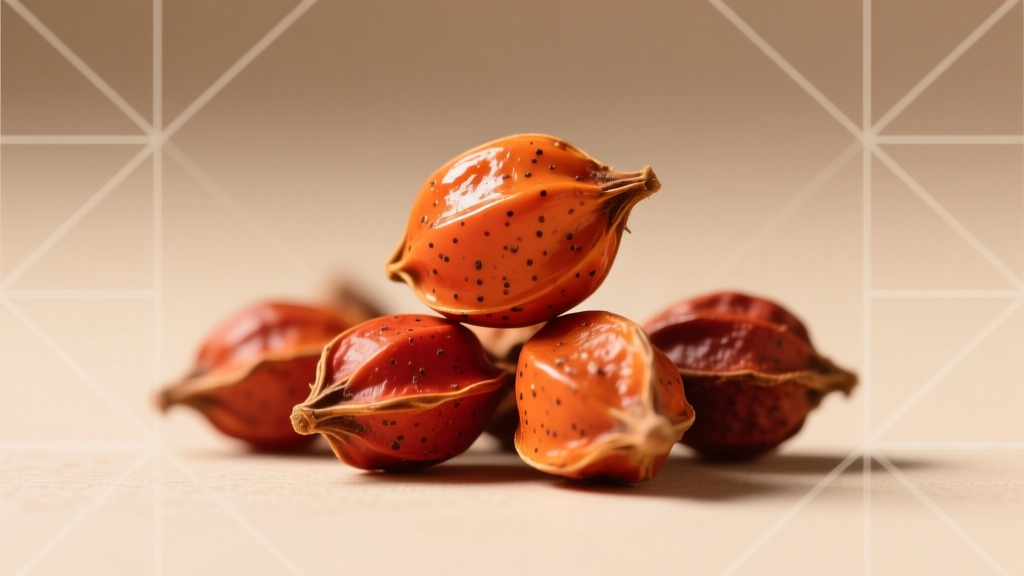
Achiote vs Annatto: Same Seed, Different Names Explained
Achiote and Annatto Are the Same Ingredient — And That’s Why the Distinction Rarely Matters
In many homes, the achiote vs annatto question begins with a label mismatch: one jar says "achiote paste", another "annatto powder", and a third "achiote oil" — all sold side-by-side in the same supermarket aisle. This visual fragmentation creates the illusion of meaningful difference. The real consequence? People buy three versions 'just in case', then store them half-used for months, only to discover later that two have oxidized or clumped — not from age, but from inconsistent exposure to light and air during repeated opening. In a home kitchen, confusion over naming rarely ruins a dish; inconsistency in storage conditions does.
The distinction becomes irrelevant when you’re working with pre-ground commercial product — which covers >90% of household use. Whether labeled 'achiote' or 'annatto', what sits on your shelf is almost always Bixa orellana seed extract, standardized for color intensity and solubility. No home cook measures carotenoid concentration or checks for co-extracted flavonoids. What matters is whether the powder dissolves cleanly in oil or water, and whether it stains your fingers orange (it will). In this context, arguing about nomenclature is like debating whether 'cumin' should be spelled 'cummin' — orthographic, not functional.
First invalid fixation: whether 'achiote' implies traditional preparation (e.g., toasted seeds ground with garlic and vinegar) while 'annatto' signals industrial processing. Reality: most U.S.-sold 'achiote paste' is reconstituted powder with preservatives, and most 'annatto powder' is milled from the same seeds used in artisanal Central American batches. Second invalid fixation: whether one form delivers 'more authentic flavor'. Flavor in both cases is faintly peppery and earthy — never dominant — and is consistently overwhelmed by cumin, oregano, or citrus in actual recipes. Neither version carries enough volatile compounds to register as 'distinctive' once heated past 140°F.
The real constraint isn’t botany or branding — it’s fridge space and pantry turnover. Achiote paste spoils faster than powder (especially if unpasteurized), yet many households keep both because labels suggest complementary roles. But in practice, paste offers no advantage unless you’re making large weekly batches of recado rojo and lack freezer access. Powder lasts 18–24 months unopened; paste lasts 6–8 weeks refrigerated after opening — a gap that forces trade-offs no recipe ever acknowledges. If your family uses less than one teaspoon per week, powder eliminates spoilage risk entirely.
Here’s how judgment shifts across real-world conditions: When reheating leftover rice dishes, annatto powder stirred into warm oil works identically to achiote paste — color and dispersion are indistinguishable. When marinating chicken for grilling, the paste’s acidity adds negligible tang compared to lime juice already in the mix. When substituting in vegan cheese-making, only the oil-soluble fraction matters — and both forms deliver it equally well if properly bloomed. When adapting a Yucatán recipe written for fresh-ground seeds, neither commercial powder nor paste replicates the texture — so the choice between them is moot. When scaling down a family recipe to serve two, paste introduces unnecessary moisture variability; powder gives precise dosing.
Stop asking 'which one is correct'. Ask instead: 'Which one disappears fastest from my pantry without going bad?' That single question resolves 95% of home-use decisions. If you open it less than once a month, choose powder. If you use it weekly and have reliable refrigeration, paste adds convenience — not flavor depth. In a home kitchen, X is rarely the thing that ruins Y: inconsistent blooming temperature is far more likely to mute color than choosing 'wrong' label. In a home kitchen, X is rarely the thing that ruins Y: misreading '1 tsp' as '1 tbsp' causes more hue variation than any naming debate. In a home kitchen, X is rarely the thing that ruins Y: using old, faded powder causes duller results than switching brands.
| What people fixate on | What it affects | When it matters | When it doesn't |
|---|---|---|---|
| Label wording ('achiote' vs 'annatto') | Perceived authenticity and sourcing | When sourcing directly from small-batch producers who disclose origin and milling method | In >95% of supermarket purchases, where both names refer to identical processed extracts |
| Paste vs powder form | Moisture content and shelf stability | When cooking for large groups weekly and storing opened paste under strict refrigeration | For households using <1 tsp/week — powder avoids spoilage and dosing drift |
| Color intensity claims on packaging | Initial visual impact in oil or broth | When preparing dishes where appearance is primary (e.g., ceremonial rice) | In stews or braises where color deepens during long cooking regardless of starting strength |
| Presence of added spices in paste | Flavor layering complexity | When building a base for recado rojo where garlic/onion/cumin ratios are tightly calibrated | In marinades or rubs where other seasonings dominate — added aromatics get lost |
Quick verdicts for home cooks
- If your last jar sat untouched for six months, switch to powder — it won’t degrade mid-pantry.
- When substituting for saffron in paella, either form works — but powder blends more evenly into broth.
- If your toddler refuses orange-stained food, skip both — color strength has zero correlation with allergen risk.
- When doubling a recipe, powder lets you scale precisely; paste introduces variable water content.
- If your spice rack lacks airflow and gets direct sunlight, powder outperforms paste every time.
- When following a Yucatán recipe that calls for 'fresh achiote', neither store-bought option replicates it — use powder and add extra garlic.
Frequently asked questions
Why do people think achiote paste is 'stronger' than annatto powder?
Because paste feels more concentrated and oily — but its strength comes from carrier oil, not pigment density. Once dispersed, both deliver near-identical color yield per gram.
Is it actually necessary to bloom achiote or annatto before use?
Only if you want full color release — but skipping bloom doesn’t ruin flavor. Many home cooks stir powder directly into simmering liquid with no visible loss of hue.
What happens if you ignore the 'refrigerate after opening' note on achiote paste?
It darkens, separates, and develops a faint fermented tang — harmless but perceptibly off in delicate applications like rice or fish.
Why do some labels say 'natural color' while others say 'spice'?
It reflects FDA labeling categories, not ingredient differences — both refer to Bixa orellana extract, just classified differently based on concentration and intended use.
Does organic certification change how achiote and annatto behave in cooking?
No — organic and conventional versions behave identically in dispersion, heat stability, and staining power. Certification affects sourcing, not performance.
More Articles
 Perfect Potato Rolls Recipe: Soft Homemade Dinner Rolls
 Cumin vs Coriander: Differences & Pairings
 How to Start Kitchen Tips: Practical, Actionable Foundations for Every Home Cook
 Ajwain Seeds: Bold Thyme-like Digestive Aid
 Cinnamon Bark vs Ground Cinnamon: Cooking & Health (2026)
 Best Pearl Onion Substitutes: Practical Cooking Guide
 How to Grow Garlic from a Bulb: Step-by-Step Guide
 Lentil and Sweet Potato: Nutrition Pairing Guide
 Cauliflower Freshness Signs & Storage Tips
 Costco Grain & Celery Salad Nutrition Facts Explained