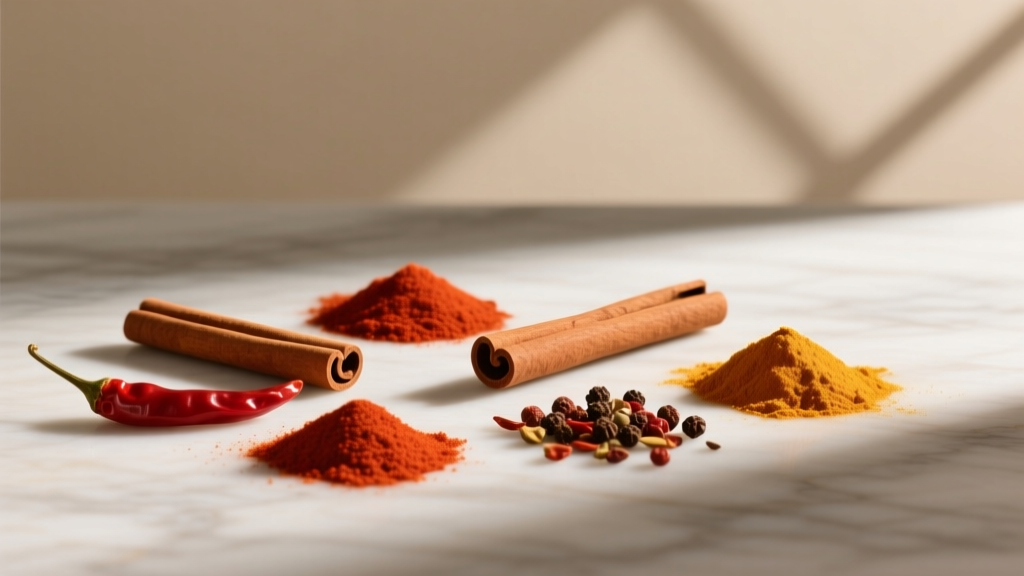
Red Spices: Types, Uses, and Benefits Explained
Red Spices Aren’t About Heat—They’re About Timing and Threshold
Most people assume red spices—paprika, cayenne, chipotle, gochugaru, Kashmiri chili—exist on a single spectrum: mild to hot. That assumption shapes how they’re stored, measured, even bought. But in practice, this scale collapses the moment heat meets fat. A teaspoon of smoked paprika stirred into cold oil behaves nothing like the same spoonful tossed into shimmering ghee at 180°C. The result isn’t just flavor shift—it’s aroma loss, bitterness onset, or unexpected sweetness. Families report ‘flat-tasting stews’ or ‘burnt-tinged curries’ not because they used the wrong spice, but because they treated all red spices as interchangeable units of heat, ignoring how each reacts to thermal thresholds unique to their stovetop, pan material, and cooking rhythm.
The core judgment is narrow and situational: Red spice identity matters only when fat temperature exceeds 160°C—and only if the dish relies on volatile top-notes (like roasted tomato depth or dried chile fruitiness) for its character. Below that threshold—or in water-based, long-simmered dishes like lentil soups or tomato sauces—the distinction between Hungarian paprika and Korean gochugaru rarely registers. In many homes, the difference disappears entirely when spices are ground fresh from whole dried chiles versus pre-ground supermarket jars. What survives isn’t ‘authenticity’—it’s whether the compound capsaicin stayed soluble, or whether the volatile oils volatilized before contact with liquid. That’s not about origin or region. It’s about physics in your pot.
Two common fixations waste mental bandwidth. First: ‘Which red spice has the highest Scoville rating?’ Irrelevant—unless you’re tasting raw powder off a spoon. In cooked food, capsaicin disperses, binds to fats, and degrades with time and pH. Second: ‘Should I toast red spices dry before adding oil?’ Often unnecessary—and sometimes counterproductive. Toasting works only when the spice is coarse, dry, and heated *before* fat enters; in home kitchens, where pans heat unevenly and attention splits between multiple tasks, dry-toasting frequently leads to scorched particles that impart acridness, not depth. Neither question changes the outcome unless the dish is built around raw or minimally cooked applications—like finishing dusts or quick stir-fries over high flame.
The real constraint isn’t heat level or origin—it’s storage stability under household conditions. Red spices degrade fastest when exposed to light, air, and ambient humidity—not time alone. A jar of cayenne left on a sunny windowsill loses aromatic potency in under three months, while the same spice in an opaque, sealed container in a cool pantry remains functional for nine. Most homes lack dedicated spice cabinets; instead, spices sit near stoves, above microwaves, or in open racks. That environment doesn’t discriminate between ‘premium’ and ‘standard’ grades—it accelerates oxidation uniformly across all red powders. So the choice isn’t ‘which brand to buy,’ but ‘where to place the jar once you do.’ That decision affects aroma retention more than any label claim.
Contrary to what cooking blogs imply, red spice substitution isn’t about matching heat units—it’s about matching thermal behavior. Gochugaru added at the start of a kimchi brine functions differently than when folded into a finished bibimbap topping. Paprika stirred into cold butter for compound butter delivers different notes than when bloomed in hot oil for paella. Chipotle powder in a slow-cooked chili gains smokiness gradually; in a quick vinaigrette, it reads as sharp and medicinal. These aren’t ‘mistakes’—they’re physics-driven outcomes. Lately, home cooks posting on community forums increasingly describe adjusting spice timing *before* swapping varieties. They’re not asking ‘What’s the best substitute?’ but ‘When should I add it so it doesn’t taste burnt?’ That subtle pivot signals a quiet shift—from ingredient obsession to process calibration.
Over the past year, search patterns show rising queries like ‘why does my paprika taste bitter’ or ‘gochugaru vs cayenne in stew’—not ‘how to make Korean chili paste.’ This reflects a growing awareness that red spices don’t behave like salt or sugar. They’re reactive agents, not static seasonings. Their impact emerges from interaction: with oil, with acid, with time, with surface temperature. The confusion isn’t about culture or geography—it’s about misreading them as flavor additives rather than thermal catalysts. That misunderstanding persists because packaging emphasizes color and heat, not volatility or solubility windows. And because no one tells you that the same spoonful can be aromatic, flat, or harsh—depending solely on whether your pan was 150°C or 175°C when it hit the oil.
| What people fixate on | What it affects | When it matters | When it doesn't |
|---|---|---|---|
| Scoville rating | Bitterness onset in oil | Quick sautés over high heat | Simmered soups or braises >45 min |
| Country of origin | Aroma complexity (smoke, fruit, earth) | Dishes served raw or barely warmed | Stewed beans, tomato sauces, rice pilafs |
| Grind fineness | Rate of oil bloom & particle burn | Frying in shallow oil (e.g., tempering) | Mixing into doughs, batters, or marinades |
| Smoked vs unsmoked | Smoke note dominance in final dish | Dishes with short cook time (<3 min) | Long-cooked stews where smoke dissipates |
Quick verdicts for home cooks
- If your curry tastes acrid, reduce red spice quantity *and* lower oil heat—don’t switch brands.
- For weeknight tomato sauce, generic paprika works fine; save gochugaru for garnish or cold dressings.
- When making chili, use chipotle powder early—but add cayenne only in the last 5 minutes to preserve brightness.
- If your spice rack gets direct sunlight, replace all red powders every 4 months regardless of ‘best by’ date.
- In baked goods with red spice, mix it into dry ingredients—not melted butter—to avoid premature oil bloom.
- For kids’ meals, choose mild paprika over ‘low-heat’ cayenne: the latter still carries sharp volatile oils that linger longer.
Frequently asked questions
Why do people think red spices must be toasted before use?
Because traditional techniques emphasize dry-toasting whole chiles—but pre-ground red spices oxidize faster when heated without fat, often yielding bitterness instead of depth.
Is it actually necessary to bloom red spices in oil?
No—if the dish contains ample fat later (like coconut milk or cheese), blooming upfront adds little; it only matters when oil is the primary fat carrier and heat is high.
What happens if you ignore the smoke point of your oil when using red spices?
You get muted aroma and a faint ash-like note—not increased heat, but diminished complexity and occasional bitterness.
More Articles
 Potato Recipes: Simple Dishes for Any Meal
 Five Spice Powder: Ingredients and Uses
 Where to Find Chia Seeds in Grocery Stores: Complete Guide
 Costco Raw Honey: Authenticity Guide & Usage Tips
 Teaspoons in a Tablespoon: Spice Conversion Chart
Fenugreek: Leaves and Seeds as Dual Spice
Teaspoons in a Tablespoon: Spice Conversion Chart
Fenugreek: Leaves and Seeds as Dual Spice
 Fenugreek Seeds: Benefits and Cooking Tips
 Long Pepper: The Forgotten Ancestor of Black Pepper
 Sichuan Peppercorn: Numbing Spice Guide
 Vegetable Soup with Tomato Soup: Real Recipe & Tips