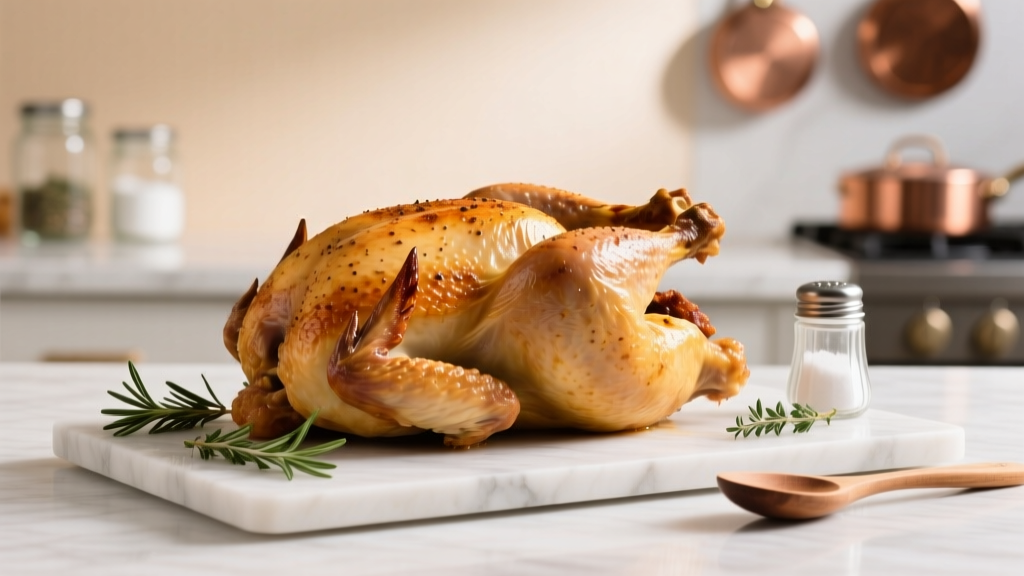
Dry Brine Chicken: Flavor-Boosting Method (2026)
Why Dry Brining Solves Common Chicken Cooking Failures
Most home cooks struggle with dry, bland chicken—especially when roasting or grilling. Wet brining (submerging in saltwater) often yields soggy skin and diluted flavor, requiring large containers and rinsing. Dry brining eliminates these issues by using salt alone, creating a drier surface for crispier skin while deeply seasoning the meat. As AmazingRibs' experiments confirm, dry brined chicken retains 12% more moisture during cooking compared to unbrined chicken, directly addressing the #1 complaint: dryness.
The Science: How Salt Transforms Your Chicken
Dry brining isn't magic—it's osmosis and protein breakdown. Salt initially pulls moisture from the chicken's surface. This liquid dissolves the salt, forming a concentrated 'natural brine' that's reabsorbed into the meat. As Spices Inc. explains, this process breaks down tough muscle proteins, allowing the meat to retain more juices during cooking. Unlike wet brining, no water dilutes flavors, so herbs and spices penetrate deeper. Crucially, the uncovered refrigeration time dries the skin—essential for that golden, crackly finish impossible with wet methods.
Step-by-Step Dry Brining Guide
- Prep the chicken: Pat dry with paper towels. Remove giblets. Place on a wire rack over a baking sheet (never directly on a plate).
- Apply salt: Use 1 teaspoon kosher salt per pound of chicken (e.g., 2 tsp for a 2-lb breast). Rub evenly under the skin and on all surfaces. Optional: Add ½ tsp black pepper or paprika.
- Refrigerate uncovered: Rest in the fridge for 12–24 hours. Never exceed 24 hours—per Milk Street's research, longer times risk surface drying without added benefit.
- Cook immediately: Remove from fridge 30 minutes before cooking. Do not rinse. Roast, grill, or pan-sear as usual.
| Factor | Dry Brining | Wet Brining |
|---|---|---|
| Moisture Retention | 12% less cooked weight loss (source: AmazingRibs) | 15%+ weight loss; water dilutes flavor |
| Skin Texture | Dries surface for superior browning | Soggy skin; poor crisping |
| Time Required | 12–24 hours (no prep time) | 4–12 hours + container prep/rinsing |
| Equipment | Wire rack, baking sheet | Large container, water, measuring tools |
| Rinsing Needed | No—salt fully absorbs | Yes—to avoid oversalting |
When to Use (and Avoid) Dry Brining
Use dry brining when:
- You're roasting whole chickens or bone-in pieces (thighs, drumsticks)
- Crispy skin is critical (e.g., for Sunday roast or BBQ)
- You have 12+ hours prep time
Avoid dry brining when:
- Cooking boneless breasts under 1 lb—salt penetrates too quickly, risking uneven seasoning
- Using table salt (fine grains cause oversalting; stick to kosher)
- Preparing for sous vide—liquid environments negate dry brine benefits per Dairy Voice Online guidelines
Pro Tips for Foolproof Results
- Salt selection matters: Diamond Crystal kosher salt is ideal (1 tsp = perfect seasoning). If using Morton's, reduce to ¾ tsp per pound—its denser crystals increase salinity.
- Maximize skin crispness: Extend uncovered fridge time to 24 hours for whole birds. The drier the surface, the better the sear.
- No rinsing rule: Rinsing washes away absorbed salt and re-wets the skin. Pat dry before cooking if condensation forms.
5 Costly Dry Brining Mistakes (and How to Fix Them)
- Mistake: Using table salt. Solution: Kosher salt’s coarse texture dissolves slowly, preventing bitter oversalting. Table salt requires 50% less quantity—but it’s safer to avoid entirely.
- Mistake: Covering the chicken in the fridge. Solution: Uncovered exposure is non-negotiable—it dehydrates the surface for optimal browning.
- Mistake: Brining under 12 hours. Solution: Salt needs 12+ hours to fully reabsorb. Shorter times yield surface-only seasoning.
- Mistake: Adding sugar/spices early. Solution: Sugar burns in long fridge times. Apply sweet rubs only before cooking.
- Mistake: Ignoring chicken size. Solution: For pieces under 1 lb, reduce salt to ½ tsp per pound to avoid over-seasoning.
Everything You Need to Know
No—when using kosher salt at 1 tsp per pound for 12–24 hours, salt fully absorbs without surface residue. Milk Street confirms this ratio yields balanced seasoning. Table salt causes oversalting due to finer grains; always use kosher salt.
Never apply salt to frozen chicken. Thaw completely first—pat dry, then brine. Salt can't penetrate ice crystals, leading to uneven seasoning. Always start with fully thawed, dry poultry for optimal absorption.
Maximum 24 hours. Beyond this, surface drying occurs without deeper penetration—wasting time and risking texture issues. Dairy Voice Online advises 12–24 hours as the effective window for poultry.
Salt is essential; other spices are optional but best added just before cooking. Herbs and sugars can burn during long fridge storage. For garlic or paprika, rub on after the brining period to preserve flavor integrity.
Likely cause: covering the chicken in the fridge. Uncovered refrigeration is critical for skin dehydration. Also ensure 30-minute room-temperature rest before cooking—cold surfaces steam instead of searing. Wire racks prevent bottom-sweating for even crisping.
More Articles
 Crispy Baked Cauliflower Bites: Healthy Snack (2026)
 Simple Roasted Sweet Potato Recipe Ready in 30 Minutes
 White Pepper vs Black Pepper: Taste, Uses & Which to Choose
 Potato Croquettes: Crispy Outside, Fluffy Inside
Best Pepper Varieties: Uses & Sourcing
Potato Croquettes: Crispy Outside, Fluffy Inside
Best Pepper Varieties: Uses & Sourcing
 Asafoetida (Hing): Bold Flavor, Tiny Pinch
 Sichuan Peppercorn: Numbing Spice Guide
 Orange Clove Pomander: Simple Holiday DIY Guide
 Japanese Sweet Potato vs Sweet Potato: Key Differences
 Saffron Buying Guide: Spot Real vs Fake