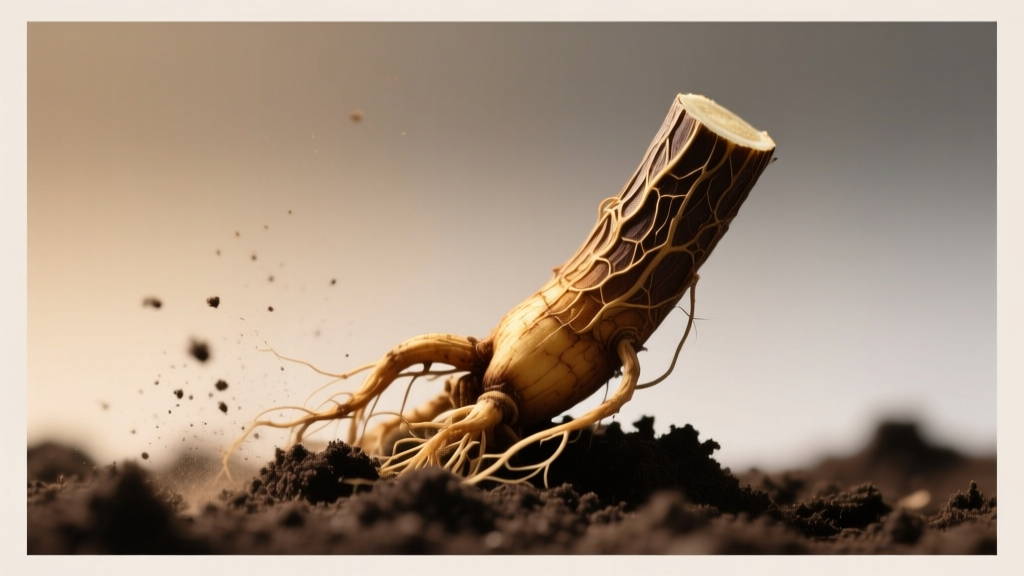
Licorice Root Isn’t a Herb—And That Changes Everything
Licorice Root Isn’t a Herb—And That Changes Everything in Your Pantry
In most supermarkets, licorice root appears beside dried mint, oregano, and chamomile—packaged in identical amber jars, labeled "organic herb blend" or "digestive tea ingredient." This visual grouping creates a quiet but persistent assumption: that it behaves like other kitchen herbs. The result? A tea brewed too long and suddenly bitter, a stew where sweetness clashes with salt, or a child refusing medicine disguised with licorice root because the flavor overwhelms everything else. These aren’t mistakes of technique—they’re consequences of category error. When you mistake botanical function for culinary role, no amount of stirring or timing adjustment fixes the underlying mismatch.
Licorice root matters only when its glycyrrhizin content is actively engaged—not diluted, not masked, not treated as background seasoning. In everyday cooking, it’s rarely the thing that ruins a dish; more often, it’s the thing that gets ignored until it’s too late. Its impact emerges not in heat or duration, but in cumulative exposure: one cup of tea per day for three days may feel fine; five cups over two days can trigger noticeable sodium retention in sensitive individuals. That threshold isn’t about skill—it’s about physiology meeting dosage. And unlike rosemary or sage, licorice root doesn’t degrade predictably with storage. Its potency holds—or intensifies—in dry, cool conditions, making last-year’s jar potentially stronger than this month’s.
Two common fixations waste time without changing outcomes. First: whether to grind it fresh versus using pre-sliced root. In a home kitchen, particle size rarely affects extraction enough to alter taste or effect—especially when steeping in hot water or simmering in broth. Second: obsessing over origin (Chinese vs. Turkish vs. Indian). While regional variation exists, supermarket-grade licorice root sold as "herbal supplement" shows minimal functional difference across origins in typical home use. Neither variable changes how much glycyrrhizin enters your system—or how your body responds. They’re aesthetic distinctions dressed up as functional ones.
The real constraint isn’t sourcing or preparation—it’s household coexistence. Licorice root interacts with blood pressure medication, potassium supplements, and even some over-the-counter diuretics. In many homes, someone takes one of these daily. That means the decision to use licorice root isn’t culinary—it’s pharmacological coordination. No recipe book warns about this. No label spells out the interaction window. Yet it’s the single factor that determines whether a calming tea becomes a clinical concern. Budget, shelf life, or flavor preference pale next to this: if someone in your household uses ACE inhibitors or spironolactone, licorice root isn’t optional—it’s contraindicated. Full stop.
Here’s where intuition fails—and why judgment must replace habit. If you’re making a short-brew herbal infusion for occasional digestive relief, licorice root’s sweetness and softness matter more than purity. But if you’re preparing a week’s batch of cold-infused tincture for chronic sore throat, even small variations in root density or cut size change glycyrrhizin yield unpredictably. And if you’re substituting it into a savory soup where star anise already contributes licorice-like notes, adding actual licorice root doesn’t deepen flavor—it flattens contrast. Each context demands a different verdict—not a universal rule.
The simplest filter isn’t “Is it organic?” or “Is it cut finely?” It’s: Does anyone in this home take medication that affects electrolyte balance? If yes, licorice root exits the pantry—no exceptions, no substitutions, no “just a pinch.” If no, then its role narrows to two clear lanes: brief, low-volume use (tea, rinse, rinse-only mouthwash), or intentional, measured inclusion in formulations designed around its pharmacology—not flavor alone. This isn’t caution—it’s calibration. You don’t adjust salt by tasting; you adjust licorice root by knowing what’s already in the bloodstream.
| What people fixate on | What it affects | When it matters | When it doesn't |
|---|---|---|---|
| Grinding before use | Slight increase in surface area | When preparing alcohol-based tinctures over 4+ weeks | In hot-water infusions under 10 minutes |
| Origin (e.g., Glycyrrhiza uralensis vs. glabra) | Glycyrrhizin concentration range | In clinical herbal practice with standardized dosing | In home tea blends sold as "digestive support" |
| Color or sheen of dried root | Surface oxidation level | When storing >18 months in humid climates | In sealed jars used within 12 months |
| Whether it’s certified organic | Pesticide residue risk | For daily, long-term internal use (>3 months) | For occasional mouth rinses or topical compresses |
Quick verdicts for home cooks
- If you’re brewing tea for occasional bloating, use pre-cut root—grinding adds zero benefit and invites over-extraction.
- If someone in your home takes blood pressure meds, skip licorice root entirely—even in “herbal” cough drops.
- If substituting for star anise in braised meat, don’t: the sweetness disrupts Maillard browning and masks umami depth.
- If using in a children’s herbal syrup, reduce quantity by half and confirm no family history of hypertension.
- If storing in a humid kitchen, keep it in an airtight jar with a silica packet—moisture concentrates glycyrrhizin unevenly.
- If combining with peppermint or fennel, expect diminished cooling effect—the licorice compounds blunt menthol perception.
Frequently asked questions
Why do people think licorice root works like mint or chamomile in tea blends?
Because it’s shelved beside them, labeled similarly, and marketed as “soothing”—but mint calms nerves via volatile oils; licorice modulates cortisol and sodium channels. Same shelf, different biology.
Is it actually necessary to avoid licorice root if you’re just using it once a week?
No—but weekly use still accumulates. What feels safe at first may shift after three months, especially with age or changing kidney function.
What happens if you ignore the “avoid with diuretics” warning?
You risk hypokalemia: muscle weakness, irregular heartbeat, fatigue—symptoms that appear gradually and mimic stress or aging.
More Articles
 Sumac: The Lemon-Like Spice Guide
 Pull Apart Cheesy Garlic Bread Recipe: Simple Sharing Style
 Long Pepper: The Spice Before Black Pepper
 Red Onion Chutney: Homemade Guide and Pairings
 Choosing the Right Spice Step: A Guide
 White Dragon Fruit: Flesh, Seeds & How to Enjoy It
 Cheap vs Premium Slow: What Really Changes When You Upgrade Your Slow-Cooked Dishes
 Tomato Seeds Safe or Harmful? Science-Based Facts
 Honey and Bread: Safe Pairing Tips & Common Mistakes
Cheap Vs Premium Organization: How to Build a Spice System That Actually Lasts
Honey and Bread: Safe Pairing Tips & Common Mistakes
Cheap Vs Premium Organization: How to Build a Spice System That Actually Lasts