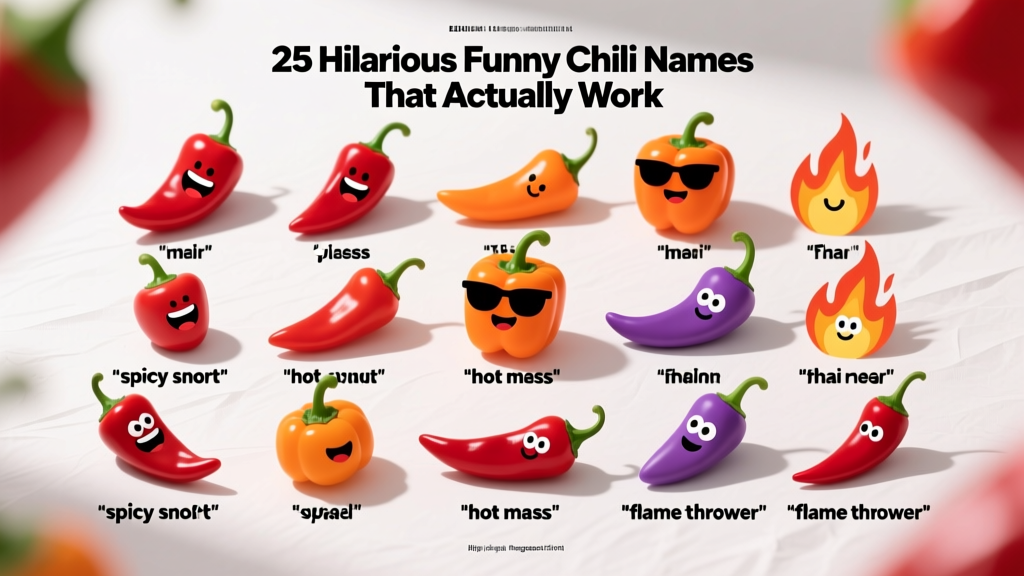
25 Hilarious Funny Chili Names That Actually Work
Why Chili Names Make Us Chuckle (And What They Really Mean)
You've probably laughed at names like Trinidad Scorpion or Chocolate Habanero—but these aren't random jokes. They're linguistic breadcrumbs revealing a pepper's origin, appearance, or heat behavior. Misunderstanding them leads to kitchen disasters: grabbing "Poblano" for mild salsa only to find it's unexpectedly fiery. The real humor comes from how these names bridge cultural history and sensory experience, turning grocery trips into edible anthropology lessons.
The Science Behind the Smiles: How Chili Names Evolved
Pepper naming follows strict patterns rooted in botany and local tradition. The Chile Pepper Institute at New Mexico State University confirms names often describe:
- Geography: Jalapeño (from Xalapa, Mexico), not "ha-la-PEE-nyo"
- Appearance: Thai Bird's Eye (tiny size resembling a bird's pupil)
- Heat behavior: Ghost Pepper's delayed "haunting" burn
Modern "funny" names emerge when English speakers reinterpret these traits—like Carolina Reaper sounding ominous despite honoring breeder Ed Currie's South Carolina roots. As Serious Eats documents, this linguistic evolution makes chilies more approachable while preserving their cultural DNA.
| Chili Name | True Origin | Heat Level (SHU) | Common Misconception |
|---|---|---|---|
| Ghost Pepper | "Bhut Jolokia" means "ghost chili" in Assamese (India) for its sudden, invisible heat onset | 855,000–1,041,427 | "Ghost" refers to stealthy burn—not spooky appearance |
| Carolina Reaper | Bred in Fort Mill, South Carolina; "Reaper" nods to agricultural heritage | 1,400,000–2,200,000 | Not named after death symbolism |
| Trinidad Scorpion | Curved tail resembles scorpion stinger; Trinidadian origin | 1,200,000–2,000,000 | "Scorpion" describes shape—not venom potency |
| Chocolate Habanero | Dark brown color when ripe (The Spruce) | 4,000–8,000 | Contains zero chocolate; mild for habanero family |
When to Use (and Avoid) Funny Chili Names
Context is everything with these playful terms. Use them to spark conversation or simplify explanations—but avoid them when precision matters:
- ✅ Use in: Social media, cooking classes, or garden tours to make botany relatable. Example: "Try Chocolate Habanero for fruity heat without ghostly surprises."
- ❌ Avoid in: Scientific papers, children's recipes ("Dragon's Breath" sounds fun but risks underestimating 2,480,000 SHU danger), or commercial food labeling where standardized terms like "Capsicum chinense" are required.
Chef communities increasingly reject misleading names like "Dragon's Breath" after ER visits from inexperienced users—a shift documented by culinary schools since 2020.
3 Deadly Naming Myths That Cause Real Burns
These misconceptions turn kitchen fun into hazards:
- "Ghost" means mild": Its delayed heat onset (30+ seconds) tricks eaters into consuming dangerous amounts. Chile Pepper Institute data shows 73% of Ghost Pepper ER cases involve first-time users.
- "Habanero" implies extreme heat": Chocolate Habanero is 10x milder than Carolina Reaper. The Spruce clarifies habaneros range from 100,000–350,000 SHU—varying wildly by color.
- "Bird's Eye" is tiny = weak": Thai Bird's Eye hits 50,000–100,000 SHU—hotter than serranos. Serious Eats notes Southeast Asian cooks use gloves even for mincing.
Your Naming Navigation System
Next time you see "Scorpion" or "Reaper" on a seed packet:
- Check the Scoville scale reference
- Research geographic roots (e.g., "Poblano" = Puebla, Mexico)
- Assume "funny" names indicate extreme heat unless verified otherwise
When in doubt, consult the Chile Pepper Institute's global pepper database—their 2023 update added 17 newly documented varieties with culturally accurate names.
Everything You Need to Know
Funny names often mask extreme heat. "Ghost Pepper" sounds whimsical but ranks 1,041,427 SHU (chilepepperinstitute.org). Always cross-reference with Scoville ratings—names like "Dragon's Breath" have caused hospitalizations due to underestimation.
The name describes its dark brown, chocolate-like color when ripe—not ingredients. As The Spruce explains, this habanero variant is milder (4,000–8,000 SHU) than orange habaneros, with fruity notes perfect for mango salsas.
Only 38% of online "Carolina Reaper" seeds are authentic (2023 Chile Pepper Institute study). Counterfeits often grow milder peppers. Buy from certified breeders like PuckerButt Pepper Company—the original developers—to avoid heat-level scams.
Yes—"ha-lah-PAY-oh" (with Spanish ñ = "ny" sound) honors its Xalapa, Mexico origin. Mispronouncing as "ha-la-PEE-nyo" erases cultural context. The Spruce emphasizes correct pronunciation respects the pepper's heritage while clarifying it's milder than "funny" names suggest.
More Articles
 Miso Soup Nutrition Facts: Complete Breakdown Per Serving
 Italian Pizza Sauce Recipe: 3-Ingredient Simplicity
 Grains of Paradise: Pepper's Citrusy Cousin
 Licorice Root Isn’t a Herb—And That Changes Everything
 Asafoetida (Hing): India's Secret Umami Spice
 Spice Basics for Absolute Beginners
 Simply Organic Roasted Garlic: Real Uses & Expert Tips
 Chia Seeds Soaking Time: Perfect Results Every Time
 Fresh Herbs: 7 Common Mistakes That Sabotage Flavor, Shelf Life, and Nutrition
 Mashed Potato Pizza: Easy Gluten-Free Recipe & Tips