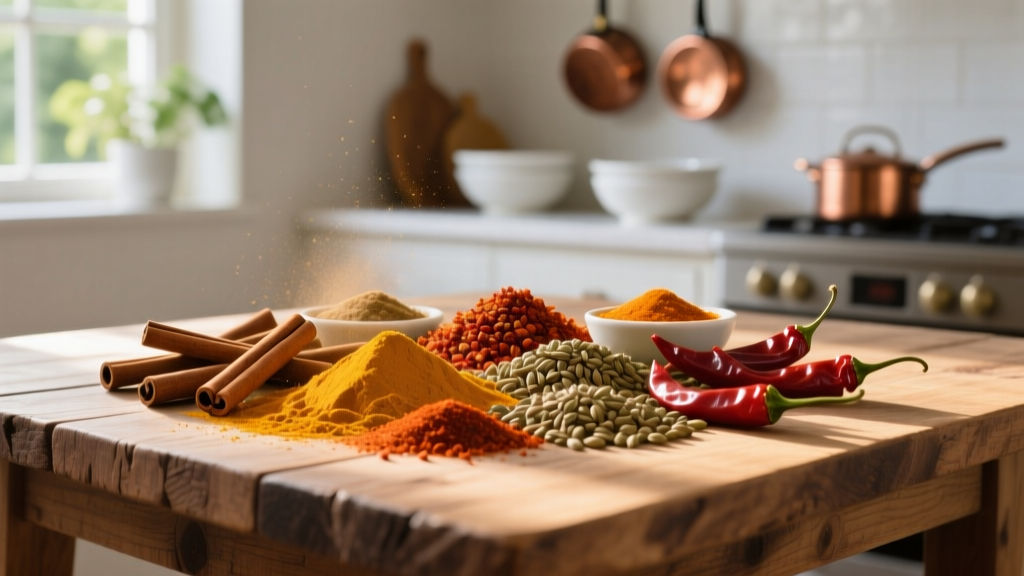
Fenugreek Seeds: Benefits and Cooking Tips
Understanding Fenugreek
Fenugreek (Trigonella foenum-graecum) produces small, hard, amber-colored seeds with a distinctive maple-syrup aroma. Both seeds and leaves (methi) are widely used in cooking.
Flavor and Aroma
Raw fenugreek seeds are bitter, but cooking transforms them into a warm, nutty flavor with sweet undertones. The compound sotolon gives fenugreek its maple-like scent.
Cooking Methods
- Tempering: Toast seeds in hot oil or ghee before adding other ingredients
- Soaking: Soak overnight to soften and reduce bitterness, then use the water in curries
- Powder: Dry-roast and grind for spice blends like sambar powder
- Sprouting: Sprouted seeds add crunch and nutrition to salads
Key Cuisines
Fenugreek is foundational in Indian curries, Ethiopian berbere, Iranian ghormeh sabzi, and Armenian spice blends. It's also used in artificial maple flavoring.
Health Notes
Studies suggest fenugreek may help regulate blood sugar and support lactation. It's rich in fiber, iron, and manganese.
More Articles
 Slow Cooker Beef Stew: Simple Recipe Steps
 Air Fryer Garlic Bread: Crispy in 7 Minutes (No Oven)
 Lemon Garlic Marinade Chicken: Simple Recipe & Pro Tips
 Onion Pakoda Recipe: Crispy Indian Snack in 20 Minutes
 Star Anise vs Anise Seed: Key Differences (2026)
Sustainable Career Decisions Framework
 Mace vs Nutmeg: Same Seed, Different Flavor
 Colman's Mustard Powder: Uses, Substitutes & Storage Guide
 Nutmeg Shell: Understanding the Common Misconception
 Sumac: The Tangy Middle Eastern Spice Guide