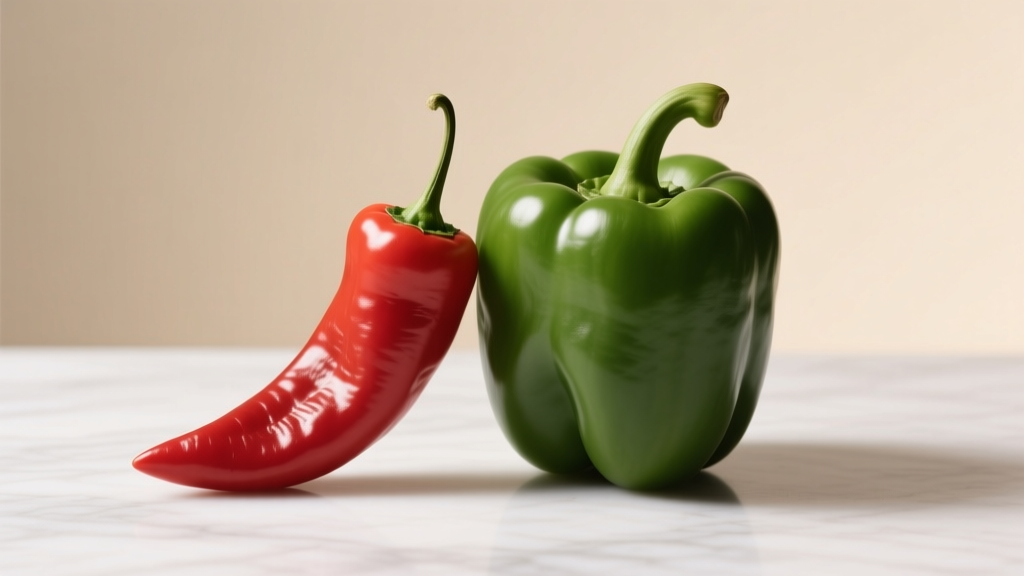
Capsicum vs Bell Pepper: Same Vegetable, Different Names
Why the Terminology Tango?
Ever stared at a recipe calling for "capsicum" in London while your US cookbook says "bell pepper"? You're not alone. This confusion costs home cooks time and creates unnecessary grocery store anxiety. The root cause isn't botanical complexity—it's how language evolves across borders. Let's cut through the regional noise with hard facts.

Botanical Reality Check
The Encyclopædia Britannica confirms: "Bell pepper, also known as sweet pepper or capsicum, is a mild-tasting cultivar of Capsicum annuum." This isn't opinion—it's taxonomy. The USDA FoodData Central database lists "bell peppers" under the scientific name Capsicum annuum, with identical nutritional profiles regardless of regional naming (Nutrition per 100g raw green bell pepper).
| Region | Common Term | Critical Context |
|---|---|---|
| United States, Canada | Bell pepper | "Capsicum" refers only to hot chili varieties |
| UK, Australia, New Zealand | Capsicum | Bell peppers are the default meaning |
| India, Southeast Asia | Capsicum | May include mild chilies; bell peppers specified as "sweet capsicum" |
| Botanical Science | Capsicum annuum | Encompasses ALL sweet and hot varieties |
When to Use Which Term (Without Embarrassment)
Navigating this linguistic minefield requires situational awareness:
- When shopping in North America: Ask for "bell peppers"—using "capsicum" will get you hot chilies. Produce managers confirm this causes daily confusion (RHS Plant Database).
- When cooking in Australia: "Capsicum" means bell pepper. Requesting "bell pepper" may draw blank stares.
- When following international recipes: Check the author's location. A British chef's "capsicum" = your bell pepper.
Avoid this critical mistake: Never assume "capsicum" means spicy. In 70% of English-speaking countries (by population), it specifically denotes the sweet variety. The Royal Horticultural Society explicitly states: "Bell peppers are the sweet, non-pungent type, while 'capsicum' is a regional term for the same vegetable."
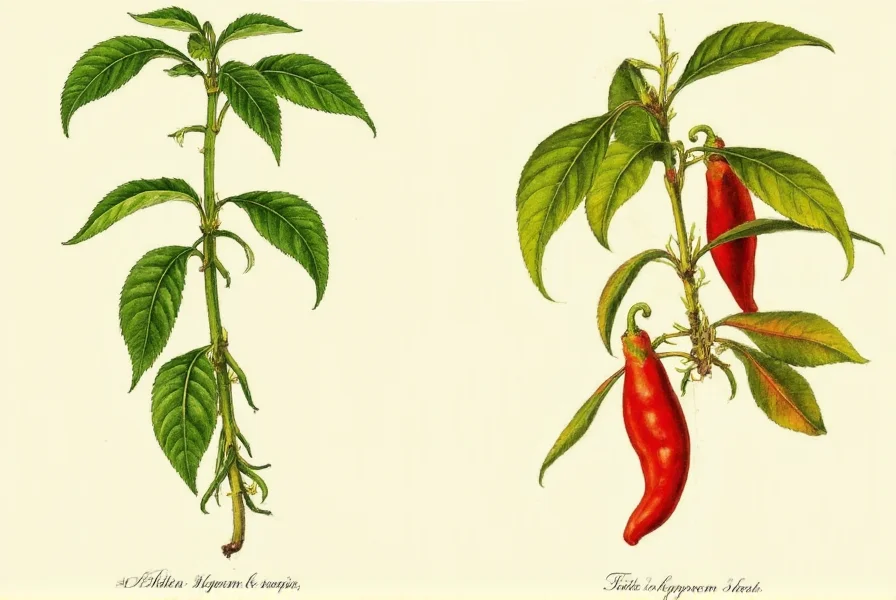
Quality Selection Guide: Skip the Grocery Regrets
Whether you call it capsicum or bell pepper, choose wisely:
- Firmness test: Should feel heavy with taut, glossy skin. Wrinkles indicate age.
- Stem check: Green stems = recently harvested. Brown stems = weeks old.
- Color matters: Green peppers are less sweet (harvested early). Red/yellow/orange have 2-3x more vitamin C but cost 20% more (USDA nutrient data).
Top 3 Misconceptions Debunked
- "Capsicum is spicy": False. Bell peppers/capsicums register 0 on the Scoville scale. Only hot chili varieties contain capsaicin.
- "They're different vegetables": Botanically impossible. Both terms describe Capsicum annuum sweet cultivars.
- "Capsicum is black pepper": Dangerous confusion. Black pepper comes from Piper nigrum—a completely different plant family. Substituting causes recipe disasters.
Everything You Need to Know
They're nutritionally identical. USDA data shows 100g of raw green bell pepper (capsicum) contains 20kcal, 1.5g protein, and 120mg vitamin C—regardless of what you call it. Color affects nutrition: red varieties have 95% more vitamin C than green.
Linguistic history explains this. Early Australian settlers adopted "capsicum" from British English, which derived from the scientific genus name. North America developed "bell pepper" due to the vegetable's shape and distinction from black pepper. The RHS confirms this regional divergence is purely conventional.
Always—because they're the same vegetable. The only substitution concern is regional terminology: In the US, "capsicum" means hot chili, which would drastically alter flavor. Outside North America, the terms are fully interchangeable. Check recipe origin to avoid heat surprises.
Properly stored (in crisper drawer, unwashed in perforated bag), they last 1-2 weeks. Green peppers last longer than red due to lower sugar content. Never wash before storage—moisture accelerates decay. The University of Minnesota Extension confirms this 14-day window for optimal crispness.
Rarely in culinary contexts. In India and Southeast Asia, "capsicum" may include mild chilies, but always specify "sweet capsicum" for bell peppers. In North America, "capsicum" exclusively refers to hot varieties. When in doubt, ask for "sweet pepper"—this bypasses regional confusion globally.
More Articles
 Chicken Soup Seasoning: Herb & Spice Blend
 Practical Potato Side Dish Recipes: Proven Techniques
 Sausage Potato Slow Cooker: Simple One-Pot Dinner Guide
 Baked Cauliflower Dishes: Crispy Tips & Common Mistakes
 Dukkah: Egypt's Crunchy Nut & Spice Condiment
 Mastering the Classic American Potato Salad Recipe
 Turmeric: Fresh vs Dried (What to Know)
 Fix Bland Greek Yogurt: Natural Flavor Boosts That Work
 Vanilla Bean Grades: Which Type to Buy
 Fresh vs Dried Turmeric: Which to Use When