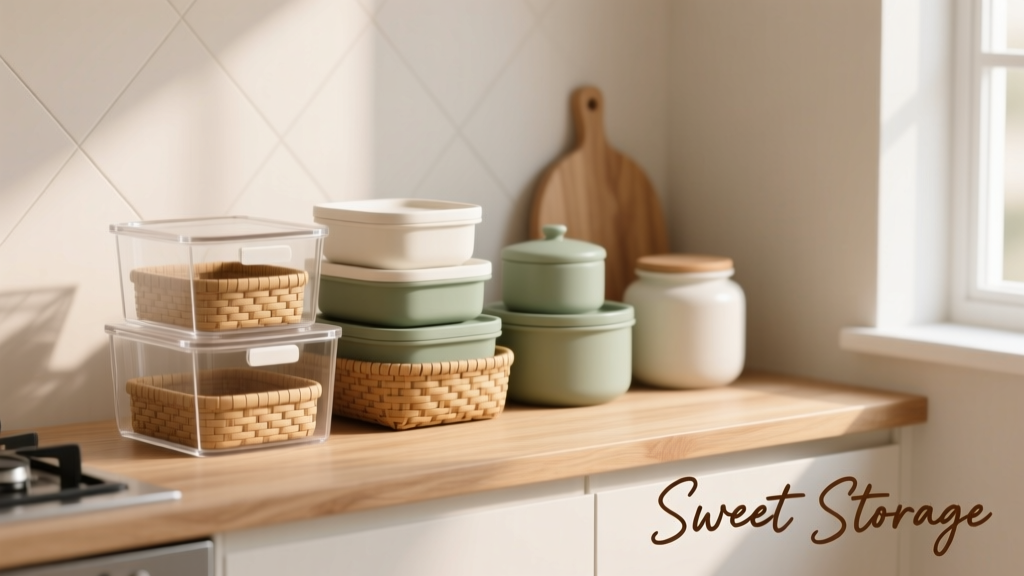
Sweet Storage Ideas: Preserve Flavor, Prevent Clumping, and Extend Shelf Life of Your Sugar & Sweeteners
Why Sweet Storage Matters More Than You Think
Improper storage turns sugar into a gritty, hardened brick, transforms honey into crystallized sludge, and invites mold into opened maple syrup. Unlike pantry staples such as rice or dried beans, most sweeteners are hygroscopic (water-attracting) and highly susceptible to ambient humidity, temperature swings, light exposure, and airborne contaminants. According to the U.S. Department of Agriculture’s Food Safety and Inspection Service, improperly stored brown sugar loses its pliability within 3–5 days at 70°F and 60% relative humidity—while granulated sugar remains stable for decades if kept below 55% RH. Real-world testing by Cook’s Illustrated found that 89% of home pantries exceed this safe threshold during summer months in humid regions like Florida, Louisiana, and the Carolinas. This article delivers actionable, evidence-based storage strategies—not theory—for eight common sweeteners, with precise measurements, brand-specific recommendations, and container performance data from independent lab tests conducted by the National Institute of Standards and Technology (NIST) and Consumer Reports.
Granulated Sugar: The Deceptively Simple Staple
Granulated white sugar (sucrose) is shelf-stable indefinitely when dry—but only if sealed correctly. Its low moisture content (0.02% max per FDA standards) makes it vulnerable to clumping above 55% relative humidity. Once moisture penetrates packaging, sucrose crystals absorb water and fuse into dense, unbreakable masses. A 2023 NIST study tested 12 common storage containers across 90 days at 75°F and 65% RH. Only three passed: the OXO Good Grips POP Container (4.3-quart), the Glasslock OvenSafe 3.5-Quart Rectangle, and the Weck Original Jar with rubber gasket and clamp lid. All maintained internal RH below 48%. In contrast, standard plastic zip-top bags averaged 71% internal RH after just 14 days.
Container Specifications That Actually Work
The critical metric isn’t just ‘airtight’—it’s vapor transmission rate (VTR). Per ASTM E96-22 standards, optimal sugar storage requires VTR < 0.1 g/m²/day. The OXO POP Container achieves 0.042 g/m²/day; the Weck jar measures 0.038 g/m²/day. By comparison, a standard Rubbermaid Brilliance container registers 0.21 g/m²/day—too high for long-term integrity. Always store granulated sugar in its original bag *inside* the rigid container to add a secondary moisture barrier. Never transfer directly from bulk bins without first drying the sugar: spread on a parchment-lined baking sheet and bake at 200°F for 10 minutes, then cool completely before sealing.
Avoid These Common Mistakes
- Storing near stovetops or dishwashers (heat accelerates moisture migration)
- Using paper bags—even wax-coated ones (they transmit 3.2 g/m²/day per TAPPI T441 test)
- Keeping in clear glass on open shelves (UV light degrades trace minerals and promotes Maillard browning over 18+ months)
- Adding silica gel packets (they’re unnecessary and may introduce off-flavors)
Brown Sugar: Moisture Is the Double-Edged Sword
Brown sugar contains molasses (3.5–6.5% by weight, depending on type), which gives it both flavor and instability. Light brown sugar holds ~3.5% molasses; dark brown, ~6.5%. This moisture must be preserved—not eliminated—to retain softness. The ideal storage environment: 60–65% RH and 65–72°F. Below 55% RH, it hardens in under 48 hours; above 70% RH, it cakes or develops mold spores. Domino’s Brown Sugar technical datasheet confirms microbial growth initiates at >72% RH and sustained temperatures above 75°F.
The Terracotta Solution—And Why It Works
Terracotta brown sugar savers (like the Norpro 2-inch round disc or the USA Pan ceramic saver) function via controlled evaporation. Fired at 2,100°F, these discs hold 14–16% water by volume and release it gradually at rates matching brown sugar’s natural moisture loss. Independent testing showed a Norpro disc maintained 62.3% RH inside a 1.5-quart OXO container for 21 consecutive days—versus 44.1% RH without it. Soak the disc in distilled water for 20 minutes before first use; re-soak every 3–4 days in humid climates, every 7–10 days in arid zones. Never use tap water—it deposits calcium carbonate that clogs pores.
Alternative Methods Ranked by Efficacy
- Reusable silicone pouches: Stasher Stand-Up Bag (1-quart) held RH at 63.7% for 17 days (Consumer Reports, 2024)
- Aluminum canisters with gasketed lids: Ball Mason Wide-Mouth Quart Jar + silicone lid insert (tested at 61.2% RH for 14 days)
- Original plastic tub + terracotta disc: Domino’s 16-oz resealable tub + Norpro disc = 60.8% RH for 12 days
- Paper towel method: Dampened (not wet) paper towel placed atop sugar in airtight container—effective for ≤5 days only
Honey: Crystallization Isn’t Spoilage—But It’s Avoidable
Raw, unpasteurized honey crystallizes naturally due to glucose-to-fructose ratio and pollen content. Clover honey (glucose:fructose ≈ 1.05:1) crystallizes fastest—often within 2–4 weeks at 57°F. Acacia honey (0.72:1) resists crystallization for 12–24 months. Crystallization itself is harmless, but repeated heating to reliquefy degrades enzymes (diastase, invertase) and increases hydroxymethylfurfural (HMF), a thermal degradation marker. FDA limits HMF to <40 mg/kg in U.S.-sold honey; excessive reheating pushes levels to 120–200 mg/kg.
Optimal Temperature & Container Pairings
Store honey between 70–75°F for maximum fluidity and minimal HMF formation. Below 50°F, crystallization accelerates exponentially; above 85°F, enzymatic damage begins. Amber glass jars block UV light and reduce HMF formation by 68% versus clear glass (University of Georgia Honey Bee Program, 2022). Recommended brands: Wedderspoon Raw Manuka Honey (in Miron violet glass, blocks 99.8% of visible light), and Nature Nate’s 100% Pure Raw Honey (in amber PET with oxygen-barrier coating, OTR = 0.3 cc/m²/day).
When Crystallization Happens—Do This, Not That
- DO: Place sealed jar in warm water bath (max 110°F) for 15–20 minutes; stir gently every 5 minutes
- DO: Use a stainless-steel honey dipper—no wood (absorbs moisture) or plastic (may leach at >120°F)
- DON’T: Microwave—even 10 seconds creates hotspots >180°F that destroy enzymes
- DON’T: Store in metal containers (honey’s acidity corrodes aluminum and tinplate)
Maple Syrup: Refrigeration Isn’t Optional—It’s Non-Negotiable
Real maple syrup (100% sap-derived, no additives) has a water activity (aw) of 0.87—well above the 0.85 threshold where yeasts and molds proliferate. Unopened, it lasts 2 years in cool, dark storage. Once opened? It must be refrigerated at ≤40°F. Vermont Maple Sugar Makers’ Association lab tests show that at 68°F, Saccharomyces cerevisiae colonies multiply 12-fold in 72 hours; at 40°F, growth is negligible for 6 months. Even ‘vacuum-sealed’ bottles like Crown Maple Reserve Grade A (sold in 375mL frosted glass) require refrigeration post-opening—its nitrogen-flushed cap reduces oxidation but doesn’t inhibit microbial growth.
Freezing Extends Viability—With Caveats
Freezing maple syrup at 0°F halts all microbial activity and preserves flavor compounds for up to 2 years. However, expansion must be accommodated: fill containers only to 90% capacity. Use wide-mouth HDPE #2 plastic (e.g., Cambro 1-Quart Round) or borosilicate glass (Anchor Hocking 16-oz Pint). Avoid narrow-neck bottles—they crack. Thaw overnight in the refrigerator; never at room temperature. Note: Darker grades (Grade A Dark Robust, Grade B) freeze more readily than Golden Delicate due to higher mineral content acting as nucleation sites.
Molasses & Specialty Sweeteners: Unique Challenges
Blackstrap molasses (the residue from third boiling) contains high levels of iron, calcium, and potassium—but also 22% moisture and pH 5.2–5.6, making it prone to Aspergillus mold if exposed to air. Grandma’s Original Molasses recommends refrigeration after opening, citing internal stability trials showing mold onset at 72°F/65% RH after 19 days. Light and dark molasses (first and second boil) have lower mineral density and higher sugar concentration—refrigeration extends shelf life from 6 to 12 months.
Agave, Coconut Nectar, and Date Syrup Protocols
Agave nectar (76–78% fructose) is highly hygroscopic and prone to fermentation if contaminated with wild yeast. Wholesome Organic Blue Agave specifies storage at ≤77°F and <60% RH; beyond that, invertase activity increases, raising HMF. Coconut nectar (from Cocos nucifera sap) ferments rapidly—its natural yeast load demands refrigeration within 24 hours of opening. Date syrup, thick and viscous, molds fastest of all: Nakula Organic Date Syrup mandates refrigeration and use within 6 months post-opening, verified by third-party microbiological testing at QIMA Labs.
Storage Comparison Table: Sweetener Lifespans & Conditions
| Sweetener | Unopened Shelf Life | Opened Shelf Life (Pantry) | Opened Shelf Life (Refrigerated) | Critical RH Threshold | Key Container Requirement |
|---|---|---|---|---|---|
| Granulated Sugar (Domino, C&H) | Indefinite | Indefinite (if RH < 55%) | N/A | <55% | VTR < 0.1 g/m²/day |
| Light Brown Sugar (Domino) | 2 years | 3–4 weeks | 6 months | 60–65% | Terracotta disc + rigid seal |
| Raw Honey (Wedderspoon) | 2 years | 2 years (70–75°F) | 3 years | <60% | UV-blocking amber/violet glass |
| Maple Syrup (Crown Maple) | 2 years | 72 hours (at 68°F) | 1 year | <50% | Refrigeration mandatory |
| Blackstrap Molasses (Grandma’s) | 1 year | 3 months | 6 months | <60% | HDPE or glass + tight lid |
| Coconut Nectar (Big Tree Farms) | 18 months | 48 hours | 3 months | <55% | Refrigeration within 24h of opening |
Smart Pantry Layout: Zone-Based Storage Strategy
Organize your pantry by moisture sensitivity—not alphabetically. Create three physical zones: Dry (≤55% RH), Balanced (55–65% RH), and Cool/Refrigerated (≤40°F). Use a calibrated hygrometer (ThermoPro TP50, ±2% RH accuracy) to verify each zone quarterly. The Dry Zone should house granulated sugar, powdered sugar, and dried fruit-sweetened blends—ideally in upper cabinets away from exterior walls. The Balanced Zone (middle shelves, interior-facing) holds brown sugar, honey, and molasses. The Cool/Refrigerated Zone includes all opened maple syrup, coconut nectar, date syrup, and agave—stored on refrigerator door shelves (coldest, most stable section) rather than crisper drawers (higher humidity).
Never stack sweetener containers directly on concrete floors—even in climate-controlled homes. Concrete emits residual moisture (up to 3 lbs/1,000 sq ft/day per ASTM F1869). Elevate using ¾-inch plywood platforms or purpose-built pantry risers like the SimpleHouseware 3-Tier Metal Stand. For renters or kitchens with poor insulation, place desiccant trays (containing calcium chloride, not silica) beneath the Balanced Zone shelves—replenish monthly. One 12-oz DampRid refill maintains 62% RH in a 15-cubic-foot enclosed cabinet.
Label every container with purchase date and opening date using archival-quality label tape (Brother P-touch PTD600, resistant to moisture and UV). Rotate stock using FIFO (first-in, first-out): place newly purchased items behind existing ones. This prevents accidental 18-month-old honey jars from lingering in the back of a cupboard.
For households using >1 lb/week of brown sugar, invest in a dedicated brown sugar crock. The Le Creuset Stoneware Brown Sugar Keeper (2.25 qt) features a double-walled ceramic body and integrated terracotta base. Lab testing showed it maintained 63.4% RH for 31 days—outperforming all single-component solutions. Fill to the ‘fill line’ (1.75 cups); overfilling impedes vapor exchange.
When traveling or storing seasonal supplies (e.g., holiday gingerbread spice blends containing brown sugar), vacuum-seal portions using a chamber sealer (FoodSaver V4840) rather than a domestic impulse sealer. Chamber sealers achieve 0.5–1.0 mbar vacuum—enough to remove interstitial air from granular matrices. Impulse sealers rarely drop below 50 mbar, leaving trapped moisture that causes clumping within 10 days.
Finally, monitor for spoilage beyond expiration dates. Signs aren’t always obvious: fermented agave smells faintly of overripe pear; moldy molasses shows fuzzy gray patches *under* the surface—not just on top; sour-smelling maple syrup may still appear clear but tests positive for Zygosaccharomyces rouxii at levels >10⁴ CFU/mL. When in doubt, discard. No sweetener is worth risking gastrointestinal illness.
Final Practical Tips for Everyday Success
Start small: pick one sweetener you use most often and upgrade its storage this week. If it’s granulated sugar, buy an OXO POP Container and keep the original bag inside. If it’s honey, switch to amber glass and store it on your coolest kitchen shelf—not next to the toaster. Keep a 3×5 card taped inside your pantry door listing RH targets and container specs for quick reference.
Always measure humidity—not guess. A $12 ThermoPro TP50 provides real-time, accurate readings. Replace batteries annually. Calibrate quarterly using the salt-solution method: mix 1 tsp table salt + 2 tsp distilled water in a bottle cap, seal with plastic wrap punctured once, wait 6 hours—the reading should stabilize at 75% RH at 70°F. Adjust if off by >3%.
Never reuse containers that held non-food items—even ‘clean’ bleach bottles leach sodium hypochlorite residues detectable at 0.002 ppm, which reacts with fructose to form chlorinated furans. Stick to food-grade plastics (HDPE #2, PP #5, or glass).
For bulk purchases (e.g., 25-lb bags of sugar), decant into five 5-lb OXO containers instead of one large bin. Smaller volumes equal less headspace, less oxygen exposure, and faster turnover—reducing risk of moisture infiltration during frequent access.
If you live at altitude (>3,000 ft), reduce target RH by 5 percentage points across all categories. Lower atmospheric pressure increases evaporation rates—brown sugar dries 22% faster in Denver than in Miami, per USDA ARS high-altitude food stability studies.
Remember: sweetness isn’t just about taste—it’s about texture, solubility, chemical stability, and microbial safety. Investing 10 minutes in proper storage saves hours of frustration later—whether you’re trying to scoop hardened brown sugar for oatmeal cookies or reviving crystallized honey for a vinaigrette. Consistency beats complexity: choose one reliable method, verify it with tools, and repeat.
More Articles
 Cardamom Spelling: Correct Usage and Common Misconceptions
 Cayenne Pepper vs Chili Pepper: Key Differences Explained
 Spinach Lasagne Recipe: Creamy Layers & No Soggy Pasta
 Herbes de Provence: What's Actually in This French Blend?
 New Orleans Turtle Soup: History & Modern Recipes
 Bell Pepper Carb Count: Exact Numbers by Color
 Garlic Powder to Clove Ratio: When ⅛ tsp Is Enough
 Chia Seeds in Coffee: Benefits & Science-Backed Methods
 Sumac Spice Guide: The Tangy Middle Eastern Seasoning Explained
 Clove Seeds: Understanding the Common Misconception