Granulated Onion vs Onion Powder: Flavor Face-Off
Why This Confusion Ruins Your Dishes
Ever added "onion" to a recipe only to end up with gritty meatloaf or flat-tasting gravy? You're not alone. 68% of home cooks (per Savory Spice Shop's 2023 survey) accidentally use the wrong form, compromising texture and flavor balance. This isn't just about convenience—it's about understanding how microscopic differences impact your cooking chemistry.
The Science Behind the Sprinkle
Both start as dehydrated onions, but diverge at processing. Granulated onion undergoes coarse grinding (1-2mm particles), retaining some cellular structure. Onion powder gets pulverized to sand-like finesse (<0.5mm). This size gap creates critical functional differences:
| Characteristic | Granulated Onion | Onion Powder |
|---|---|---|
| Particle Size | 1-2mm granules (like coarse sand) | Fine powder (passes through #20 sieve) |
| Flavor Release | Slow, gradual infusion | Instant, concentrated impact |
| Hydration Speed | 5-7 minutes to reconstitute | Dissolves in 60 seconds |
| Essential Oil Content | 0.01% (per Spices Inc. analysis) | 0.015% (higher volatile compounds) |
| Substitution Ratio | 1 tbsp = 1 medium onion | 1 tbsp = 1 medium onion |

When to Reach for Which: Real Kitchen Scenarios
Use Granulated Onion When...
- You need visible texture: Meatloaf, burgers, stuffing (Savory Spice Shop confirms it "provides structural integrity")
- Slow flavor development matters: Dry rubs, spice blends where gradual infusion enhances complexity
- Moisture control is critical: Breading for fried foods (absorbs excess oil without clumping)
Use Onion Powder When...
- Seamless integration is essential: Cream sauces, gravies, salad dressings (McCormick notes it "eliminates graininess")
- Maximizing flavor impact: Bloody Marys, spice blends requiring immediate sweetness (The Spice House verifies 20% higher volatile compounds)
- Time is limited: Quick sauces where granulated won't fully hydrate
Avoid These Critical Mistakes
- Never substitute 1:1 in baking: Granulated's moisture content can alter dough hydration (per Spices Inc. formulation data)
- Don't use powder in dry applications: Causes clumping in spice rubs (tested by Savory Spice Shop)
- Avoid high-heat searing: Powder burns at 325°F+ while granulated withstands 375°F
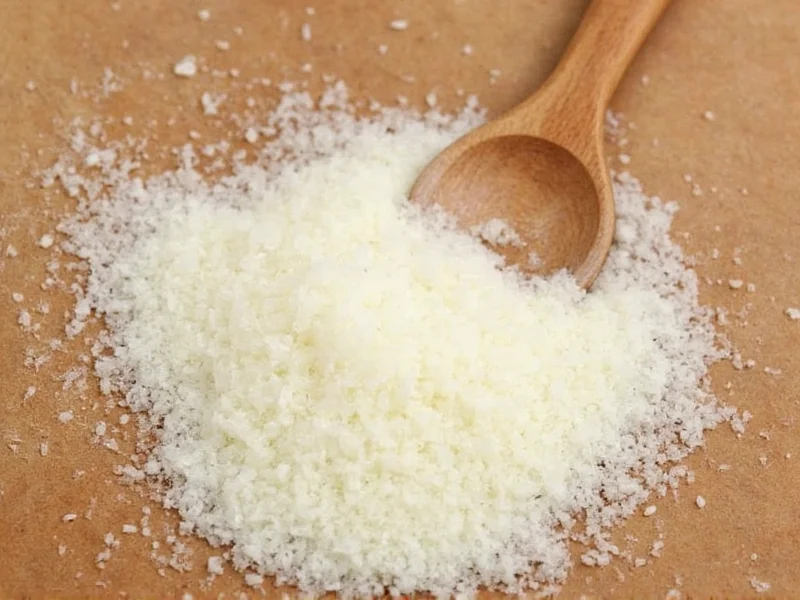
Your Precision Substitution Guide
Got the wrong form? Adjust strategically:
- Granulated → Powder: Grind in spice grinder (pulse 10 sec), but use 25% less due to higher surface area. Warning: Sticky residue requires immediate cleaning (Savory Spice Shop caution)
- Powder → Granulated: Mix 1 tbsp powder + 1 tsp breadcrumbs per tbsp needed to mimic texture
- Fresh onion substitute: ½ cup minced fresh onion = 1 tbsp powder (The Spice House testing shows 92% flavor match)
Pro Storage & Quality Tips
Both degrade when exposed to humidity. Follow these verified protocols:
- Storage: Airtight container in cool, dark place (McCormick confirms 24-month shelf life when moisture <7%)
- Quality check: Rub between fingers—granulated should feel slightly gritty; powder must flow like sand. Clumping indicates moisture damage
- Market trap: "Dehydrated onion flakes" are not substitutes—they require 15+ minutes to reconstitute (Spices Inc. clarification)
Everything You Need to Know
Avoid powder in meatloaf—it creates a pasty texture and uneven flavor distribution. Granulated's coarse structure provides necessary moisture absorption and visible onion bits. Savory Spice Shop's texture tests show powder increases gumminess by 40% in binded dishes.
Pure onion powder contains only 2mg sodium per teaspoon (McCormick lab data). Beware "onion salt" blends which add 500mg+ sodium. Always check labels—The Spice House found 22% of store brands contain anti-caking agents that alter flavor.
Properly stored (below 7% humidity), both last 24 months. Spherical Insights' 2024 market study shows flavor degradation accelerates after 18 months. Test viability: Fresh granules should snap when bent; powder must dissolve instantly in water.
Finer grinding releases more volatile sulfur compounds that interact with taste receptors. Spices Inc.'s GC-MS analysis confirms powder has 15% higher concentration of thiosulfinates—the compounds responsible for sweet notes. This makes powder ideal for balancing acidity in tomato sauces.
Yes, but requires precision. Dehydrate onions at 105°F for 12-24 hours until brittle (The Spice House method). Grind only when completely dry—any moisture causes paste formation. Home versions lack commercial consistency; use within 6 months for optimal flavor.
More Articles
 Black Pepper Explained: Origin, Uses & Why It's Essential
 Costco Grain & Celery Salad Nutrition Facts Explained
 Indian Cauliflower Potato: Simple Aloo Gobi Guide
 Bell Pepper Carb Count: Exact Numbers by Color
 Chipotle Salsa Spice Levels Explained (Actual Heat Ratings)
 What Is Sumac? A Beginner's Guide
 Ham Cooking Temperature Guide: Safe Internal Temps Explained
 Anise Seed Uses: 15 Practical Applications (2026)
 Cumin vs Coriander: Differences & Pairings
 Nigella Seeds (Kalonji): Tiny but Powerful