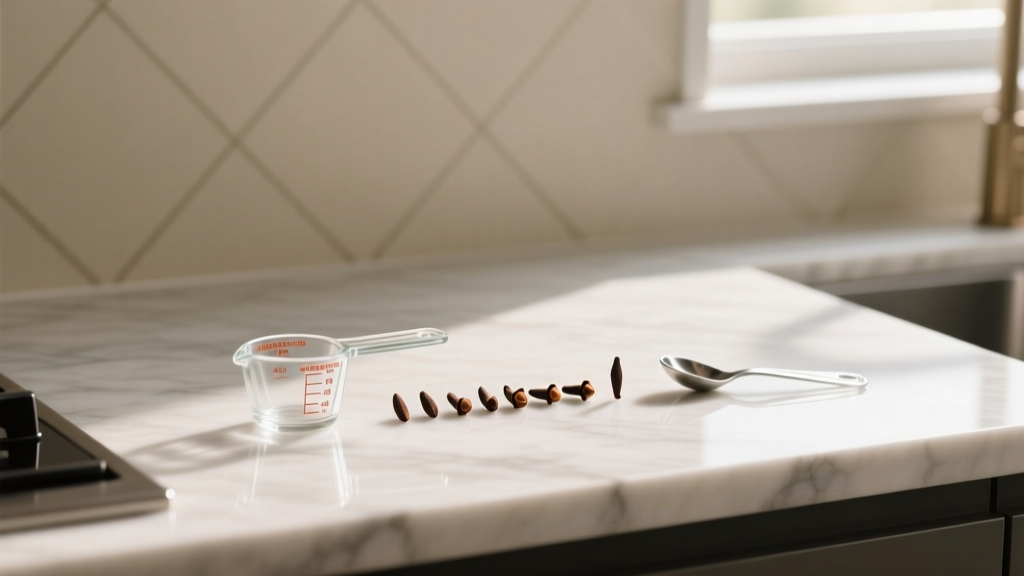
Cloves to Tsp: Exact Conversion for Cooking & Baking
Whole Cloves Are Not a Measuring Unit—And That’s Why Teaspoon Conversions Fail in Real Kitchens
In most homes, the question “How many cloves equal one teaspoon of ground?” arises only after something has already gone wrong: a mulled wine too sharp, a rice pudding faintly medicinal, or a holiday ham with an unplaceable bitterness. The assumption—that grinding whole cloves yields a predictable, stable volume—is baked into online converters and spice aisle labels. But it ignores how cloves behave when handled outside commercial mills: uneven size, variable density, moisture loss over time, and inconsistent grind fineness in home grinders. The result isn’t minor variance. It’s sensory dissonance—where the dish tastes like ‘cloves’ instead of tasting with cloves.
The conversion matters least when heat and time are generous. Simmered stews, braised meats, or slow-baked spiced cakes absorb clove presence gradually; a 20% difference in ground volume rarely shifts perception. Here, the clove functions as background architecture—not a solo note. What matters more is whether the clove was added early enough to infuse, not whether it measured precisely. In these cases, counting whole cloves (3–4 for a 4-quart pot) or eyeballing a light dusting of ground spice produces identical outcomes. Precision becomes noise. The kitchen doesn’t reward accuracy here—it rewards timing and integration.
Two common fixations waste mental bandwidth. First: “Should I use a mortar and pestle or a coffee grinder?” Neither changes the core issue—ground clove loses aromatic volatility within minutes of grinding, so equipment choice affects freshness, not dosage reliability. Second: “Do I need to weigh cloves before grinding?” Weight adds false rigor. A 1-gram batch of small cloves contains more pieces—and thus more surface area—than the same weight of large cloves, yielding different extraction rates even if volume post-grind appears identical. Neither method resolves the real instability: ground clove degrades faster than any measurement can compensate for.
The true constraint isn’t measurement—it’s shelf life under typical home conditions. Cloves stored in clear jars on sunny countertops lose volatile oils within weeks. Ground clove, even in opaque containers, flattens noticeably after 3–4 months. In many homes, the clove in the jar labeled ‘ground’ is functionally inert long before the expiration date. That means the teaspoon you’re measuring may deliver 30% of its intended aroma—or none at all. Budget, space, and habit dictate storage reality—not ideal lab conditions. No conversion chart accounts for this decay. You can calibrate your spoon all day; if the powder is stale, the number is meaningless.
Contrary to intuition, the right call depends entirely on context—not on finding ‘the correct ratio’. For quick sautés or finishing sauces, whole cloves (lightly crushed) outperform pre-ground every time: they release aroma on demand and stop when removed. For baked goods where uniform dispersion matters, freshly ground is non-negotiable—but only if used within hours. For overnight marinades, whole cloves dominate; ground clove diffuses too fast and turns acrid. There is no universal answer. There is only alignment between form, timing, and thermal exposure.
Here’s what works instead of memorizing ratios: match clove form to thermal duration. If cooking time is under 10 minutes, use whole (crushed). If it’s 20–60 minutes, use freshly ground—grind just before adding. If it’s longer than 90 minutes, whole cloves (whole or lightly cracked) are safer and more controllable. This isn’t a rule—it’s a thermal filter. It bypasses measurement entirely and treats clove as a time-release compound, not a volumetric ingredient.
| What people fixate on | What it affects | When it matters | When it doesn't |
|---|---|---|---|
| Number of whole cloves per tsp ground | Initial aroma intensity in short-cooked dishes | Finishing sauces, quick stir-fries, cold infusions | Slow-simmered soups, braises, baked custards |
| Grind fineness (fine vs coarse) | Rate of oil release and bitterness onset | Medium-heat sautés, pan sauces, rice pilafs | Steeping in hot liquid >5 min, dry-roasting spices |
| Using pre-ground vs freshly ground | Aromatic fidelity and top-note clarity | Cold applications (chutneys, dressings), last-minute garnishes | Dishes cooked >45 min at medium-low heat |
| Storing ground cloves in glass jars | Actual volatile oil content at point of use | Households without dark cabinets or refrigeration | Those using cloves within 2 weeks of grinding |
Quick verdicts for home cooks
- If making mulled cider for guests tonight, skip grinding—use 6 whole cloves, remove before serving.
- For gingerbread batter, grind cloves fresh and fold in immediately—don’t prep ahead.
- When seasoning roast chicken skin, crush 2 cloves finely and mix with salt—no teaspoon needed.
- If your ground clove smells faint or dusty, discard it—even if the jar says ‘good until 2026’.
- For rice pudding simmered 45 minutes, ¼ tsp pre-ground works fine—no need to count cloves.
- When reviving old ground clove, toast it 20 seconds in a dry pan—don’t add more volume.
Frequently asked questions
Why do people think clove-to-teaspoon conversion is about accuracy?
Because packaging and blogs present it as a math problem—not a degradation timeline. They ignore that ground clove loses potency faster than most home cooks replace it.
Is it actually necessary to grind cloves right before use?
Only when aroma is the primary goal and heat exposure is brief. For long simmers or baking, freshness matters less than form and timing.
What happens if you ignore clove age and rely only on volume?
You risk flatness or unexpected bitterness—especially in delicate dairy-based dishes where stale clove notes become dominant.
More Articles
 Oats Cooking Ratios & Timing for Perfect Oatmeal
 Fresh Ginger to Ground Ginger Conversion: Ratios & Tips
 Allspice: One Berry, Every Flavor
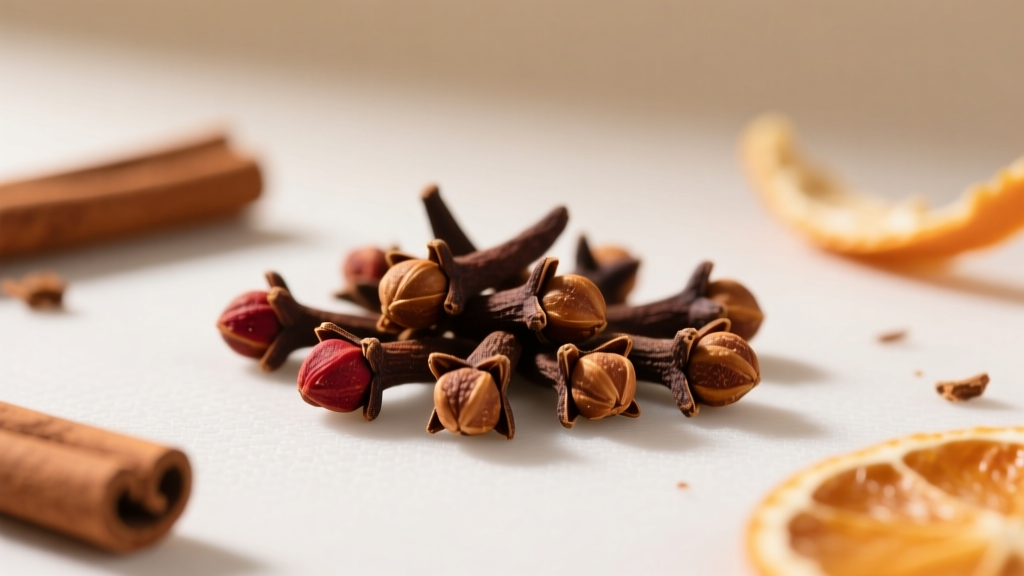 Do Cloves Expire? Shelf Life, Storage & Safety Facts
 How To Organize Your Spice Cabinet for Maximum Flavor, Efficiency, and Longevity
 Turmeric for Masala: Science & Techniques for Blends
 Oven-Baked Tuna Steaks: Foolproof Method & Timing
 Mastering the Classic American Potato Salad Recipe
 Perfect Pairings: What to Serve with White Chicken Chili
Saffron Grading System Explained (2026)
Perfect Pairings: What to Serve with White Chicken Chili
Saffron Grading System Explained (2026)