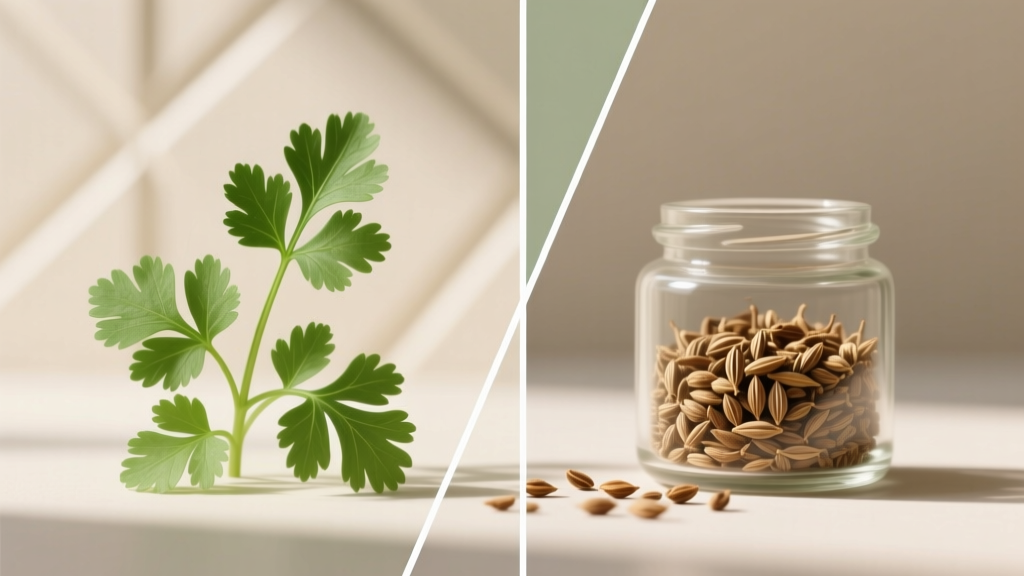
Cilantro vs Coriander: Same Plant, Different Names Explained
Cilantro and Coriander Are Not a Naming Conflict—They’re a Context Collapse
Most people think the cilantro/coriander confusion is about terminology: one word for two parts of the same plant, split by geography or habit. That’s not wrong—but it’s dangerously incomplete. The real friction isn’t linguistic. It’s cognitive: we treat the label as if it carries functional equivalence, like ‘basil’ meaning the same herb whether fresh or dried. But cilantro leaves and coriander seeds share zero functional overlap in flavor chemistry, volatility, or thermal behavior. In many homes, this misunderstanding shows up as last-minute panic—grabbing dried coriander because the recipe says ‘coriander’, then tasting flatness in a salsa, or adding raw cilantro to a slow-braised curry and watching its brightness vanish before serving. The consequence isn’t error—it’s eroded confidence. You stop trusting your own palate because the label promised continuity that doesn’t exist.
The distinction stops mattering entirely when you’re building background depth—not top-note identity. Coriander seed, toasted and ground, adds warm, citrusy-woody resonance to spice blends meant to simmer for hours. Cilantro leaves contribute volatile aldehydes that evaporate above 60°C (140°F) and vanish under steam. So if your goal is structural support—say, seasoning lentils before pressure-cooking—coriander seed works. Cilantro won’t. But if your goal is finishing freshness—garnishing dal just before serving—only raw cilantro delivers. Neither is ‘substitutable’ here; they’re non-overlapping tools. In a home kitchen, using one where the other is intended rarely breaks the dish outright. It simply removes a layer the recipe counted on—and you won’t notice until you compare it to something made with the right ingredient, in the right role.
Two ‘invalid’ debates dominate home cooking forums: (1) ‘Which is more authentic?’ and (2) ‘Should I buy both or just one?’ Both are distractions. Authenticity presumes a single origin point—a myth in globalized food culture. A Mexican home cook uses fresh cilantro in salsas and coriander seed in chorizo spice rubs—not because of ‘tradition’ but because each matches the functional demand of the dish. As for buying both: it’s not about authenticity, but about shelf-life realism. Dried coriander lasts 2–3 years in a cool pantry. Fresh cilantro wilts in 4 days—even with stem-in-water storage. If you cook weekly but only use cilantro twice a month, buying it fresh every time means waste. Buying coriander seed once a year means stability. The question isn’t ‘should you own both?’ It’s ‘what decay curve can your routine absorb?’
The one constraint that actually determines success is refrigeration access—not knowledge, not budget, not even taste preference. Most homes have inconsistent cold-chain reliability: crisper drawers fluctuate between 2°C and 8°C, and door shelves hover near 10°C. That range is fine for dried coriander but lethal for cilantro. At 7°C+, cilantro stems soften, leaves yellow, and aldehyde content drops measurably within 48 hours. No amount of rinsing or re-trimming fixes that. So if your fridge runs warm—or if you shop infrequently—the real risk isn’t mislabeling. It’s serving cilantro that’s chemically inert before it hits the plate. That’s not a ‘mistake’. It’s physics meeting infrastructure.
Lately, grocery labeling has shifted—not toward clarity, but toward ambiguity. More US supermarkets now label fresh bunches as ‘cilantro (coriander leaves)’ and dried spice jars as ‘coriander (ground cilantro seed)’. This isn’t education. It’s hedging: brands avoid ‘confusing’ shoppers by making both names visible, assuming visibility equals understanding. But it doesn’t. It deepens the illusion that the terms are interchangeable modifiers—not discrete ingredients with divergent roles. The signal isn’t growing awareness. It’s growing surrender to the idea that precision is too hard for home use. That’s why the confusion persists: not because people don’t know the difference, but because the system no longer rewards knowing it.
Over the past year, home cooks have quietly stopped asking ‘What is coriander?’ and started asking ‘What does this *do* in the dish?’ That shift—from taxonomy to function—is the first sign the collapse is stabilizing. You don’t need to memorize botanical Latin. You need to recognize whether the recipe expects volatile top notes (cilantro) or stable base notes (coriander seed). And you need to accept that some dishes tolerate substitution better than others—not because the ingredients are similar, but because their absence is less noticeable in certain matrices. A vinaigrette without cilantro tastes thin. A garam masala without coriander seed tastes hollow. One is fixable mid-prep. The other requires remaking the blend.
| What people fixate on | What it affects | When it matters | When it doesn't |
|---|---|---|---|
| Whether the label says 'cilantro' or 'coriander' | Ingredient selection at point of purchase | When the recipe specifies raw garnish vs. dry spice base | When building a neutral broth or rice pilaf with no aromatic finish |
| Using fresh vs. dried form interchangeably | Volatility and thermal resilience of flavor compounds | In quick-finish dishes (salsas, chutneys, curries served immediately) | In long-simmered stews where all top notes have already dissipated |
| Substituting one for the other based on 'same plant' logic | Sensory architecture of the final dish | When the dish relies on contrast—e.g., cooling cilantro against spicy heat | When the dish is structurally dominated by fat, acid, or umami (e.g., mayonnaise-based dressings) |
| Storing both forms identically | Shelf life and chemical integrity | In humid climates or warm-fridge households | In consistently cold, dry pantries with sealed containers |
Quick verdicts for home cooks
- If your recipe calls for ‘coriander’ and you’re stirring it into hot oil before adding onions, use ground coriander seed—not fresh leaves.
- If you’re topping a finished soup or taco with green herbs, only fresh cilantro delivers the expected lift—dried coriander won’t recover it.
- Buying whole coriander seed instead of pre-ground gives you more control over intensity and avoids stale batches from supermarket shelves.
- When cilantro yellows fast in your fridge, switch to frozen cilantro paste for cooked applications—not garnishes, but bases like chutney or marinade.
- If family members dislike cilantro’s soapy note, omitting it rarely harms texture or structure—just skip the garnish and add lime zest instead.
- For meal prep batches, coriander seed holds up across weeks; cilantro must be added fresh per serving or omitted entirely.
Frequently asked questions
Why do people think cilantro and coriander are interchangeable because they come from the same plant?
Because botanical kinship implies functional similarity—but leaves and seeds evolve different compounds for different ecological roles. A plant doesn’t optimize flavor for human use.
Is it actually necessary to toast coriander seed before grinding it?
In most home kitchens, toasting isn’t mandatory—but skipping it forfeits 70% of its aromatic depth. Untoasted coriander reads as dusty, not citrusy.
What happens if you ignore the cilantro/coriander distinction in a marinade?
You’ll get either muted flavor (using seed where leaf is needed) or bitter grassiness (using raw leaf where toasted seed belongs)—but neither will make the meat unsafe or inedible.
More Articles
 Oven Pot Roast Guide: Foolproof Steps for Tender Results
 Peanut Sauce for Satay: 7 Easy Variations & Tips
 Sweet Potato Recipe Guide: Foolproof Baking and Cooking Tips
 Air Fryer Baked Potatoes: Fast & Foolproof Guide
 Trader Joe's Minced Garlic: Truth Revealed (2026)
 Sweet Potato Casserole: Simple Recipe & Pro Tips
 Potato Chip Recipes: Quick Cooking Hacks That Work
 Mexican Fruit Seasons: Year-Round Availability Guide
 Beef Steak Cooking: Step-by-Step for Perfect Results
 How to Make Pumpkin Seeds: Simple Roasting Guide