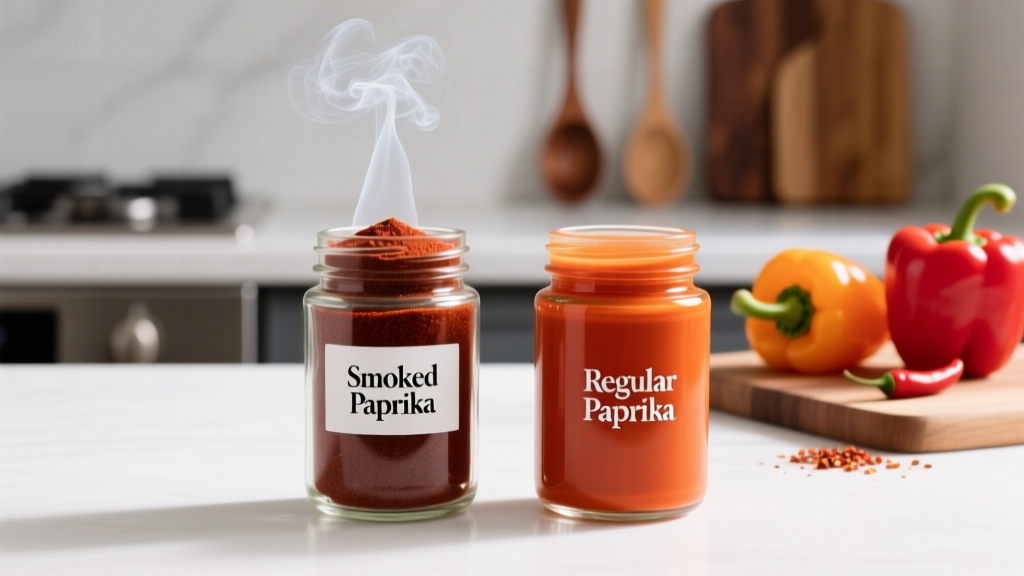
Smoked vs Regular Paprika: When to Use Each
Quick Answer: They're Made from Different Processes
Regular paprika is made from dried, ground red peppers. Smoked paprika (pimentón) is made from peppers that are smoke-dried over oak fires before grinding. This single difference creates two completely distinct flavor profiles that aren't always interchangeable.
Flavor Profile Comparison
Regular Paprika
Sweet, mild, and slightly fruity. Hungarian paprika ranges from sweet (édesnemes) to hot (erős), with the sweet variety being most common in grocery stores. It adds color and a gentle warmth without overpowering other ingredients.
Smoked Paprika
Deep, woodsy, and unmistakably smoky. Spanish pimentón comes in three varieties: dulce (sweet), agridulce (bittersweet), and picante (hot). The smoking process gives it a barbecue-like depth that can dominate a dish.
When to Use Regular Paprika
- Deviled eggs — a light dusting for color without altering the filling's flavor
- Chicken paprikash — Hungarian sweet paprika is essential for this classic stew
- Rice dishes — adds golden color and subtle sweetness
- Marinades where you don't want smokiness — let other spices shine
- Garnishes — the bright red color makes any dish look more appetizing
When to Use Smoked Paprika
- Barbecue rubs and sauces — reinforces the smoky flavor from the grill
- Roasted vegetables — especially potatoes, sweet potatoes, and cauliflower
- Chorizo and sausage recipes — pimentón is the defining spice in Spanish chorizo
- Soups and stews with beans — adds depth to lentil, black bean, or chickpea dishes
- Grilled meats (when you can't grill) — brings outdoor flavor to indoor cooking
Can You Substitute One for the Other?
Sometimes, but with caution:
- Regular → Smoked: Use half the amount. Smoked paprika is much more assertive and can overwhelm delicate dishes. If a recipe calls for 2 tsp regular, start with 1 tsp smoked.
- Smoked → Regular: Use the same amount plus a tiny drop of liquid smoke or a pinch of chipotle powder to approximate the smoky character. It won't be identical but gets you close.
Avoid swapping in recipes where paprika is the star ingredient (like Hungarian goulash or patatas bravas) — the flavor shift will be too noticeable.
Storage Tips
Both types lose potency quickly. Buy in small quantities and store in airtight containers away from light. If your paprika has no aroma when you open the tin, it's time to replace it. Smoked paprika tends to hold its flavor slightly longer due to the smoke-drying process.
Buying Guide
- Regular: Look for Hungarian brands with "édesnemes" (sweet-noble) labeling for the best quality
- Smoked: Spanish "Pimentón de la Vera" has protected designation of origin (DOP) and is the gold standard
Bottom Line
Keep both in your spice rack. Regular paprika is your everyday color-and-mild-flavor workhorse. Smoked paprika is your secret weapon for adding depth and that outdoor-cooked taste to any dish. They complement each other beautifully in spice blends — try mixing both in your next barbecue rub.
More Articles
 Simple Homemade Tomato Basil Soup Recipe in 30 Minutes
 Powder vs. Facts: Why Ground Spices Lose Potency—and What the Data Really Shows
 Garlic Sauce for Chicken: Simple Recipe & Pro Tips
 Lowest Carb Potato: Yukon Gold vs Sweet Potato Facts
 Mouldy Sweet Potato: When to Discard and Why It's Dangerous
 How to Cook Lamb Roast: Juicy Results Every Time
 Best Whole Grain Mustard Substitutes for Any Recipe
 Quiche Lorraine Spinach Mushroom: Recipe & Tips
 How to Cook Okra Without Slime: Practical Methods
 The Ultimate Storage Guide: Preserve Flavor, Potency, and Freshness of Your Spices for Up to 4 Years