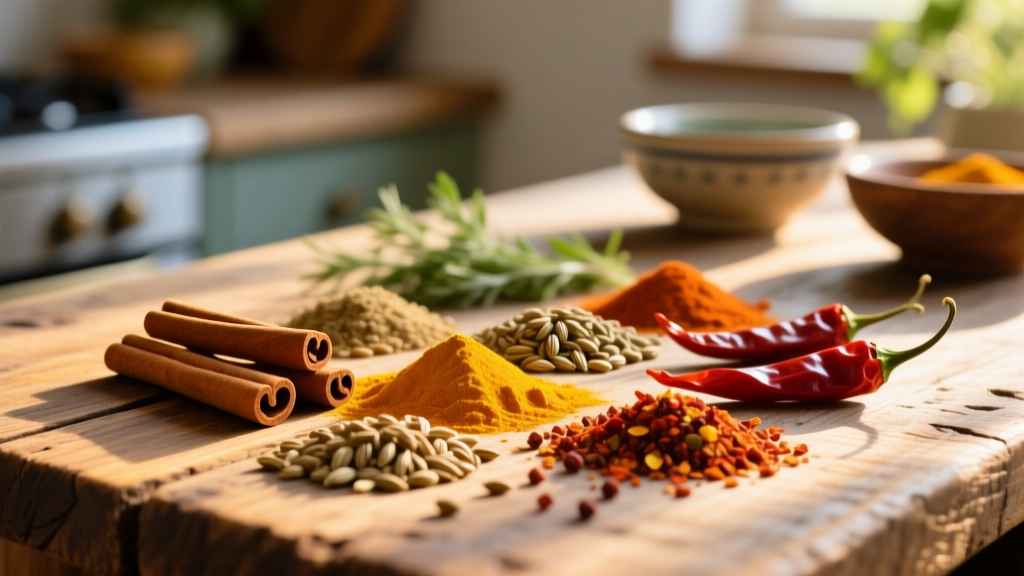
Sumac Spice: Tangy Flavor from the Middle East
What Is Sumac?
Sumac is a deep red-purple spice made from the dried, ground berries of the Rhus coriaria shrub, native to the Mediterranean and Middle East. It delivers a bright, lemony tartness without the liquid acidity of citrus juice - making it indispensable in cuisines from Turkey to Iran.
Flavor Profile
Sumac tastes like a cross between lemon zest and pomegranate molasses: tangy, slightly fruity, with a faint astringency. It is not hot or pungent. The tartness comes from malic acid and citric acid naturally present in the berries.
How It Compares
- vs. Lemon juice: Sumac adds tang without adding moisture - crucial for dry rubs and salads
- vs. Tamarind: Less sweet, more straightforward sourness
- vs. Amchur (mango powder): Similar tartness but fruitier, less earthy
Culinary Uses
Za'atar Blend
Sumac is a core ingredient in za'atar - mixed with dried thyme, sesame seeds, and salt. Sprinkle over olive oil-drizzled flatbread before baking for a classic Levantine breakfast.
Salads
In fattoush, sumac is sprinkled generously over the bread-and-vegetable salad, providing the acidic backbone that lemon juice alone cannot achieve. It also seasons Iranian shirazi salad (cucumber, tomato, onion).
Grilled Meats
Turkish cooks dust sumac over raw onion slices served alongside kebabs - the spice softens the onion's bite while adding color. It also works as a finishing spice on grilled chicken, lamb, or fish.
Rice Dishes
In Iranian cuisine, sumac is sprinkled over chelo kebab (saffron rice with grilled meat), adding visual contrast and a tart counterpoint to the rich, buttery rice.
Buying and Storage
- Look for deep burgundy color - pale or brownish sumac is old or adulterated
- Buy from Middle Eastern markets or specialty spice shops for best freshness
- Store in an airtight container away from light; it keeps well for 12 months
- Some commercial sumac is mixed with salt - check the label if watching sodium
Easy Substitutions
If you cannot find sumac, mix 1 tsp lemon zest with a pinch of paprika for color. It will not be identical, but the tang and visual appeal will be close enough for most recipes.
Health Notes
Sumac is rich in antioxidants - particularly flavonoids and tannins. Traditional medicine in the Middle East has used it for digestive issues and inflammation. Modern research confirms significant antioxidant capacity, though more clinical studies are needed.
More Articles
 Best Spice Storage & Usage Hacks for Culinary Precision and Longevity
 Mistakes and Practical Alternatives to 'Actually' in Spice Blending, Sourcing, and Cooking
 Seed and Essential: Understanding the Fundamental Differences Between Whole Spices and Their Concentrated Oils
 How to Choose Turmeric: A Practical Guide to Quality, Purity, and Culinary Performance
 Furikake: Japan's Versatile Rice Seasoning — Types, Recipe, and Uses
 Masala Dabba: The Indian Spice Box Explained
 Cumin and Ginger Compared: Flavor Profiles, Culinary Uses, Medicinal Evidence, and Global Spice Traditions
 Spice Storage, Usage Hacks, Tools & Checklist: Preserve Flavor, Extend Shelf Life, and Cook Smarter
 12 Creative DIY Rice Ideas That Transform Everyday Grains Into Global Flavor Experiences
 Za'atar Through the Ages: How a Levantine Herb Blend Conquered Global Kitchens