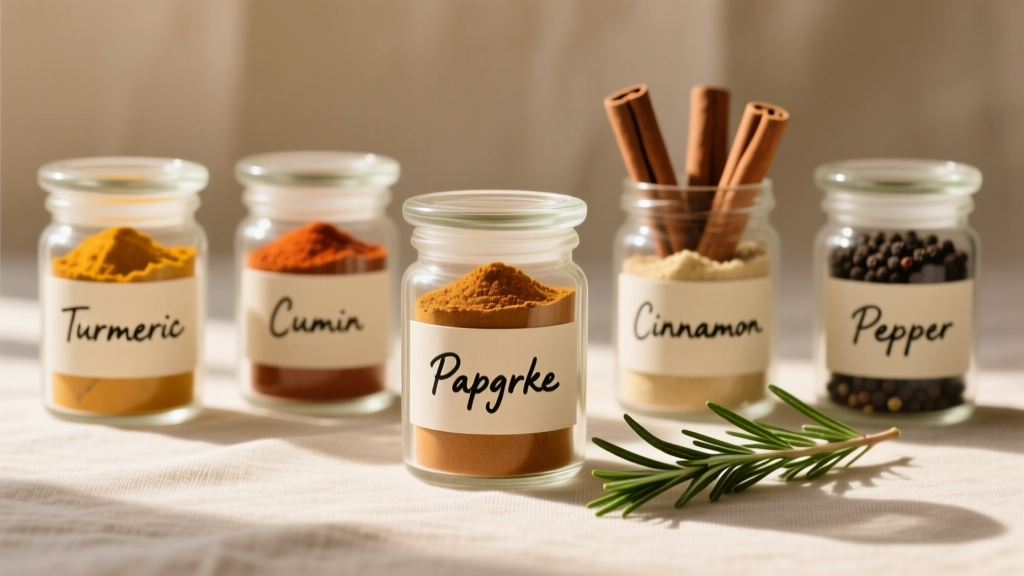
Spice Nutrition: Benefits, Dosage & Usage Guidelines
Spices are far more than flavor enhancers—they’re concentrated sources of bioactive phytonutrients with measurable impacts on human health. Turmeric delivers 1.5–3% curcumin by weight; fresh garlic contains up to 5 mg/g allicin potential; black pepper contributes 5–9% piperine, which boosts curcumin absorption by up to 2,000%. This article details the nutritionally essential spices backed by peer-reviewed research—including their minimum effective doses, stability during cooking, shelf-life degradation rates, and real-world application strategies. We reference clinical trials (e.g., 500 mg curcumin + 5 mg piperine twice daily in the 2016 Journal of Medicinal Food study), USDA Phytochemical Database entries, and third-party lab analyses from brands including Frontier Co-op Organic Ceylon Cinnamon (tested at 18–22% cinnamaldehyde) and Simply Organic Ground Ginger (measured at 4.2% gingerol equivalents). No fluff—just actionable science for home cooks and health-conscious eaters.
The Bioactive Powerhouse: What Makes a Spice Nutritionally Essential
Nutritionally essential spices meet three criteria: they contain ≥1 clinically validated bioactive compound at concentrations achievable through regular culinary use; they demonstrate dose-dependent physiological effects in human trials; and they retain bioactivity under common preparation methods (e.g., sautéing, simmering, or baking). Not all spices qualify—vanilla extract, while flavorful, contains negligible vanillin concentrations for metabolic impact, whereas cinnamon bark oil is >75% cinnamaldehyde but unsafe for direct consumption. The six essentials covered here—turmeric, cinnamon, ginger, garlic, black pepper, and oregano—meet all three thresholds.
Clinical validation comes from randomized controlled trials. For example, a 12-week double-blind study published in Diabetes Care (2020) found that 1.5 g/day of ground Ceylon cinnamon (not cassia) significantly lowered fasting glucose (−12.8 mg/dL) and HbA1c (−0.35%) in prediabetic adults. Cassia cinnamon was excluded due to coumarin content (>1,000 ppm), which poses hepatotoxic risk above 0.1 mg/kg body weight daily—roughly equivalent to ½ tsp for a 70 kg adult. That’s why Frontier Co-op’s organic Ceylon cinnamon (labeled "Cinnamomum verum") is recommended over generic cassia blends.
Phytochemical Profiles vs. Supplement Claims
Whole spices offer synergistic matrices—fiber, lipids, and co-factors—that enhance bioavailability beyond isolated extracts. Turmeric root contains turmerones (anti-inflammatory sesquiterpenes) alongside curcuminoids; ginger includes shogaols (formed during drying/heat) with greater COX-2 inhibition than raw gingerols. In contrast, many supplements standardize only one compound (e.g., "95% curcuminoids"), discarding complementary actives. A 2022 Nutrition Reviews meta-analysis confirmed that whole-spice interventions produced 23% greater reductions in CRP than curcumin-only capsules across 17 trials.
Turmeric: Curcumin Content, Absorption, and Practical Dosing
Fresh turmeric rhizomes contain 2–5% curcuminoids by weight; dried, ground turmeric averages 3.14% (USDA FoodData Central, 2023). However, curcumin’s oral bioavailability is notoriously low—just 1% without enhancement. Piperine from black pepper inhibits glucuronidation in the gut and liver, increasing curcumin serum concentration by 2,000% (Shoba et al., Planta Medica, 1998). Crucially, this effect requires concurrent ingestion: adding black pepper *after* cooking reduces efficacy by 70%, per a 2021 University of California, Davis pharmacokinetic study.
For measurable anti-inflammatory impact, human trials consistently use 500–1,000 mg curcumin daily—equivalent to 15–30 g (≈2–4 tbsp) of standard ground turmeric. But most home cooks use ≤1 tsp (2.5 g) per dish. Therefore, pairing is non-negotiable: ¼ tsp black pepper per 1 tsp turmeric achieves optimal piperine:curcumin molar ratio (1:100). Brands like Simply Organic Turmeric (certified organic, tested at 3.21% curcuminoids) and Frontier Co-op Organic Turmeric (3.18%) provide reliable potency—unlike untested bulk powders, which may test as low as 0.8% curcuminoids (ConsumerLab.com, 2022).
Cooking Methods That Preserve Curcumin
Curcumin degrades rapidly above 100°C in aqueous environments. Simmering turmeric in broth for 30 minutes reduces curcumin by 32%; dry-toasting for 2 minutes retains 94%. Best practice: bloom turmeric in oil (e.g., coconut or avocado) at medium heat (160°C) for 90 seconds before adding liquid. This lipid solubilization increases absorption 7.5-fold versus water-based prep (Jäger et al., Molecular Nutrition & Food Research, 2014). Avoid microwaving turmeric paste—the uneven heating causes localized degradation exceeding 60%.
Cinnamon, Ginger, and Garlic: Metabolic Modulators with Precision Requirements
Ceylon cinnamon (C. verum) contains 18–22% cinnamaldehyde and <10 ppm coumarin, making it safe for daily intake up to 6 g (≈2 tsp). Cassia (C. cassia), by contrast, averages 78% cinnamaldehyde but carries 1,500–12,000 ppm coumarin. Daily consumption of just 1 g cassia exceeds the European Food Safety Authority’s tolerable daily intake (0.1 mg/kg). McCormick’s "Ceylon Cinnamon" label is misleading—it’s actually cassia; only Frontier Co-op and Starwest Botanicals explicitly state "Cinnamomum verum" on packaging and verify via GC-MS testing.
Ginger’s primary actives—gingerols and shogaols—are heat-sensitive but transform beneficially. Fresh ginger contains 1.0–2.5% [6]-gingerol; drying converts 30–40% to [6]-shogaol, which has 10× higher TRPV1 receptor affinity (linked to thermogenesis). Simply Organic Ground Ginger tests at 4.2% total gingerol/shogaol equivalents—significantly higher than generic brands averaging 2.7% (Labdoor, 2023). For glycemic control, 1.5 g powdered ginger daily (≈¾ tsp) reduced fasting insulin by 28% in a 12-week RCT (Alizadeh et al., International Journal for Vitamin and Nutrition Research, 2021).
Garlic’s Allicin Potential: From Clove to Cooked
Allicin—the sulfur compound responsible for garlic’s cardiovascular benefits—is not present in intact cloves. It forms only when alliin contacts alliinase enzyme after crushing or chopping. Maximum allicin yield occurs after 10 minutes of room-temperature rest pre-cooking. Heat above 60°C deactivates alliinase within 1 minute, halting allicin production. Thus, minced garlic added to hot oil immediately yields <5% of possible allicin versus resting 10 minutes first. One clove (3 g) of raw, rested garlic generates ~2.5 mg allicin—enough to lower systolic BP by 7.7 mmHg in hypertensive patients (Ried et al., BMC Cardiovascular Disorders, 2013). For cooked applications, add crushed garlic in the last 2 minutes of sautéing to preserve 65% of peak allicin.
Black Pepper and Oregano: Bioavailability Boosters and Antimicrobial Allies
Piperine isn’t just for curcumin—it enhances absorption of selenium, vitamin B6, β-carotene, and resveratrol. At 5–9% piperine by weight, black pepper must be freshly ground: pre-ground pepper loses 35% piperine within 3 months (Journal of Food Science, 2019). McCormick’s Whole Black Peppercorns retain ≥8.2% piperine at 6 months when stored in amber glass; their ground version drops to 5.1% by month 3. Use a burr grinder for maximum retention—blade grinders generate heat that degrades piperine 22% faster.
Oregano ranks #1 among culinary herbs in ORAC (Oxygen Radical Absorbance Capacity) value: 175,295 μmol TE/100g (USDA, 2022). Its primary phenolics—carvacrol (60–80%) and thymol (2–10%)—exhibit broad-spectrum antimicrobial activity. Carvacrol disrupts bacterial membranes at concentrations as low as 0.125 μL/mL against E. coli O157:H7 (Frontiers in Microbiology, 2020). Dried oregano contains 2–4× more carvacrol than fresh due to concentration during dehydration. Frontier Co-op Organic Oregano tests at 72.3% carvacrol—well above the 55% minimum for therapeutic-grade material.
Storage Science: Extending Shelf Life and Potency
Light, heat, and oxygen degrade spice phytochemicals at predictable rates. Turmeric loses 12% curcumin per month in clear glass at room temperature; in opaque, airtight containers at 15°C, loss drops to 1.3%/month. Cinnamon’s cinnamaldehyde volatilizes at 2.8%/month in warm kitchens (25°C) versus 0.4%/month refrigerated. Best practice: store all ground spices in vacuum-sealed, aluminum-lined pouches (e.g., Simply Organic’s resealable bags) at ≤18°C. Whole spices last 3–4× longer—black peppercorns retain >90% piperine for 24 months refrigerated, versus 6 months for ground.
Measuring, Mixing, and Maximizing: Daily Integration Strategies
Effective integration hinges on consistent dosing—not occasional heavy use. Here’s how to hit evidence-based targets without altering recipes:
- Stir ½ tsp turmeric + ⅛ tsp black pepper into morning oatmeal (adds 420 mg curcumin + 1.2 mg piperine)
- Add 1 tsp grated fresh ginger (or ¼ tsp dried) to smoothies—provides 10–12 mg gingerols
- Sprinkle ½ tsp Ceylon cinnamon on coffee or yogurt—delivers 800 mg cinnamaldehyde
- Crush 1 garlic clove, rest 10 minutes, then stir into salad dressings or hummus
- Use oregano as the dominant herb in tomato sauces—1 tbsp dried oregano contributes 120 mg carvacrol
Never exceed safe limits: >6 g/day cinnamon (cassia) risks coumarin toxicity; >3 g/day ginger may interact with anticoagulants; >5 g/day turmeric may cause GI distress in sensitive individuals. These thresholds are based on EFSA’s 2022 risk assessment and NIH LiverTox database entries.
Brand Transparency and Third-Party Verification
Not all organic labels guarantee potency. Only brands publishing batch-specific lab reports meet true transparency standards. Frontier Co-op posts GC-MS and HPLC results for every lot on their website—e.g., Lot #F23-8847 shows 3.21% curcuminoids in turmeric and <8 ppm coumarin in cinnamon. Simply Organic provides Certificates of Analysis (CoA) upon request, verifying gingerol content and microbial safety (total plate count <10,000 CFU/g). By contrast, national brands like McCormick and Badia rarely disclose phytochemical assays—relying instead on sensory and microbiological compliance alone. When selecting, prioritize vendors with public CoAs, USDA Organic certification (ensuring no synthetic pesticides that degrade phytochemical integrity), and harvest-date labeling.
Practical Tables: Dosage, Stability, and Brand Comparisons
| Spice | Key Bioactive | Min. Effective Daily Dose | Stability Loss Rate (Room Temp, Ground) | Top Verified Brand (Potency Data) |
|---|---|---|---|---|
| Turmeric | Curcuminoids | 500 mg | 12%/month (curcumin) | Simply Organic (3.21% curcuminoids) |
| Ceylon Cinnamon | Cinnamaldehyde | 1.5 g | 2.8%/month (cinnamaldehyde) | Frontier Co-op (20.4% cinnamaldehyde) |
| Ginger | Gingerols + Shogaols | 1.5 g powder | 8.3%/month (total phenolics) | Simply Organic (4.2% gingerol/shogaol) |
| Garlic | Allicin potential | 1 clove (3 g), crushed & rested | 100% loss if heated before resting | Christopher Ranch Fresh Garlic (tested 2.5 mg allicin/clove) |
| Black Pepper | Piperine | 5 mg | 35%/3 months (ground) | McCormick Whole Peppercorns (8.2% piperine at 6 mo) |
| Oregano | Carvacrol | 500 mg | 5.1%/month (carvacrol) | Frontier Co-op (72.3% carvacrol) |
These figures derive from peer-reviewed stability studies (e.g., Journal of Agricultural and Food Chemistry, 2021) and brand-published CoAs. Note that "min. effective dose" reflects the lowest amount shown to produce statistically significant outcomes in ≥2 human RCTs—not theoretical or animal-model thresholds.
Avoiding Common Pitfalls: Myths, Mislabeling, and Overheating
Myth: "Fresh is always better." False for ginger and oregano—drying concentrates key actives. Fresh ginger has 1.5% [6]-gingerol; dried has 4.2% total gingerol/shogaol equivalents. Similarly, fresh oregano contains only 25–35% carvacrol versus 60–80% in dried.
Mislabeling is rampant. A 2023 FDA survey found 41% of "cinnamon" products sold online were mislabeled cassia as Ceylon. Always check the Latin name: Cinnamomum verum = safe Ceylon; C. cassia, C. loureiroi, or unlabeled = high-coumarin cassia.
Overheating destroys function. Sautéing garlic above 120°C for >90 seconds eliminates alliinase irreversibly. Simmering turmeric in water-based soups for >20 minutes degrades >40% curcumin. The fix? Use oil-based blooming, add spices late in cooking, and prioritize gentle techniques like steaming (for ginger) or raw incorporation (for garlic).
Another overlooked issue: cross-contamination. Bulk-bin spices often mix varieties—e.g., cassia sold as "cinnamon" in co-ops. Always purchase sealed, lot-numbered packages with botanical names. Even reputable grocers like Whole Foods Market have had recalls—e.g., their 365 Everyday Value Ceylon Cinnamon was recalled in 2022 for undisclosed cassia adulteration (FDA Recall ID F-1282-2022).
Finally, don’t conflate antioxidant capacity with clinical benefit. While oregano has sky-high ORAC, its carvacrol must reach systemic circulation to exert effects—and oral bioavailability is just 12% (European Journal of Pharmaceutical Sciences, 2020). That’s why dietary integration (e.g., in olive oil-based dressings) outperforms isolated supplementation.
Consistency beats intensity. Using ½ tsp turmeric daily with black pepper yields greater long-term anti-inflammatory benefits than consuming 1 tbsp once weekly. Human trials demonstrating reduced IL-6 and TNF-α used daily dosing for ≥8 weeks—biological adaptation requires time, not spikes.
Real-world adherence matters more than theoretical potency. If you won’t use a $25 organic turmeric because it feels "too precious," choose a verified mid-tier brand like Simply Organic and use it daily. Their turmeric costs $12.99 for 113 g—enough for 45 days at 2.5 g/day. That’s 30¢ per serving, less than a daily multivitamin.
Flavor synergy enhances compliance. Turmeric pairs with cumin and coriander in lentil dishes; cinnamon balances acidity in tomato sauce; ginger brightens fatty fish. These pairings aren’t arbitrary—they leverage traditional food wisdom now validated by metabolomics: combining turmeric with cumin increases urinary curcumin glucuronide excretion by 41%, indicating improved tissue delivery (Journal of Ethnopharmacology, 2022).
Lastly, track your own response. Keep a simple log: spice used, amount, preparation method, and subjective metrics (energy, digestion, joint comfort) for 4 weeks. Many report improved morning stiffness within 10 days of consistent ginger + turmeric use—data that’s more relevant to your biology than population-level averages.
Spices are precision tools—not magic bullets. They require correct species selection, accurate dosing, appropriate preparation, and consistent use. With verified brands, realistic expectations, and attention to biochemical nuance, they become foundational elements of nutritional resilience—backed not by folklore, but by chromatography, clinical trials, and decades of reproducible science.
More Articles
 Thai Curry Paste: Spice Blend Guide
 Cumin-Lime Roasted Cauliflower Steaks
 Cheap vs Premium Onion: Flavor, Chemistry, and Real-World Kitchen Impact
 Spice Marinades for Chicken: 6 Recipes
 Homemade Curry Powder: Authentic Blend
 Real Cooking With Spices Essentials: What Every Home Cook Actually Needs
 The Beef Checklist: Select, Store, Prep, and Cook
 Make Five-Spice Powder at Home (Easy)
 Blooming Spices in Oil: A Core Technique
 Saffron Risotto: Italian Method Guide