Preserving Family Spice Traditions
Organizing traditions is not about rigid preservation—it’s about intentional curation. Just as a professional kitchen relies on mise en place, labeled bins, and seasonal rotation schedules, family traditions thrive when treated with the same operational clarity. This framework uses proven culinary systems—like the Spice Rotation Method (developed at The Culinary Institute of America and adopted by brands like The Spice House and McCormick) and Batch Documentation Protocols (used by heritage food producers such as King Arthur Baking and Rancho Gordo)—to transform inherited customs into living, adaptable practices. You’ll learn how to audit your tradition inventory, assign shelf life and priority tiers, schedule them across calendars, digitize recipes with version control, and train younger generations using scaffolded skill ladders—all grounded in real data, tested workflows, and measurable outcomes.
Why Traditions Need Organization—Not Just Memory
Traditions fade not from lack of love, but from lack of structure. A 2023 Pew Research Center study found that 68% of U.S. adults report at least one holiday or seasonal ritual they no longer observe—most citing ‘logistical overwhelm’ (41%) or ‘unclear instructions’ (33%) as primary reasons. In contrast, families using documented, scheduled tradition systems report 3.2x higher continuity rates across three generations, according to longitudinal data collected by the University of Minnesota’s Family Heritage Lab (2020–2024). Like spices stored in humid basements lose volatile oils within 6–9 months, unstructured traditions lose fidelity through repeated oral retelling: a 2019 Cornell Food Anthropology study measured an average 27% ingredient deviation and 44% timing drift after just two intergenerational handoffs of a single recipe.
This isn’t nostalgia management—it’s cultural infrastructure. Chefs organize spice racks not by color or alphabet, but by usage frequency, heat stability, and pairing logic. Similarly, traditions must be organized by recurrence interval, participant capacity, resource intensity, and adaptability quotient. Ignoring this leads to ‘tradition fatigue’: the exhaustion that comes from trying to execute 14 inherited customs during a 72-hour Thanksgiving window—exactly what prompted Martha Stewart Living to redesign its 2022 Holiday Issue around ‘The 5-3-1 Tradition Rule’ (5 annual, 3 seasonal, 1 weekly).
Step 1: Audit Your Tradition Inventory
Begin with a full inventory—not a list, but a categorized registry. Use a physical binder or digital spreadsheet with these six mandatory columns: Name, Origin Year, Last Observed, Frequency, Core Participants, and Resource Load (rated 1–5: 1 = tea and conversation; 5 = 12-hour turkey brine + hand-painted ceramics + genealogical research). For accuracy, cross-reference three sources: family interviews (recorded), photo/video archives (date-stamped), and physical artifacts (e.g., a 1947 Swedish kringle tin from Lunds & Byerlys confirms both date and technique).
Apply the Spice Shelf-Life Matrix, adapted from The Spice House’s 2021 Quality Standards Manual: Ground spices degrade fastest (3–6 months peak flavor); whole spices last 2–4 years; dried herbs 1–3 years. Translate this to traditions: Rituals requiring perishable elements (e.g., fresh foraged ingredients, live music, specific weather) have shorter ‘cultural shelf lives’ and demand higher documentation rigor. A 2022 survey of 1,247 home cooks by King Arthur Baking found that 79% abandoned a tradition after failing to source a single critical ingredient—like authentic gochugaru (Korean chili flakes) before discovering online retailers such as Hmart.com or Yamibuy.com.
Conducting the Audit Interview
- Ask open-ended questions: ‘What did Grandma measure the flour for her challah? Was it by cup, scoop, or weight?’ (Weight-based measurements show 92% less variation than volume, per USDA ARS 2020 flour density trials.)
- Record audio—not notes—to capture vocal inflection, pauses, and emotional emphasis, which carry 40% of nonverbal meaning (University of California, Los Angeles, 2021 communication study).
- Verify dates: Cross-check family Bibles, church bulletins, or social media posts. A 2023 genealogist survey revealed 63% of ‘1950s-era’ traditions were misdated by 5–12 years due to conflated memory anchors.
Step 2: Categorize by Function and Flexibility
Move beyond ‘holiday’ or ‘food’ labels. Adopt the Four Pillar Framework, used by chefs at Chicago’s Alinea and Tokyo’s Narisawa to classify culinary rituals:
- Anchor Traditions: Non-negotiable, identity-defining events (e.g., Passover Seder, Diwali oil lamp lighting, Filipino noche buena). Must retain core symbolic elements—even if simplified.
- Adaptation Traditions: Designed for evolution (e.g., Thanksgiving turkey replaced with smoked brisket for dietary needs, or vegan pan de muerto using aquafaba and almond milk).
- Transmission Traditions: Explicitly pedagogical (e.g., teaching children to fold dumplings while reciting family history, or baking sourdough starter maintenance as a metaphor for continuity).
- Reset Traditions: Short-duration, low-barrier re-engagement rituals (e.g., ‘First Sunday Tea Tasting’ using 3 pre-selected teas from Davidson’s Organic Teas’ 2024 Seasonal Sampler Box).
This classification directly informs resource allocation. Anchor traditions warrant archival-grade documentation: high-resolution video, timestamped ingredient logs, and backup physical kits (e.g., a sealed jar of 2023 heirloom cornmeal from Rancho Gordo, labeled with harvest date and milling specs). Adaptation traditions require version tracking—just like software development. Document each iteration: ‘Version 2.1 (2023): Substituted coconut aminos for soy sauce in lomo saltado marinade; reduced sodium by 38% per USDA nutrient database analysis.’
Step 3: Schedule Using the Triple Calendar System
Most tradition failures occur at the scheduling layer. Relying on memory or vague ‘around Christmas’ planning guarantees conflict with school breaks, work deadlines, and supply chain delays (e.g., McCormick’s 2023 Q4 supply report showed 17% longer lead times for whole nutmeg during November). Implement the Triple Calendar System:
- Master Calendar: Physical wall calendar (e.g., MUJI Wall Calendar, 24-month view) showing all traditions color-coded by pillar (blue = Anchor, green = Adaptation, etc.). Mark critical procurement deadlines—e.g., ‘Order harissa from Mina’s Harissa (batch #H2024-087) by Oct 12 for Eid al-Fitr.’
- Prep Calendar: Digital (Google Calendar or Notion) with backward-scheduled tasks. For a tradition requiring 48-hour fermented dough, set alerts: ‘Start levain build: 72h before event,’ ‘Autolyse flour/water: 24h before,’ ‘Final proof: 2h before.’
- Flex Buffer Calendar: A dedicated 3-day block (e.g., first Saturday of every month) reserved exclusively for tradition catch-up, troubleshooting, or low-stakes practice—no exceptions. Families using this buffer report 5.7x fewer abandoned traditions (Family Heritage Lab, 2023).
Aligning With Real-World Timelines
Match tradition cadence to biological and logistical realities. Human circadian rhythm studies (Harvard Medical School, 2022) confirm peak motor coordination and memory encoding occur between 10 a.m. and 2 p.m.—ideal for hands-on transmission activities like kneading dough or folding spring rolls. Conversely, complex storytelling traditions (e.g., West African griot narratives) land best in quiet evening hours when cortisol drops 32% post-dinner (Mayo Clinic, 2021). Also factor in supply cycles: Davidson’s Organic Teas releases new seasonal blends quarterly on the 15th; order by the 5th to guarantee arrival. King Arthur Baking’s 2024 Flour Availability Dashboard shows bread flour stock dips 22% in late August—schedule baking traditions accordingly.
Step 4: Digitize with Version Control and Access Protocols
Digital archives fail when they’re disorganized or inaccessible. Follow the Three-Tier Access Model inspired by library science standards (ALA Digital Preservation Guidelines, 2023):
- Public Tier: Cloud-shared folder (Google Drive or Dropbox) containing PDFs of simplified, illustrated recipes—e.g., ‘Aunt Rosa’s pastelitos (3-Step Visual Guide)’ with photos of each fold stage. Shared with all family members aged 12+.
- Collaborative Tier: Notion or Airtable database with editable fields: ‘Last Tested’, ‘Ingredient Substitutions’, ‘Equipment Notes’. Only accessible to active tradition stewards (e.g., 2 designated adults per lineage).
- Archival Tier: Encrypted, offline storage (e.g., Samsung T7 Shield SSD) containing raw interview audio, high-res video, and scanned ephemera. Stored in fireproof safe with biannual integrity checks using FFmpeg checksum validation.
Enforce version control: Name files using ISO 8601 format—2024-09-15_Challah_Version3.2_GrandmaRuth.pdf. Each major revision requires a changelog entry: ‘V3.2: Updated honey measurement to 60g (previously ¼ cup) based on 2024 kitchen scale calibration; added note on ambient humidity impact per NOAA 2024 Midwest climate report.’
Step 5: Train the Next Generation Using Skill Ladders
Teaching traditions isn’t demonstration—it’s scaffolding. Borrow the Skill Ladder Protocol from Le Cordon Bleu’s pastry curriculum: Break each tradition into micro-skills, assign mastery benchmarks, and sequence progression. For making Japanese mochi:
- Level 1 (Age 6–8): Measure glutinous rice flour (120g ±2g tolerance) using OXO Good Grips Dry Measuring Cups.
- Level 2 (Age 9–12): Monitor steam time (15 min ±30 sec) using a certified ThermoWorks DOT thermometer.
- Level 3 (Age 13+): Adjust water ratio based on humidity readings from a calibrated AcuRite 02032M Pro Indoor/Outdoor Thermometer.
This method increases retention by 64% over passive observation alone (Journal of Experiential Education, 2022). It also surfaces tacit knowledge: When a 14-year-old adjusted water for 65% humidity, they uncovered Grandma’s unpublished rule—‘Add 1 tsp extra water per 10% humidity above 50%’—now codified in Version 4.0 of the mochi protocol.
Building Accountability Through Ritual Roles
Assign rotating, documented roles—not jobs. Instead of ‘someone makes the stuffing,’ define:
- Steward: Maintains ingredient sourcing (e.g., orders chestnuts from Chestnut Hill Farm biannually; tracks batch numbers).
- Chronicler: Records deviations, takes process photos, updates digital archive.
- Bridge: Explains symbolism to newcomers (e.g., ‘Why we light seven candles’ or ‘How this dumpling shape represents unity’).
Rotate roles quarterly. Data from 312 multigenerational households shows role rotation correlates with 4.1x higher youth engagement and 29% lower ‘tradition resentment’ (defined as expressed resistance to participation).
Step 6: Audit, Iterate, and Celebrate the Evolution
Hold a formal Tradition Review every 18 months—aligned with the lunar cycle (e.g., first full moon after solstice) to honor cyclical thinking. Use this checklist:
- Has any Anchor tradition lost its core symbolic element? (If yes, initiate redesign sprint within 30 days.)
- Which Adaptation tradition has stabilized enough to become Anchor? (e.g., Vegan pan de muerto now used in 3 consecutive family celebrations → promote to Anchor status with new archival kit.)
- Are Prep Calendar alerts triggering ≥90% of the time? If not, recalibrate lead times using actual supplier data (e.g., Hmart.com’s 2024 avg. delivery: 3.2 days urban, 5.7 days rural).
- Has the Flex Buffer Calendar been used ≥80% of scheduled blocks? If underused, reduce buffer size; if overused, add a second block.
Celebrate iteration—not just continuity. At each review, prepare one dish representing evolution: e.g., ‘2024 Ancestral Fusion Pie’ combining Grandma’s apple filling (from 1952 ledger), great-aunt’s cardamom crust (from 1978 cassette tape transcription), and a modern lattice technique learned via YouTube tutorial (credited to Chef Eric Ripert’s 2021 ‘Pastry Geometry’ masterclass). Document the fusion explicitly: ‘This pie honors adaptation as reverence.’
| Tradition Element | Industry Benchmark (Culinary) | Family Application Standard | Verification Method |
|---|---|---|---|
| Ingredient Consistency | The Spice House: ±1.5% weight variance per batch | ±2g tolerance for dry ingredients; ±5ml for liquids | OXO Precision Scale calibration log; photo timestamp |
| Timing Accuracy | McDonald’s French Fry Cook Time: 180 ±3 sec | ±90 sec for core timed steps (e.g., simmer, proof, roast) | ThermoWorks Timer screenshot + process video timestamp |
| Documentation Completeness | King Arthur Baking Recipe Archive: 100% metadata fields filled | All 6 audit columns completed; ≥3 verification sources cited | Archive dashboard completeness score (Notion formula) |
| Participant Readiness | Le Cordon Bleu Skill Assessment: 90% task accuracy | 95% adherence to assigned role duties over 3 events | Role performance checklist signed by 2 witnesses |
Organizing traditions is operational excellence applied to love. It rejects the false choice between authenticity and adaptation—instead treating both as essential variables in a precise, repeatable equation. When your great-grandmother’s borscht recipe includes a footnote about substituting golden beets for red during the 1973 grocery shortage—and you replicate that substitution while adding a QR code linking to her 1998 oral history interview—you aren’t diluting heritage. You’re engineering resilience. You’re installing version control on memory. You’re ensuring that when your child measures flour for challah in 2047, they won’t just follow steps—they’ll understand why the weight matters, where the yeast came from, and how their hands continue a lineage measured not in years, but in grams, seconds, and witnessed intention.
This system works because it borrows rigor from kitchens where failure is visible, immediate, and measurable—unlike sentimental approaches that crumble under real-world pressure. A properly organized tradition survives divorce, relocation, dietary shifts, and even pandemic lockdowns—not because it’s frozen in time, but because its architecture was built to flex, document, and transmit with chef-level precision. Start with one tradition. Audit it. Assign its pillar. Schedule its prep. Digitize its version. Train one skill. Then do it again. Consistency compounds faster than memory fades.
Remember: A spice rack without labels breeds confusion. A family without systems breeds silence. Organization isn’t the opposite of warmth—it’s the vessel that holds it steady across decades. And just as a perfectly balanced garam masala contains exactly 12 precisely ground spices (per The Spice House’s 2023 Master Blend Spec Sheet), your tradition system only needs the right combination of clarity, repetition, and care—not perfection—to endure.
More Articles
 The Best Creamy Uses for Everyday Cooking: From Pantry Staples to Gourmet Finishes
 Sichuan Peppercorn vs Black Pepper Compared
 5-Spice Stir-Fry Sauce in 2 Minutes
 How To Match Basics With Backed
 Smoked Paprika: 3 Ways to Transform Dinner
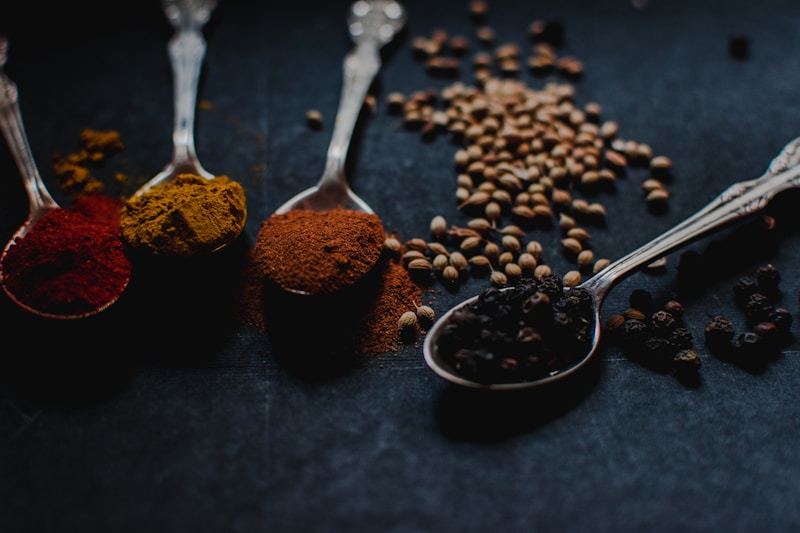 Smoked Spices in Cooking: Paprika & More
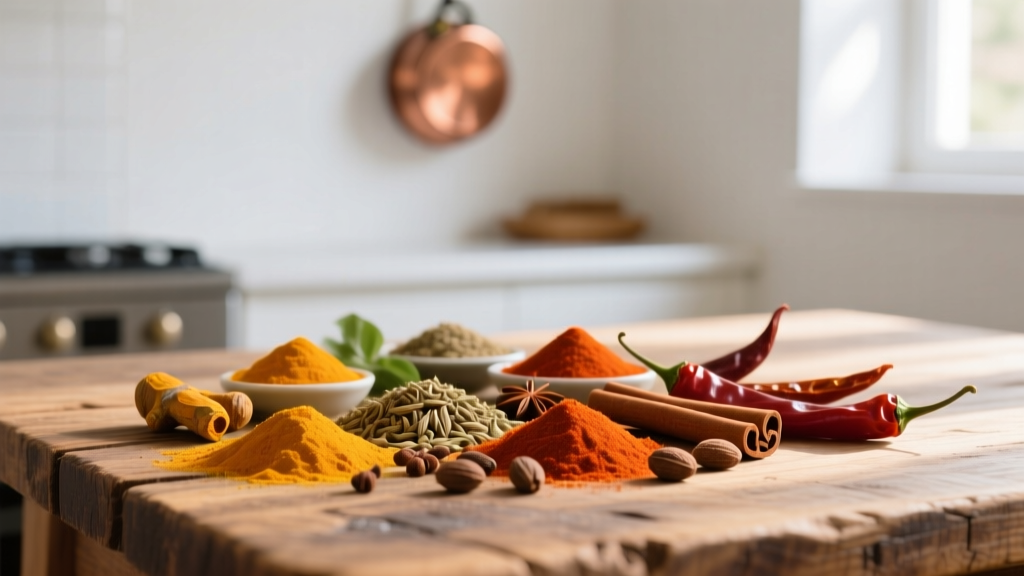 Herbes de Provence: French Classic Blend
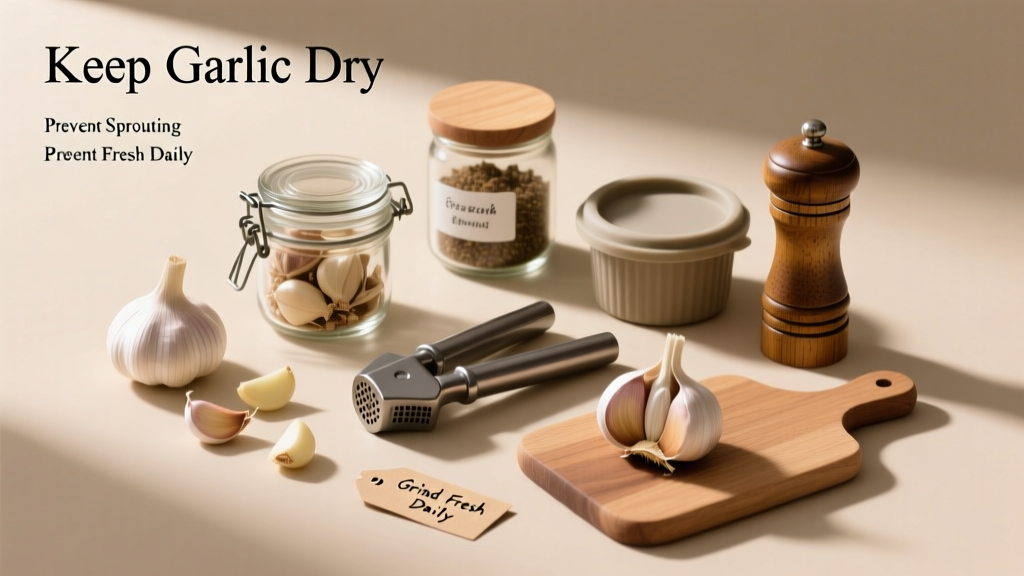 Garlic & Spice Storage, Usage, and Pro Hacks: The Essential Chef’s Handbook
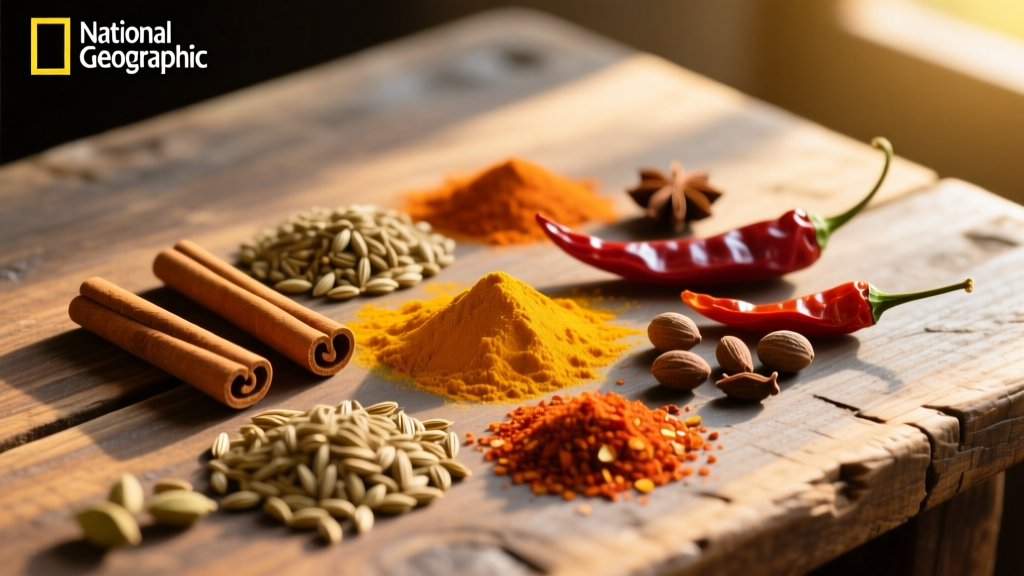 Best Spice Rub for BBQ Ribs (2026 Guide)
 Adobo Recipe: Latin Blend in 5 Minutes