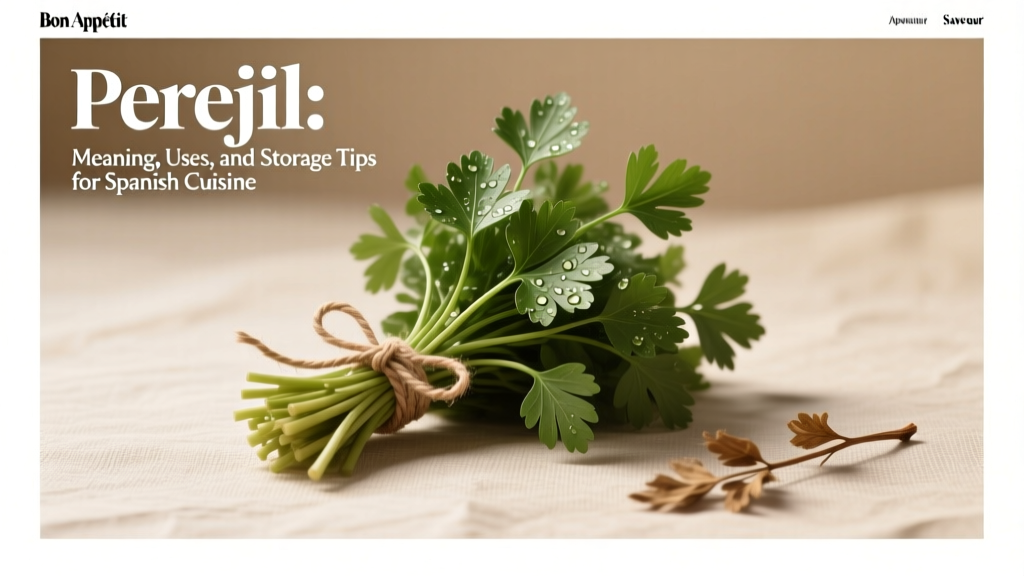
Perejil: Meaning, Uses, and Storage Tips for Spanish Cuisine
Why Translation Alone Isn’t Enough
Many English speakers assume “perejil” is just a direct translation, leading to critical culinary mistakes. In Spain, parsley isn’t reserved for plate decoration—it’s a core flavor component. Misusing it as a last-minute garnish (common in Anglo cuisine) strips dishes of its intended depth. Spanish chefs emphasize adding perejil liso early in cooking to infuse oils and broths, while reserving perejil rizado for fresh finishes.
Cultural Context: More Than a Word
Spain’s dominance in EU parsley production (200,000 tons annually) reflects its cultural integration. According to Spain’s Ministry of Agriculture, Andalusia, Murcia, and Valencia account for 85% of national harvests, supporting over 30,000 agricultural jobs. This isn’t incidental—it’s woven into culinary identity. As noted by Recetas de España, traditional salsa verde requires fresh perejil liso blended with garlic and olive oil, never substituted with dried herbs.
| Parsley Type | Spanish Name | Primary Use in Spain | Avoid When... |
|---|---|---|---|
| Flat-leaf (Italian) | Perejil liso | Sauces, stews, sofrito base | Need visual garnish (too subtle) |
| Curly-leaf | Perejil rizado | Finishing dishes, salads | Making salsa verde (bitter taste) |
| Dried | Perejil seco | Rarely used (considered inferior) | Authentic Spanish recipes |
When to Use (and Avoid) Parsley in Spanish Cooking
Must-use scenarios:
- Gazpacho: Blended with tomatoes for freshness (per Recetas de España)
- Fish dishes: Perejil en salsa (garlic-olive oil-lemon blend) is essential
- Sofrito base: Flat-leaf parsley starts flavor development
- Dried parsley in traditional recipes (Spanish chefs reject it for losing volatile oils)
- As a sole garnish without integration (indicates inauthentic preparation)
- With strong vinegar-based sauces (overpowers delicate notes)
Quality Identification: Market Insights
Spanish markets prioritize freshness indicators absent in Anglo contexts. Per Royal Horticultural Society guidelines, seek:
- Vibrant green stems (yellowing indicates age)
- Firm, unwilted leaves (mushiness = moisture damage)
- Intense aroma when rubbed (faint scent = nutrient loss)
Storage Reality Check
Contrary to generic advice, Spanish chefs reject refrigerator crisper drawers for long-term storage. Instead:
- Trim root ends
- Place stems in water (like flowers)
- Cover loosely with plastic bag
- Store at room temperature (max 3 days)
3 Common Misconceptions
- “Perejil has regional names”: False. Unlike cilantro (coriander), “perejil” is universal across 20+ Spanish-speaking countries.
- “Curly parsley is decorative”: In Spain, perejil rizado adds texture to salads—not mere garnish.
- “Dried works in stews”: Spanish home cooks discard dried parsley for its metallic aftertaste.
Everything You Need to Know
Yes. Unlike herbs like cilantro (which has regional names), “perejil” is universally used across Spain, Mexico, Argentina, and all Spanish-speaking regions. This consistency stems from parsley’s deep integration into Iberian culinary traditions before colonial expansion.
Flat-leaf parsley (“perejil liso”) has higher essential oil concentration and a more robust flavor profile. Spanish chefs prefer it for cooked dishes like salsa verde because it withstands heat better than curly varieties. Curly parsley (“perejil rizado”) is reserved for fresh applications due to its milder taste.
No. Dried parsley loses volatile compounds like apigenin—critical for authentic flavor. As documented by Spain’s Ministry of Agriculture, fresh parsley consumption exceeds dried by 97:3 in Spanish households. For best results, use frozen flat-leaf in oil cubes if fresh isn’t available.
Light cooking (e.g., in gazpacho) preserves 85% of Vitamin C and 92% of Vitamin K per USDA data. However, boiling reduces Vitamin C by 40%. Spanish preparation methods like blending raw into sauces maximize nutrient retention—key for its role as Spain’s #1 culinary herb.
Spain’s Mediterranean climate (sun, well-drained soil) aligns perfectly with parsley’s growth needs, per Royal Horticultural Society guidelines. Andalusia’s irrigation infrastructure supports year-round harvests, producing 200,000 tons annually—more than double Italy’s output. This agricultural advantage cemented parsley’s role in Spanish cuisine for centuries.
More Articles
 Honey Pearl Grapes: Sweet Specialty Variety (2026)
 Potato Sides Guide: Simple Recipes & Timing Tips
 Saffron: Why It Costs $5,000/kg
 Sumac: Tangy Middle Eastern Seasoning
 Sourdough Garlic Bread: Why It's Better & How to Make It
 White Dragon Fruit: Flesh, Seeds & How to Enjoy It
 Smoked Paprika Types: Dulce, Agridulce, Picante Explained (With Pairing Guide)
 How To Clean Rice: Science, Technique, and Culinary Best Practices
 Black Seeds vs Black Sesame: Key Differences (2026)
 Kitchen Trends 2026: Smart Integration