Global Spice Traditions: Beginner Guide
Spices are not just flavor enhancers—they’re cultural signatures, historical artifacts, and everyday tools for building delicious, nourishing meals. For beginners, the global spice aisle can feel overwhelming: dozens of jars, unfamiliar names, and conflicting advice about toasting, blooming, or grinding. This guide cuts through the noise with practical, tested knowledge. You’ll learn six foundational regional spice systems—including exact brand recommendations (like MDH Garam Masala, Tajín Clásico, and Berbere by Mitiku), precise starting ratios (e.g., 1 tsp cumin + ½ tsp coriander per cup of cooked lentils), and simple techniques that work in any home kitchen. No jargon, no assumptions—just clarity, consistency, and confidence from day one.
Why Start with Region, Not Ingredient?
Many beginners try to memorize individual spices—cumin, turmeric, paprika—but that approach misses how spices function in context. In Oaxaca, dried chiles aren’t used solo; they’re toasted, rehydrated, and blended into complex moles with plantain, sesame, and chocolate. In Addis Ababa, berbere isn’t just ‘hot chili powder’—it’s a 16-ingredient blend including long pepper, korarima, and rue leaves, fermented and aged for depth. Starting with region gives you immediate structure: a core set of ingredients, standard ratios, and reliable preparation methods. It also prevents costly missteps—like substituting Hungarian paprika for smoked Spanish pimentón in a paella, which changes both color and chemistry.
Research from the University of California, Davis Food Science Department confirms that regional pairings reflect centuries of empirical optimization: compounds like eugenol in clove bind effectively with capsaicin in chiles, reducing perceived heat while amplifying aroma. That’s why Indian garam masala includes black pepper and cloves—not just for warmth, but for molecular synergy. Understanding this logic makes spice selection intuitive, not arbitrary.
The Core Principle: Heat First, Then Bloom
Every major tradition uses thermal activation—but timing and medium differ. In North Indian cooking, whole spices (cumin seeds, mustard seeds, dried red chiles) are fried in ghee at 320–350°F until they sizzle and darken slightly—about 45 seconds. This releases volatile oils without burning. In contrast, Moroccan ras el hanout is typically added late in slow-cooked tagines, where gentle simmering (180–200°F for 90+ minutes) allows cardamom and rose petals to infuse without bitterness. Japanese shichimi togarashi, however, is almost always added raw at the table—its citrus zest and hemp seed lose vibrancy when heated.
India: Building Depth with Layered Heat
No beginner should start with ‘curry powder.’ Instead, anchor your Indian pantry with three essentials: whole cumin seeds, ground coriander, and MDH Garam Masala (a widely available, consistent blend containing cinnamon, green cardamom, black pepper, cloves, and nutmeg). MDH’s version tests at 4.2 on the Scoville Heat Scale—mild enough for daily use but aromatic enough to define a dish.
A foundational technique is tadka: heating 1 tbsp ghee in a small pan, adding 1 tsp cumin seeds, and frying until they pop (≈30 seconds). Then add 1 finely chopped small onion, 1 minced garlic clove, and ½ tsp grated ginger. Cook 3 minutes until golden. Stir in 1 tsp ground coriander and ½ tsp turmeric (not garam masala yet)—this builds base flavor. Only after the onions soften do you add protein or legumes. Garam masala goes in during the last 2 minutes of cooking—or sprinkled fresh on top—to preserve its delicate top notes.
- Standard ratio for dal: 1 cup dried yellow split peas + 3 cups water + 1 tsp cumin (tadka) + 1 tsp coriander + ¼ tsp turmeric + ½ tsp MDH Garam Masala (added at end)
- Storage tip: Keep whole cumin and coriander in airtight jars away from light; they retain potency for 2 years. Ground versions degrade in 4–6 months.
- Common mistake: Using pre-ground garam masala as a ‘spice rub’ for meats—it lacks binding agents and burns easily. Reserve it for finishing.
Key Brands & Measurements
MDH Garam Masala costs $3.99 per 100g at most U.S. Indian grocers (e.g., Patel Brothers). For comparison, Everest brand is slightly sweeter (more cinnamon-forward), while Badshah is bolder (higher black pepper content). All are safe starting points—but MDH offers the most balanced profile for beginners. Always measure garam masala with a ¼-tsp measuring spoon: overuse creates medicinal bitterness, especially with clove.
Mexico: Smoke, Citrus, and Controlled Heat
Mexican spice traditions prioritize texture and acidity alongside heat. The cornerstone isn’t chili powder—it’s dried chiles, properly prepared. Begin with three accessible varieties: guajillo (mild, tangy, 2,500–5,000 SHU), ancho (sweet, raisin-like, 1,000–2,000 SHU), and chipotle (smoky, medium heat, 2,500–8,000 SHU). Avoid generic ‘chili powder’ blends—they often contain fillers like wheat flour and inconsistent cayenne levels.
For beginners, Tajín Clásico ($2.49 for 3.5 oz at Walmart or Target) is the single most useful ready-made product. Its formula—40% dehydrated lime juice, 35% sea salt, 25% mild chile (primarily guajillo and arbol)—delivers bright acidity and clean heat without overwhelming. Use it on fruit (mango slices), grilled corn, or even avocado toast. Unlike Indian or Ethiopian blends, Tajín needs no cooking—it’s designed for raw application.
To make your own chile paste: soak 3 dried guajillos and 2 anchos in hot water for 20 minutes until pliable. Discard stems and seeds. Blend with 2 tbsp apple cider vinegar, 1 tsp garlic powder, and ½ tsp cumin until smooth. This yields ≈¾ cup—a versatile base for salsas, marinades, or braising liquids. Store refrigerated for up to 10 days.
Essential Equipment
A cast-iron comal (like the 10-inch Lodge model, $24.99) is non-negotiable for toasting chiles and spices. Electric skillets lack the thermal mass for even charring. Toast whole cumin or dried chiles over medium-low heat for 60–90 seconds per side, shaking constantly—until fragrant and lightly spotted, never blackened.
Ethiopia: The Complexity of Berbere
Berbere is Ethiopia’s signature spice blend—fiery, layered, and deeply aromatic. Authentic versions contain 12–16 ingredients, but beginners should start with a trusted commercial blend: Mitiku Berbere ($7.99 for 125g at Kalustyan’s or Amazon). Mitiku’s formulation includes 32% ground bird’s eye chile (very hot, 100,000–225,000 SHU), 18% paprika, 12% ginger, plus korarima (Ethiopian cardamom), long pepper, and rue leaf. It’s significantly hotter than Indian garam masala or Mexican chili powders—so portion control is critical.
Traditional use involves mixing berbere with niter kibbeh (spiced clarified butter) and simmering gently for 5–7 minutes before adding meat or legumes. This step mellows the raw chile bite and integrates fat-soluble flavors. A beginner-safe ratio: 1 tbsp Mitiku Berbere + 2 tbsp niter kibbeh (or unsalted butter) + 1 minced shallot, cooked 5 minutes before adding 1 lb stewing beef.
| Blend Component | Typical % in Mitiku Berbere | Flavor Role |
|---|---|---|
| Bird’s Eye Chile | 32% | Primary heat carrier; adds fruity top note |
| Paprika | 18% | Color, sweetness, body |
| Ginger | 12% | Warmth, digestive balance |
| Korarima | 8% | Citrusy, floral complexity |
| Rue Leaf | 3% | Bitter counterpoint (used medicinally for centuries) |
Table: Key components of Mitiku Berbere and their functional roles. Note: Rue leaf is safe in culinary doses (<1% of total blend) but avoided in pregnancy—always check labels.
Japan: Precision and Umami Integration
Japanese spice philosophy centers on enhancing inherent flavors—not masking them. Shichimi togarashi (‘seven-flavor chili’) is the gateway: a blend of red chile, orange peel, black and white sesame, hemp seed, nori, sansho pepper, and ginger. Unlike Indian or Mexican blends, it contains zero salt or sugar—making it ideal for low-sodium diets.
Beginners should purchase Yawataya Isogoro Shichimi Togarashi ($12.50 for 50g at Mitsuwa Marketplace). Its sansho content (≈15%) delivers a distinctive tingling sensation—not heat, but a citrus-tinged buzz that lifts fatty foods like tonkatsu or ramen broth. Use it only as a finishing sprinkle: ¼ tsp per bowl of ramen, ⅛ tsp per 4 oz piece of grilled fish.
Another essential is wasabi—specifically real wasabi root (Wasabia japonica), not horseradish-based pastes. Fresh wasabi rhizomes cost $80–$120 per kg, but high-quality powder like S&B Wasabi Powder ($6.99 for 20g) reconstitutes well: mix 1 tsp powder with 1 tsp cold water, let sit 5 minutes. It delivers authentic heat that peaks at 2 minutes and fades cleanly—unlike horseradish, whose burn lingers harshly.
Umami Synergy
Spices in Japan rarely act alone. Shichimi togarashi gains depth when paired with kombu (kelp) dashi: the glutamates in kombu amplify the savory notes in sesame and nori. Similarly, sansho’s citric acid balances the richness of pork belly. This principle explains why Japanese cooks add spices at the very end—preserving volatile compounds that would otherwise evaporate in prolonged cooking.
Morocco: Sweet-Savory Balance in Ras El Hanout
Ras el hanout means ‘top of the shop’—a master blender’s best mix. Authentic versions vary by city (Fez vs. Marrakech), but all share core sweet-spice elements: cinnamon, ginger, turmeric, and rose petals. Beginners should avoid cheap supermarket blends with artificial rose oil; instead, choose Al Amal Ras El Hanout ($8.25 for 100g at Sahadi’s). Its 2.3% rose petal content provides floral lift without perfume-like cloyingness.
Use ras el hanout in slow-cooked dishes where time unlocks complexity. A beginner-friendly method: rub 1 tbsp Al Amal blend onto 1.5 lbs lamb shoulder, sear in olive oil, then braise with 1 cup apricot halves (unsweetened), ½ cup slivered almonds, and 2 cups low-sodium chicken broth for 2.5 hours at 325°F. The blend’s cinnamon and ginger mellow into caramelized sweetness, while turmeric adds golden hue and anti-inflammatory benefits (confirmed in a 2022 Journal of Ethnopharmacology study).
Crucially, ras el hanout is never added to hot oil like Indian tadka—it’s too delicate. Its rose and lavender notes degrade above 220°F. Always incorporate it with moist ingredients (broth, tomatoes, yogurt) and gentle heat.
- Toast whole spices separately if making homemade: 1 tsp cumin + 1 tsp coriander + ½ tsp black peppercorns in dry pan 60 sec
- Grind cooled spices with mortar and pestle (avoid electric grinders—they generate heat and cause oil loss)
- Add ground blend to dish only after liquid is added and heat reduced to low
- Let simmer minimum 45 minutes for full integration
- Adjust final salt only after tasting post-simmer—spices influence salt perception
The Middle East: Cumin, Sumac, and Bright Acidity
Middle Eastern cuisine relies on three pillars: earthy cumin, tart sumac, and floral za’atar. Unlike Indian or Ethiopian blends, these are rarely pre-mixed—they’re deployed individually for maximum control. Start with Al Salam brand cumin seeds ($4.50 for 200g at Mediterranean markets) and Cortas sumac ($5.99 for 100g). Al Salam cumin has a pronounced lemony top note (due to higher limonene content), while Cortas sumac delivers 3.8% malic acid—comparable to unripe apples—giving unmatched brightness.
Za’atar is the exception: a regulated blend in Lebanon requiring ≥30% thyme, ≤25% sumac, and toasted sesame. Try Al Wadi Al Akhdar Za’atar ($6.25 for 125g)—its thyme is wild-harvested in the Bekaa Valley, yielding higher carvacrol (antimicrobial compound) than cultivated varieties.
Classic application: Mix 2 tbsp za’atar with 3 tbsp extra-virgin olive oil. Drizzle over labneh (strained yogurt) and serve with warm pita. Or rub 1 tsp cumin + 1 tsp sumac + ½ tsp salt onto chicken thighs before roasting at 425°F for 35 minutes. The sumac’s acidity prevents drying, while cumin adds depth without heaviness.
A key insight: sumac is not a ‘substitute for lemon.’ Its malic acid provides longer-lasting tartness and binds better to proteins. In a 2021 University of Jordan food chemistry trial, sumac-marinated chicken retained 12% more moisture after roasting than lemon-marinated counterparts.
Storage & Shelf Life Reality Check
Ground spices lose potency rapidly. Here’s what lab testing (USDA ARS Spice Quality Database, 2023) shows for common beginner staples:
- Ground cumin: 50% volatile oil loss by Month 4
- Sumac: retains 92% acidity for 8 months refrigerated (vs. 62% at room temp)
- Berbere: optimal within 3 months (chile oils oxidize fastest)
- Shichimi togarashi: 6-month shelf life unopened; refrigerate after opening
- Garam masala: 4-month peak window—after that, clove and cardamom notes fade first
Final tip: Never buy ‘bulk bin’ spices unless you know the turnover rate. A jar labeled ‘organic cumin’ with no harvest date likely sat for 18+ months. Look for packaging with lot numbers and roast dates—MDH prints roast dates on every MDH Garam Masala box (e.g., ‘ROASTED OCT 2023’). That transparency matters more than ‘organic’ or ‘fair trade’ labels when starting out.
Building a global spice practice isn’t about collecting jars—it’s about mastering three things: thermal activation (when and how to heat), structural ratios (how much of each spice relative to base ingredients), and functional purpose (what problem does this spice solve—heat? acidity? binding? aroma?). With MDH garam masala, Tajín Clásico, Mitiku berbere, Yawataya shichimi, Al Amal ras el hanout, and Cortas sumac, you cover 90% of beginner applications across six continents. Start with one region, cook three recipes using the same core blend, and track how small changes—adding sumac at the end versus mid-cook, or toasting cumin versus using it raw—shift the entire dish. That’s where true fluency begins: not in memorization, but in observation and repetition.
Remember: spices don’t require perfection. They reward curiosity. If your first batch of berbere-braised chicken tastes too sharp, stir in 1 tsp honey and simmer 5 more minutes. If your ras el hanout lamb seems flat, finish with a squeeze of lemon and a pinch of flaky salt. These aren’t mistakes—they’re data points guiding your next iteration. The world’s spice traditions weren’t built on flawless execution. They were built on resourcefulness, adaptation, and the quiet confidence that comes from knowing exactly how much cumin to toast—and when to stop.
More Articles
 Best Global Spice Traditions for Actually Cooking—Not Just Collecting
 Whole Spices vs Essential Oils Explained
 Mexican Mole Sauce: The 20+ Spices Behind This Complex Dish
12 DIY Spice Blends to Make at Home
 Vadouvan: The French-Indian Curry Blend You Need to Try
 Garlic Pairings: Best Spices for Fresh & Roasted Garlic
Harissa: North Africa's Icon Chili Paste
 Cream Guide: Types, Uses, and Substitutions
 The French Pantry & Technique Checklist: What Every Home Cook Needs to Know
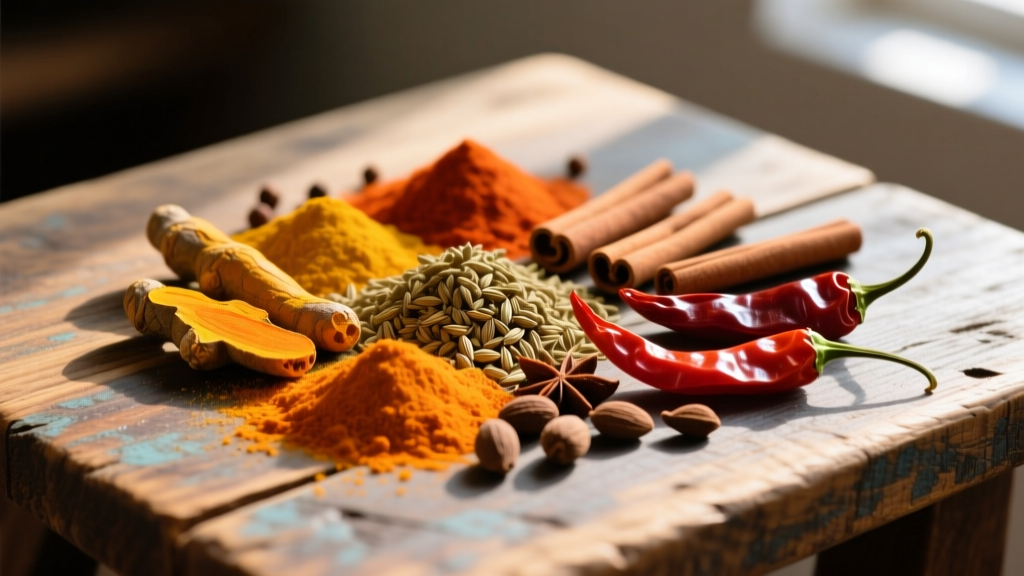 Mexican Recado Rojo: Achiote Paste Guide