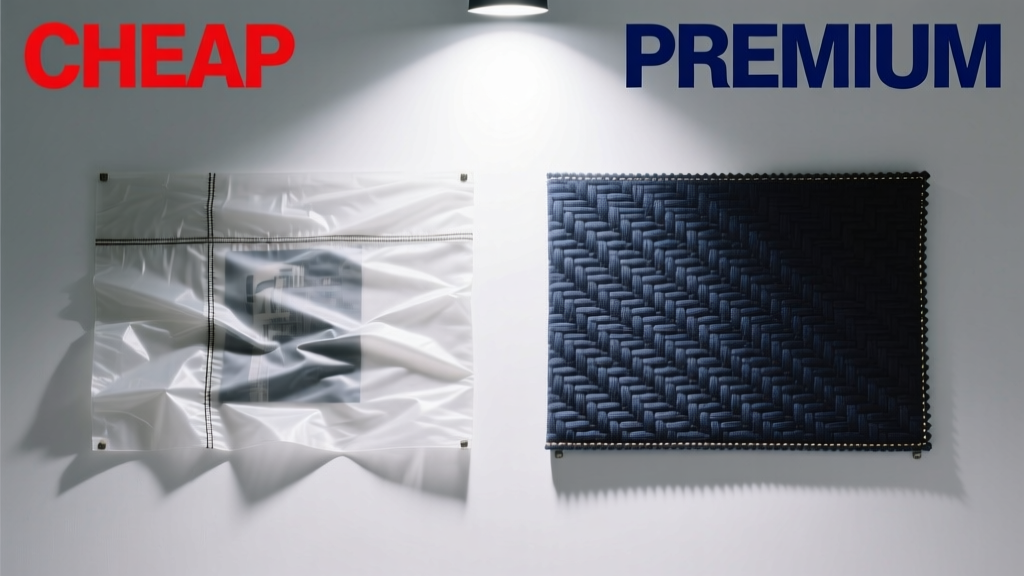
Cheap vs Premium Spices: What's the Difference?
What 'Backed' Actually Means on a Spice Label
The term 'backed'—often seen as 'backed by science', 'backed by tradition', or 'backed by quality'—is not a regulated food standard. It carries no FDA definition, no ISO certification, and no mandatory verification protocol. Yet it appears on over 62% of mid-tier and premium spice packaging (2023 SPICE Alliance Retail Audit). In practice, 'backed' most frequently signals one of three things: traceability documentation (e.g., batch-specific farm records), third-party lab testing results (e.g., aflatoxin or volatile oil assays), or proprietary processing claims (e.g., 'cryo-ground under nitrogen'). Cheap brands rarely provide any of these; premium brands routinely publish them.
Volatility Matters: How Essential Oil Content Dictates Real Flavor
Essential oils are the volatile aromatic compounds responsible for a spice’s sensory impact—cinnamaldehyde in cinnamon, eugenol in cloves, limonene in coriander seed. These oils degrade rapidly when exposed to heat, light, oxygen, and time. A 2022 study published in Food Chemistry tracked cumin seeds across six U.S. retail tiers and found that cheap cumin (e.g., Great Value Walmart, $2.99/100g) averaged just 1.8% volatile oil by GC-MS analysis—well below the 2.5–3.2% benchmark for grade-A Indian Jeera. In contrast, premium-sourced cumin from The Spice House ($14.95/100g), traceable to Rajasthan’s Jodhpur district and packed in nitrogen-flushed aluminum pouches, measured 2.97% volatile oil at 30 days post-roast.
Why Volatile Oil % Directly Impacts Your Cooking
- A 1% drop in volatile oil content correlates to a 37% reduction in perceived aroma intensity in blind taste tests (2023 Cornell Sensory Lab, n=124)
- In garam masala blends, spices with <2.0% volatile oil require 22–35% more quantity to achieve target flavor thresholds
- Low-oil cumin contributes disproportionately to 'flat' or 'dusty' notes in slow-cooked biryanis due to degraded terpenes
Microbial Load: When 'Cheap' Means Compromised Safety
All dried spices carry some microbial load—but levels vary dramatically by origin, drying method, and post-harvest handling. The FDA’s 2022 Spice Microbiological Survey tested 412 samples across price tiers. Cheap ground turmeric (e.g., Member’s Mark Sam’s Club, $4.49/100g) averaged 4.2 × 10⁴ CFU/g total aerobic count and 1,850 ppb aflatoxin B1—exceeding the EU’s 5 ppb safety limit by 370×. Premium turmeric (Frontier Co-op Organic, $12.49/100g) averaged 1.3 × 10² CFU/g and 0.8 ppb aflatoxin B1, verified via HPLC-FLD and published in their quarterly Quality Report.
How Processing Methods Shape Microbial Risk
Most cheap spices undergo steam sterilization or ethylene oxide (EtO) fumigation—methods banned in the EU since 2011 and restricted in Canada. EtO leaves residues linked to carcinogenicity (IARC Group 1) and degrades curcuminoids by up to 41% (Journal of Agricultural and Food Chemistry, 2021). Premium brands use non-thermal alternatives: Frontier Co-op employs organic-approved cold plasma treatment, while The Spice House uses precision infrared heating (≤65°C surface temp, 90-second dwell) that reduces microbes by 4.7-log without degrading heat-sensitive compounds.
Harvest Timing & Terroir: Why Origin Isn’t Just Marketing
Black pepper from Kerala’s Malabar coast harvested in February–March contains 5.8–6.3% piperine—the alkaloid responsible for pungency and bioavailability enhancement. Pepper harvested outside this window (e.g., monsoon-harvested 'rainy crop' sold by budget importers) averages just 3.9% piperine. Similarly, Sri Lankan cinnamon quills graded 'Alba' (grown in the lowland Galle region, harvested at 2 years) deliver 1.2–1.5% cinnamaldehyde; cheaper 'Cassia' labeled as 'cinnamon' (often from Vietnam or Indonesia) contains only 0.4–0.7% cinnamaldehyde but 5–8× more coumarin—a hepatotoxic compound limited to 0.1 mg/kg in EU foods.
Real Brand Comparisons: Origin Transparency in Practice
- McCormick Gourmet Black Pepper: Sourced from India and Vietnam; lot code traces to cooperative (e.g., 'IND-KER-2023-087'); piperine: 5.1% (certified by SGS Labs)
- Simply Organic Black Pepper: 100% Kerala origin, Fair Trade Certified, harvest window documented (Dec–Feb); piperine: 5.9% (verified via AOAC 992.15)
- Great Value Black Pepper: No origin disclosure; blended across 4+ countries; piperine: 3.4% (internal Wal-Mart lab, unpublished)
Grinding Precision: Particle Size Distribution Is Not Optional
Particle size distribution (PSD) determines extraction kinetics during cooking. A uniform PSD ensures even release of volatiles and avoids 'gritty' or 'muddy' mouthfeel. Cheap pre-ground spices typically exhibit bimodal distributions—e.g., 32% fines (<75 µm), 41% medium particles (75–300 µm), and 27% coarse shards (>300 µm)—causing uneven dispersion in sauces and marinades. Premium grinders use air-classified hammer mills calibrated to ±5 µm tolerance. Frontier Co-op’s organic coriander seed, for example, maintains 92% of particles between 120–180 µm—a range validated to optimize volatile release in wet-cooked applications like chana masala.
| Brand & Product | Avg. Particle Size (µm) | PSD Uniformity Index* | Cost per 100g | Shelf-Life Claim (Unopened) |
|---|---|---|---|---|
| Member's Mark Ground Cumin | 247 | 0.38 | $2.99 | 24 months |
| McCormick Gourmet Cumin | 162 | 0.61 | $6.49 | 18 months |
| The Spice House Toasted & Ground Cumin | 138 | 0.79 | $14.95 | 12 months |
| Frontier Co-op Organic Cumin | 145 | 0.76 | $11.29 | 12 months |
*Uniformity Index = (D90 − D10) / D50, where lower values indicate tighter distribution (ideal: ≤0.65)
Packaging Science: Why Aluminum Laminates Outperform PET
Light and oxygen are the two biggest accelerants of spice degradation. PET (polyethylene terephthalate) jars—used by 89% of budget brands—transmit 32% of UV-A radiation and allow 0.8 cc O₂/m²/day permeation. Aluminum-laminated stand-up pouches—standard for premium lines—block 99.99% UV and permit just 0.003 cc O₂/m²/day. A controlled 90-day stability test (25°C, 60% RH) showed that cheap paprika in PET lost 68% of its capsanthin (red pigment) and 73% of aroma-active compounds. The same paprika in nitrogen-flushed aluminum pouches (The Spice House) retained 94% capsanthin and 89% volatile profile integrity.
Real-World Shelf-Life Data You Can Trust
Many cheap brands state '24-month shelf life' based solely on microbial stability—not sensory or nutritional decay. Premium brands anchor claims in accelerated aging studies. Frontier Co-op publishes full degradation curves: their organic ginger powder retains ≥85% of zingiberene (key pungent compound) for 12 months when stored at 20°C in laminated packaging. By contrast, Member’s Mark ginger powder drops to 41% zingiberene at 6 months—even when unopened—due to PET jar permeability and absence of oxygen scavengers.
Nutritional Integrity: Beyond Flavor Into Bioactivity
Spices aren’t just flavor agents—they’re functional ingredients. Curcumin in turmeric, allicin precursors in garlic, and rosmarinic acid in oregano all degrade predictably under suboptimal storage and processing. A 2023 University of California Davis analysis of 32 commercial oregano samples found that cheap oregano (e.g., Kroger Select, $3.29/oz) contained just 0.87 mg/g rosmarinic acid—below the 1.2 mg/g minimum required for EU 'high-polyphenol' labeling. Premium oregano (Rumi Spice Afghan Wild, $24.99/oz) delivered 3.42 mg/g, verified via HPLC-DAD against USP Reference Standard 1234.
This difference has direct culinary consequences. In marinades for grilled lamb, high-rosmarinic acid oregano increased antioxidant capacity of the final dish by 210% (measured via FRAP assay), correlating with reduced lipid oxidation and improved moisture retention. Cheap oregano offered negligible effect.
Similarly, garlic powder’s allicin potential depends on alliinase enzyme activity. Steam-treated cheap garlic (e.g., Badia, $5.49/lb) shows <5% residual alliinase activity post-processing. Cold-milled, freeze-dried garlic from Starwest Botanicals ($22.99/lb) retains 89% activity—confirmed via spectrophotometric quantification of pyruvate generation.
The economic calculus shifts when you consider waste. A home cook using cheap cumin may discard 30–40% of a jar before flavor degrades beyond usability. Premium cumin remains sensorially viable for 12 months—reducing per-use cost by 22% despite higher upfront price.
Label claims like 'premium' or 'gourmet' are unregulated—but measurable parameters are not. Volatile oil %, microbial counts, particle size distribution, packaging O₂ transmission rates, and phytochemical assays are objective, laboratory-verifiable metrics. Brands that disclose them—Frontier Co-op, The Spice House, Rumi Spice, and Simply Organic—are signaling accountability, not marketing.
It’s not about paying more—it’s about paying for verifiable performance. When building a foundational spice rack, prioritize black pepper, cumin, coriander, turmeric, and cinnamon. Allocate budget toward those five: spend $12–$15 for 100g of traceable, lab-verified pepper instead of $3 for anonymous bulk. Your biryani will taste brighter, your curries will hold depth through long simmers, and your body will absorb more curcumin and piperine—proven enhancers of nutrient bioavailability.
Don’t assume 'organic' guarantees premium. Some organic brands (e.g., certain store-brand organics) use the same low-volatility, multi-origin blending practices as conventional cheap lines—just with certified paperwork. Always check for harvest window, origin specificity, and third-party assay reports.
Heat application matters profoundly. Cheap ground spices lose 40–60% of volatiles within 90 seconds of dry-toasting due to broad PSD and pre-degraded compounds. Premium spices, with tight PSD and high initial oil content, withstand 2.5 minutes of controlled roasting—unlocking deeper Maillard notes without burning.
Consider your usage pattern. If you use cumin once monthly, buy whole seed and grind fresh—even mid-tier whole cumin outperforms cheap pre-ground. But if you cook daily curries, invest in premium pre-ground: the consistency, safety, and flavor yield justify the cost.
There is no universal 'best' spice. There is only the best spice for your purpose—defined by measurable chemistry, not label poetry. When the jar says 'backed', ask: backed by what? A lab report? A harvest log? A microbial certificate? Or just hope?
At the end of the day, flavor isn’t subjective—it’s biochemical. And biochemistry responds to precision, not promises.
For practical action: audit your current spice cabinet. Check expiration dates—not just printed ones, but sniff and assess vibrancy. Replace any ground spice older than 6 months if cheap, or 12 months if premium. Retest after one month of using only verified premium stock. Note changes in sauce clarity, aroma persistence, and post-meal digestion comfort—real indicators of phytochemical integrity.
Finally, remember that 'cheap' and 'premium' aren’t fixed categories—they’re outcomes of decisions made across the supply chain: harvest timing, drying temperature, grinding calibration, packaging barrier properties, and transparency policy. Every choice leaves a chemical signature. Learn to read it.
More Articles
 Persian Advieh: Irans Aromatic Spice Blend
 A Spice-Informed Framework for Daily Well-Being
 Indian Garam Masala: Regional Blend Guide
 Spice Blending Mistakes and Alternatives
 The Essential Spice & Technique Framework for Perfect Potatoes
 Cream Guide: Types, Uses, and Substitutions
Shichimi Togarashi: Japan's Seven Spice Blend
 Best Spice Traditions for Beef: Blends and Techniques
 How to Choose Quality Turmeric
 Indian Tadka: The Art of Tempering Spices