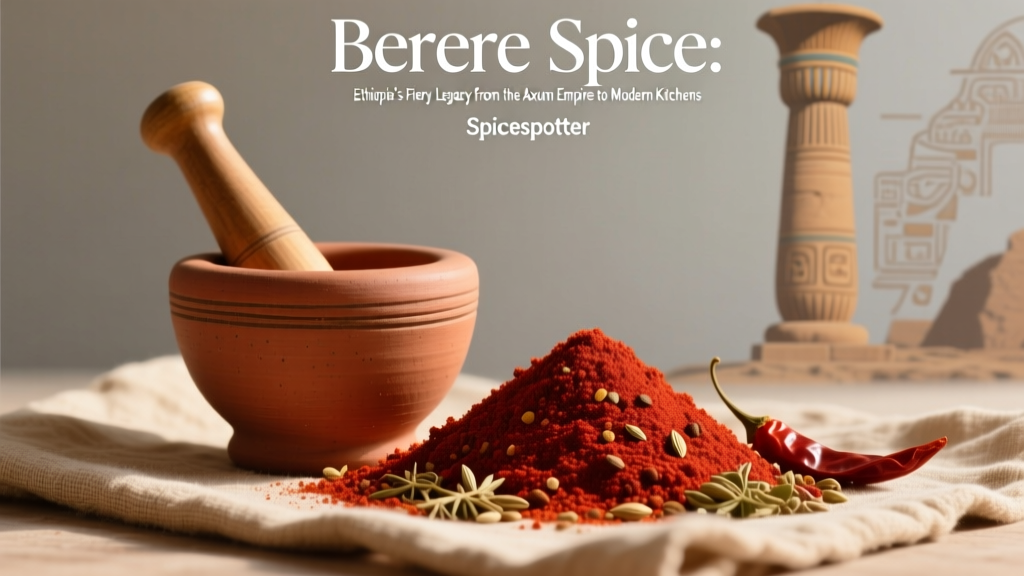
Berbere is more than a spice blend — it's the soul of Ethiopian cuisine and a living artifact of one of Africa's oldest civilizations. This fiery, complex mixture of up to 20 ingredients has seasoned Ethiopian food for over two millennia, carrying flavors from ancient trade routes to today's injera-laden tables.
## Historical Origins
The Axum Empire (100-940 CE), centered in modern-day Ethiopia and Eritrea, controlled Red Sea trade routes that connected Africa to Arabia, India, and beyond. Spices like black pepper, cardamom, and cinnamon flowed through Axum's ports, where local cooks blended imported spices with indigenous ingredients like korarima (Ethiopian cardamom) and long pepper.
The name 'berbere' comes from the Amharic word for 'hot' — but the blend is far more nuanced than simple heat.
## Traditional Ingredients
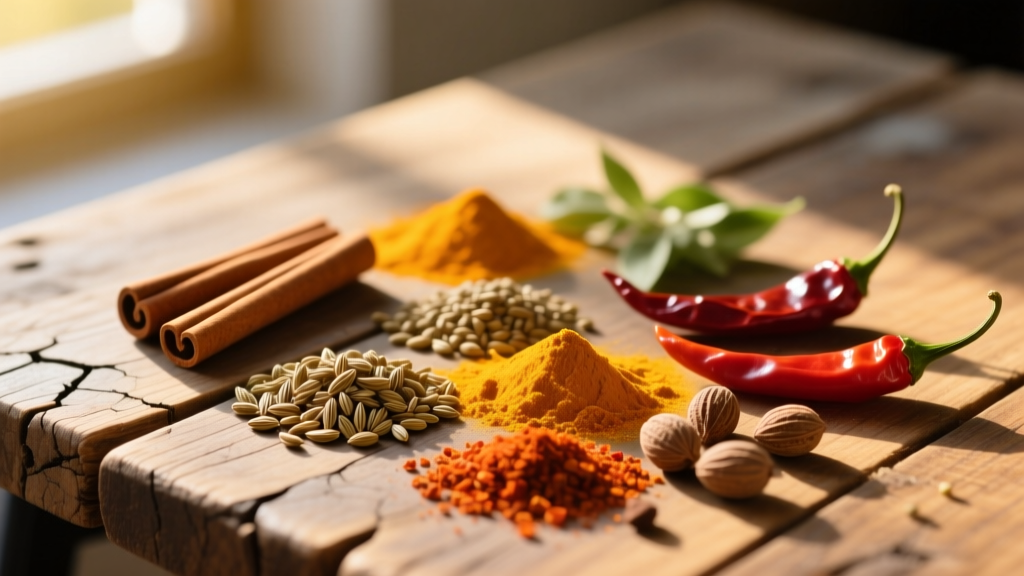
A proper berbere contains at minimum:
- **Dried red chilies** (bird's eye or Ethiopian variety): The fiery base
- **Korarima** (Aframomum korarima): Ethiopian cardamom, larger and more floral than Indian cardamom
- **Fenugreek**: Bitter-sweet, maple-like
- **Ginger**: Fresh warmth
- **Cloves**: Pungent sweetness
- **Cinnamon**: Warm sweetness
- **Black pepper**: Sharp heat
- **Allspice**: Multi-layered warmth
- **Nutmeg**: Earthy depth
- **Turmeric**: Color and earthy base note
- **Rue** (tena adam): Bitter herb, uniquely Ethiopian
## Traditional Preparation
1. Sun-dry red chilies for several days
2. Dry-roast each spice separately (different optimal temperatures)
3. Pound in a wooden mortar (mukecha) — never use a machine traditionally
4. Sieve through fine mesh
5. Store in a woven basket (mesob) or clay pot
This process can take an entire day and is often a communal activity among women in Ethiopian villages.
## Doro Wat: Berbere's Signature Dish
Doro wat — slow-cooked chicken stew — is berbere's most famous application. The recipe uses an extraordinary amount of berbere (1/4 cup for 4 servings) cooked low and slow with onions (up to 2 hours of caramelization), niter kibbeh (spiced clarified butter), and hard-boiled eggs.
The result is a deeply complex, brick-red stew where berbere's heat is balanced by the sweetness of caramelized onions and the richness of spiced butter.
## Modern Availability
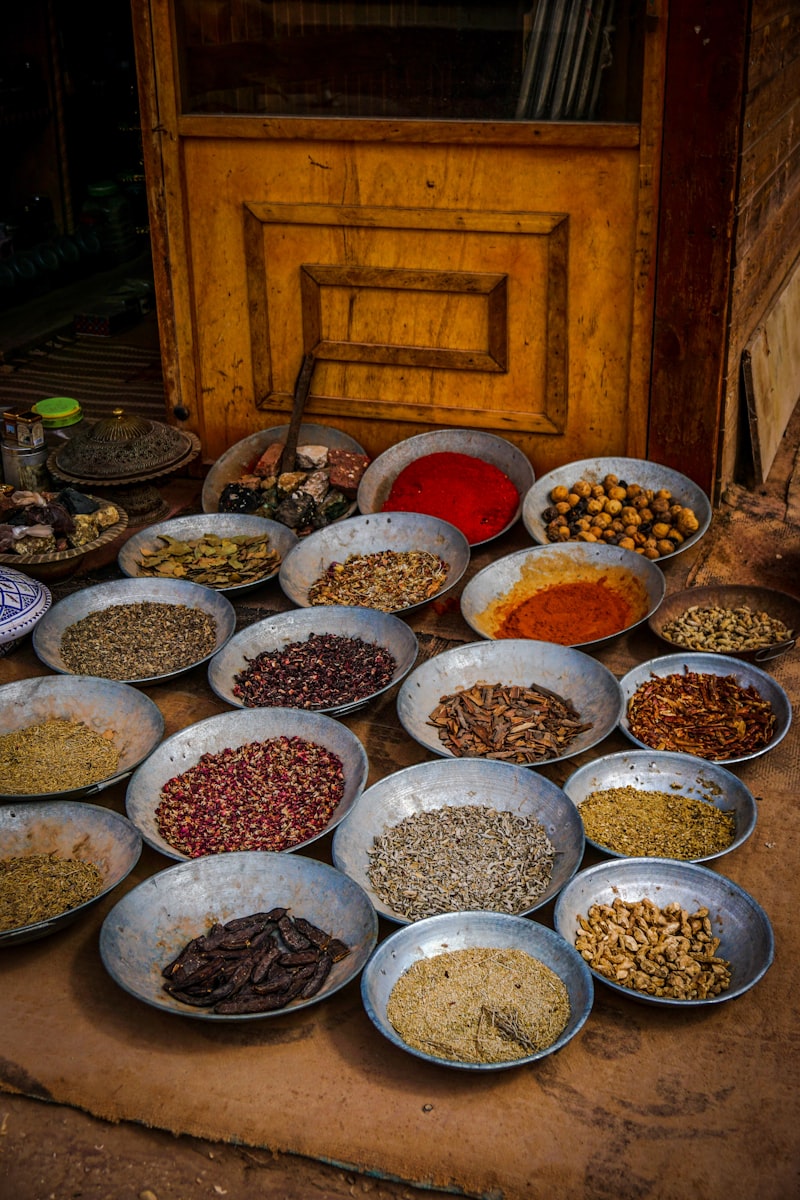
Outside Ethiopia, berbere is available from specialty spice shops. Look for blends that include korarima rather than substituting green cardamom — the flavor difference is significant. Some Ethiopian diaspora communities produce authentic berbere using imported korarima.
 Recado Rojo: Yucatan's Signature Achiote Paste Recipe and Uses
 12 Creative DIY Rice Ideas That Transform Everyday Grains Into Global Flavor Experiences
 Spices Kitchen Tips Essentials: Practical Wisdom for Better Flavor, Longer Shelf Life, and Smarter Cooking
 Za'atar Spice Blend: History, Ingredients, and 7 Ways to Use It
 Berbere Spice: Ethiopia's Fiery Blend
 Turmeric vs. EXACT: Clarifying the Confusion Between a Spice and a Brand
 Mistakes and Practical Alternatives to 'Actually' in Spice Blending, Sourcing, and Cooking
 Japanese Seven Spice (Shichimi Togarashi): What Is in It and How to Use It
 Authentic Garam Masala Recipe: Toast, Grind & Blend at Home
 Cheap vs Premium Cook: What the Price Tag Really Reveals About Flavor, Safety, and Performance