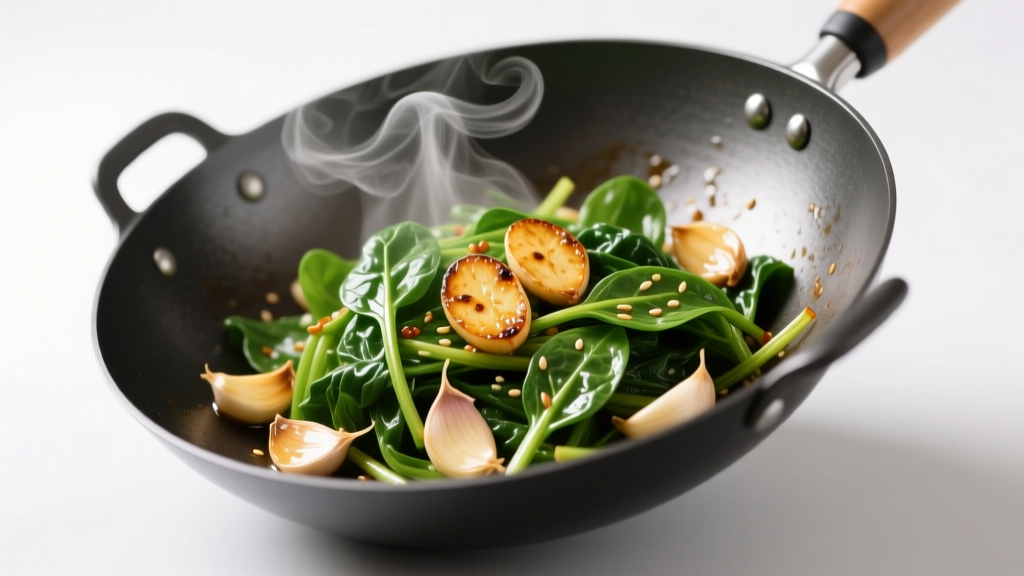
Authentic Chinese Spinach Stir-Fry: Garlic Wok Method
Wait, Is This Actually Spinach?
Okay, real talk: what Westerners call “Chinese spinach” is usually water spinach (Ipomoea aquatica), known as ong choy or kangkong in Asia. Totally different plant from regular spinach (Spinacia oleracea). I’ve seen so many home cooks grab baby spinach by mistake – trust me, it won’t give you that authentic crunch. Water spinach has hollow stems, grows in waterways, and… yeah, it’s sandier. More on that later.
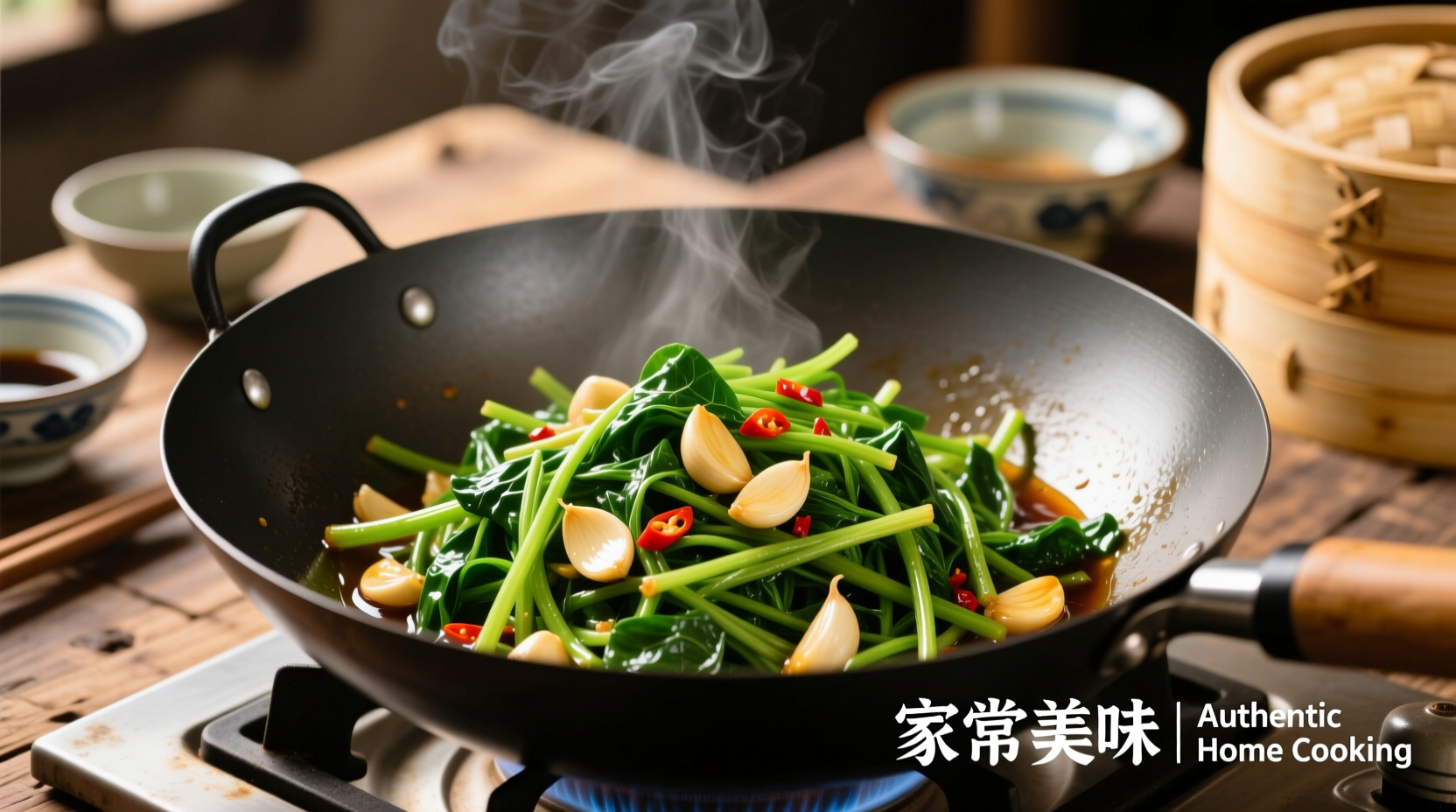
Why This Recipe Works (After 20 Years of Wok Mistakes)
Look, I’ve ruined more batches than I’d like to admit. Water spinach isn’t forgiving like regular spinach. The magic? Brutal heat and speed. Regular spinach wilts gently – water spinach explodes if you hesitate. That’s why we’re using a screaming-hot wok, not a skillet. And garlic goes in before the greens – burns in 5 seconds if you reverse it. Learned that the hard way.
Authentic Water Spinach Stir-Fry (90-Second Method)
No fancy ingredients – this is street food simplicity. Serves 2.
What You’ll Need
- 1 bunch water spinach (12 oz / 340g)
- 3 garlic cloves, thinly sliced
- 1¼ tbsp peanut oil (smoke point matters!)
- 1½ tsp sea salt
- 1 tsp Shaoxing wine (optional but legit)
Step-by-Step (Seriously, Don’t Multitask)
- Prep smart: Cut 1-inch off root ends. Slice thick stems diagonally; leave tender tips whole. Rinse in 3 water changes – it’s gritty.
- Heat wok until smoking: Seriously, wait for wisps of smoke. Add oil, swirl to coat.
- Garlic first: Toss in garlic, stir 10 seconds until golden – not brown! (I use chopsticks for speed)
- Spinach avalanche: Dump all greens in. Toss constantly for 60-90 seconds. Stems should bend but not droop.
- Finish fast: Salt + wine. Toss 15 seconds. Off heat. Done.
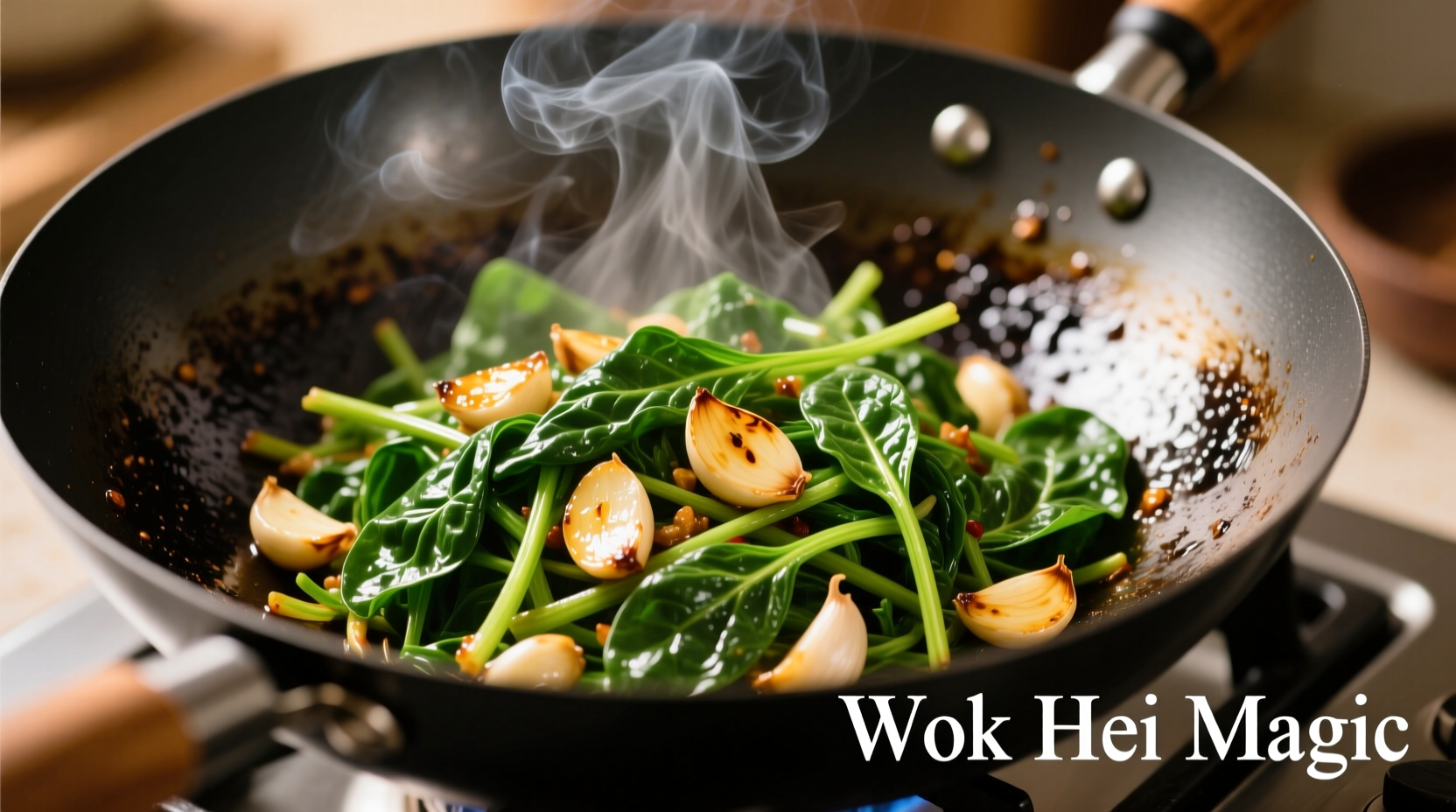
| Chinese Water Spinach | Regular Spinach |
|---|---|
| Hollow, crunchy stems | No stems (all leaves) |
| Cooks in 60-90 seconds | Takes 3-4 minutes |
| Needs aggressive rinsing | Rinses clean easily |
| Best stir-fried or blanched | Works raw/soups/sautes |
When to Use (and Avoid) This Spinach
Let’s get real about where this shines – and where it’s a disaster.
🔥 Do Use It For
- High-heat stir-fries: Handles wok hei (breath of wok) better than regular spinach
- Summer dishes: Its crispness cuts through rich meats like char siu
- Street-style meals: That hollow stem soaks up garlic oil like a dream
🚫 Avoid These Scenarios
- Raw salads: Stems are too tough (and may carry bacteria from waterways)
- Slow-cooked dishes: Turns to slimy mush in stews or casseroles
- Cold weather cooking: Best eaten fresh; doesn’t store well raw
3 Costly Mistakes Even Experienced Cooks Make
I’ve tested these the hard way – save yourself the soggy disappointment.
Mistake #1: Skipping the “Sand Check”
Water spinach grows in muddy waterways. If you don’t rinse in 3+ water changes (swish vigorously!), you’ll crunch grit in your teeth. Pro tip: Soak stems in salted water 10 minutes – sand sinks faster.
Mistake #2: Using Olive Oil
Its low smoke point burns garlic instantly. Peanut or canola oil handles 400°F+ wok heat. Extra virgin? Absolutely not – ruins the flavor.
Mistake #3: Overcrowding the Wok
One batch only. Too much spinach = steaming instead of stir-frying. Result? Soggy, gray, sad greens. Cook in batches if needed – I’ve done it.
Everything You Need to Know
You can, but it won’t be authentic. Regular spinach wilts slower and gets mushy. If you must: reduce cook time to 2 minutes, skip stem prep, and use only leaves. But honestly? Grab water spinach – it’s in most Asian markets for $2.
Two culprits: overcooking (past 90 seconds) or low heat. Water spinach releases water when stressed – high heat evaporates it instantly. If your wok isn’t smoking hot, it’s steaming instead of stir-frying. Also, never cover the pan!
Wrap unwashed bunches in dry paper towels inside a perforated bag. Lasts 2-3 days max in crisper drawer. Don’t wash until use – moisture speeds decay. Pro move: Freeze blanched stems for stir-fries (but texture changes).
Nutritionally similar (both high in iron/vitamins), but water spinach has less oxalic acid – meaning better mineral absorption. Downside: it absorbs pollutants from waterways, so source from clean farms. Regular spinach has more folate, but water spinach wins on crunch factor.
More Articles
 Honey Pearl Grapes: Sweet Specialty Variety (2026)
 Sichuan Peppercorn Guide: Why It Numbs Your Mouth and How to Cook With It
 Black Pepper Explained: Origin, Uses & Why It's Essential
 Best Chili Sauce Substitutes When You're Out
 Eggo Cinnamon Waffles: Complete Preparation Guide & Uses
 Crispy Smashed Potatoes: Perfect Recipe & Pro Tips
Smart Spice Storage and Usage Tips
Crispy Smashed Potatoes: Perfect Recipe & Pro Tips
Smart Spice Storage and Usage Tips
 Potato vs Rice: Which Is Healthier? Nutritional Facts
 Allspice vs Five Spice: Which to Use When
 Trader Joe's Minced Garlic: Truth Revealed (2026)