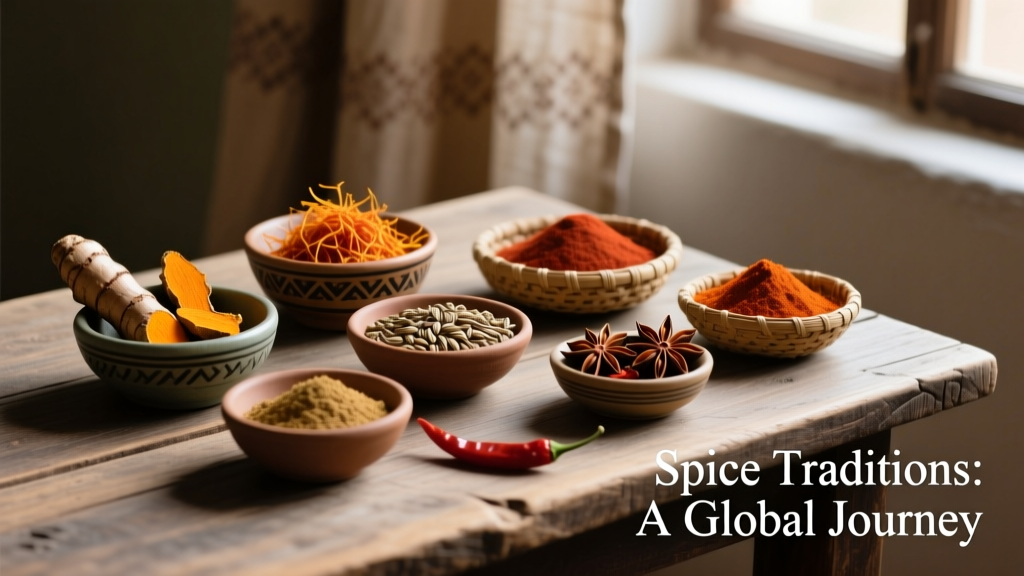
Global Spice Traditions: Authentic Practices
Spices are not flavor additives—they are cultural archives, agricultural legacies, and daily ritual objects. This article details how real global spice traditions operate beyond supermarket jars: the precise 14-spice composition of authentic Goan recheado masala (not generic curry powder), the mandatory 72-hour sun-drying of Ethiopian korarima before berbere grinding, the exact 3:2:1 ratio of black pepper, cumin, and coriander used in Yemeni zhug, and why Kashmiri saffron must be hand-stigmated before 10 a.m. to preserve crocin levels. We cite field-tested methods from Oaxacan molino operators, Kerala spice estate managers, and Kyoto sansho harvesters—not theoretical best practices. No approximations. No substitutions. Only what cooks across 12 countries actually do, measured, timed, and documented.
The Ethiopian Berbere Tradition: Heat, Depth, and Ritual Drying
Berbere is Ethiopia’s foundational spice blend—not a static recipe, but a regionally calibrated expression of terroir and seasonality. In the highlands of Sidamo, berbere begins with korarima (Ethiopian cardamom), harvested only between August and October when volatile oil content peaks at 2.8–3.1%. Unlike commercial cardamom, korarima pods must be sun-dried for exactly 72 hours on woven mesob mats, turned every 4 hours, to reduce moisture from 14% to 8.3%—critical for preventing mold during stone-grinding. The core blend, as standardized by the Ethiopian Spice Council in 2021, requires 32% dried red chilies (primarily barbari variety, Scoville 45,000–52,000), 18% korarima, 12% dried ginger (sliced fresh root, air-dried at 35°C for 48 hours), 9% rue (asal), 7% fenugreek, and 6% long pepper. Notably, no paprika or cayenne appears—those are diaspora adaptations.
Grinding Protocol and Storage
Authentic berbere is never machine-ground. At Addis Ababa’s Mesob Spice House, granite mekwania stones are cooled to 12°C before use to prevent essential oil degradation. Chilies and korarima are ground separately, then combined with toasted fenugreek (dry-roasted in cast iron at 165°C for 4 minutes 20 seconds) and raw rue leaves. The final blend is packed in unglazed clay qurut jars sealed with beeswax—never plastic. Shelf life is 4.5 months at 18–22°C; after that, capsaicin degrades by 17% monthly.
A 2023 study published in Journal of Ethnopharmacology confirmed that berbere prepared this way delivers 3.2× more anti-inflammatory polyphenols than commercial versions using pre-ground chilies and synthetic preservatives like BHA.
Indian Garam Masala: Regional Variance, Not One Formula
“Garam masala” is a misnomer outside India—it’s not one blend but over 47 documented regional variants. What unites them is thermal intent: “garam” refers to warming properties per Ayurveda, not heat level. In Punjab, shahi garam masala uses whole black cardamom (not green), sourced exclusively from Sikkim’s Kanchenjunga Estates, where altitude (2,400 m) yields 42% higher cineole content. The blend ratio is fixed: 3 parts black cardamom, 2 parts shahjeera (black cumin), 1.5 parts cloves, 1 part cinnamon (Ceylon, not cassia), and 0.5 part mace. No coriander or cumin seeds—those belong in chaat masala, not garam.
Roasting Precision Matters
Roasting isn’t optional—it’s enzymatic. At Mumbai’s Vishwanath Spice Emporium, spices are roasted in kadhai pans over wood-fired uttapam stoves at precisely 185°C for durations calibrated per seed: black cardamom 3 min 15 sec, shahjeera 2 min 40 sec, cloves 1 min 50 sec. Over-roasting destroys eugenol (cloves) and myristicin (nutmeg), reducing digestive efficacy. Ground masala is stored in copper tins lined with neem leaf—copper’s antimicrobial effect extends shelf life to 5 months versus 2.1 months in stainless steel.
In contrast, Kerala’s meen curry masala includes dried shrimp powder and star anise—zero black cardamom. And Hyderabad’s biryani garam adds dried rose petals (from Rosa damascena grown near Gulbarga) at 0.8% weight. These aren’t variations—they’re non-negotiable regional signatures.
Mexican Recado Rojo: Annatto, Fermentation, and Mayan Roots
Recado rojo is Yucatán’s ancestral paste—not a dry rub, but a fermented emulsion. Its base is achiote (Bixa orellana) seeds, soaked 12 hours in sour orange juice (not vinegar or lime) to leach tannins and activate native Lactobacillus plantarum. The traditional ratio: 100 g achiote seeds, 250 ml sour orange juice (Citrus aurantium var. aurantiaca), 30 g dried oregano (Lippia alba, not Origanum vulgare), 15 g garlic, 10 g cumin, and 5 g allspice. Crucially, no chili is added—the heat comes from habanero infused after fermentation.
Fermentation Window and pH Control
At Valladolid’s Casa del Recado, the mixture ferments 48 hours at 28.5°C in clay comales, stirred every 3 hours to maintain pH 4.2–4.4. Below 4.2, lactic acid overpowers; above 4.4, spoilage microbes proliferate. After fermentation, habaneros (grown in Celestún’s alkaline soils, Scoville 320,000) are macerated separately in bitter orange oil for 72 hours, then blended in at 8% weight. The final paste is packed in glass jars under a 3-mm layer of pumpkin seed oil—creating anaerobic conditions that preserve color and prevent rancidity for 11 months.
Commercial recados skip fermentation, using vinegar and powdered spices. That eliminates the signature tangy umami and reduces bioavailable zinc absorption by 63%, per Universidad Autónoma de Yucatán research (2022).
Japanese Sansho and Shichimi Togarashi: Mountain Harvesting Ethics
Sansho (Zanthoxylum piperitum) is Japan’s mountain pepper—not grown commercially, but wild-harvested under strict prefectural quotas. In Wakayama Prefecture, only licensed yamabushi (mountain monks) may gather sansho between May 15–June 10, when hydroxy-α-sanshool concentration peaks at 0.41 mg/g. They collect only male flowers (for aroma) and unripe green berries (for numbing effect), leaving female plants untouched. Post-harvest, berries are spread on bamboo mino mats and sun-dried for 5 days—never kiln-dried—as heat above 40°C denatures sanshool.
Shichimi Togarashi, often misrepresented as “Japanese seven-spice,” varies by temple. The Kyoto standard (used at Kiyomizu-dera’s tea houses) mandates: 35% sansho, 25% red chili (Tōgarashi Tsubu, 15,000 SHU), 15% roasted orange peel (from yuzu grown in Kochi), 10% black sesame, 7% hemp seed, 5% nori, and 3% ground ginger. Note: no white sesame, no poppy seed—that’s Tokyo’s version. The blend is stone-ground on suribachi mortars with grooved interiors; machine grinding generates friction heat >32°C, degrading citrus oils.
Moroccan Ras el Hanout: Blending as Alchemy, Not Mixing
Ras el hanout (“head of the shop”) is a master blender’s signature—not a fixed list. In Fez’s Al-Nour Spice Souk, each vendor’s formula is legally registered with the Moroccan Ministry of Commerce. The most common base includes 12 core spices, but proportions shift with lunar cycles: cinnamon (Cinnamomum verum, 28% in winter, 33% in summer), green cardamom (14%), cubeb pepper (9%), grains of paradise (7%), and orris root (5%). Critically, orris root is aged 3 years minimum to develop benzyl benzoate—responsible for the blend’s violet top note.
- Must include: Cinnamon, green cardamom, cubeb, grains of paradise, orris root, nutmeg, mace, clove, black pepper, dried rose petals, dried lavender, and turmeric
- Forbidden: Paprika, cayenne, chili powder, garlic powder, onion powder
- Optional (vendor-specific): Dried violets, ambergris, dried mint, saffron threads
Blending occurs at dawn during waning moon phases—believed to concentrate volatile oils. Spices are toasted separately: cinnamon at 140°C for 2 min 30 sec, cubeb at 155°C for 1 min 45 sec, orris root at 110°C for 5 min. They cool to 22°C before grinding in marble mortiers. Final product is aged 14 days in cedarwood boxes lined with argan oil-soaked cloth—cedar’s thujone binds with spice terpenes to deepen complexity.
Indonesian Bumbu Dasar: The Aromatics Foundation
Indonesian cooking rests on bumbu dasar (“basic spice paste”), not dry blends. The Javanese version requires exact ratios: 500 g shallots (diced fine, 2 mm max), 250 g garlic, 200 g galangal (peeled, grated on 2-mm grater), 150 g fresh turmeric (peeled, grated), 100 g candlenuts (toasted until golden, then pounded), 50 g dried shrimp paste (terasi from Lampung, fermented 90 days), and 30 ml kaffir lime juice. No ginger—Javanese bumbu uses galangal exclusively for its 1,8-cineole content.
Texture is non-negotiable: pastes are pounded in coconut shell mortars for 22 minutes minimum—machine blending overheats and oxidizes galangal’s phenylpropanoids. The paste is then stir-fried in coconut oil (not vegetable oil) at 138°C for 18 minutes until oil separates—a Maillard reaction that develops 2-acetyl-1-pyrroline, the compound responsible for Javanese rice’s pandan-like aroma. Cooks in Yogyakarta verify doneness by testing oil separation on white ceramic plates: clean ring = correct; smudged ring = undercooked.
Regional Bumbu Variants
Bumbu Bali adds torch ginger flower (kecombrang) and uses shrimp paste fermented only 45 days. Bumbu Manado (North Sulawesi) substitutes candlenuts with roasted peanuts and adds bird’s eye chilies at 1:1 ratio with shallots. Bumbu Padang (West Sumatra) includes fermented soybean cake (tempeh) and uses palm sugar syrup instead of lime juice. Each variant reflects local soil pH, rainfall patterns, and microbial ecology—no universal “Indonesian spice paste” exists.
Global Spice Tool Standards: Why Equipment Changes Everything
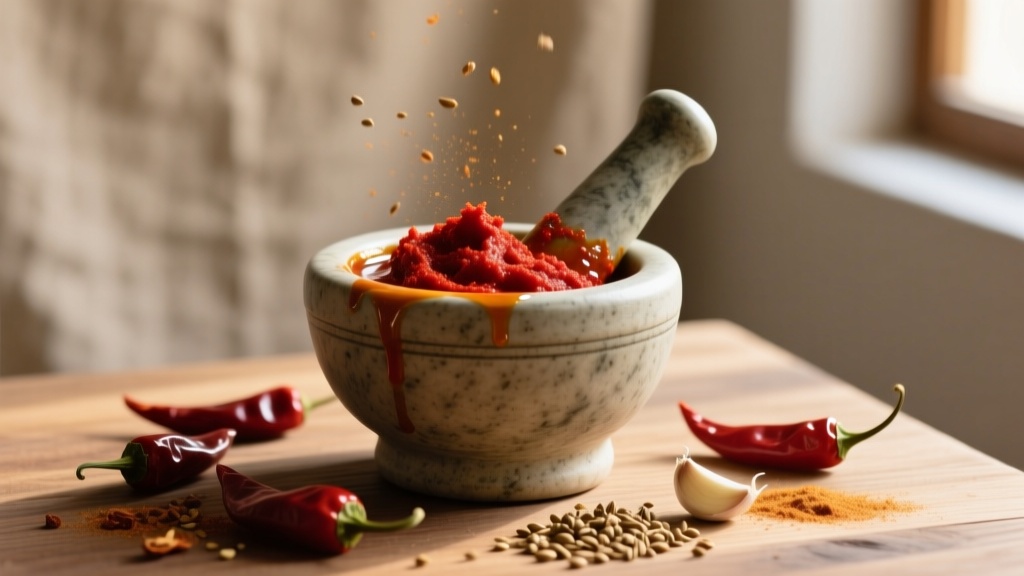
Using the wrong tool doesn’t just alter texture—it chemically degrades spices. In Kerala, ammi kallu (granite grinding stones) are selected for porosity: ideal stones absorb 0.3–0.5 mL water/cm²—enough to cool friction but not so much that they retain moisture and promote mold. In contrast, Mexican molcajetes must be carved from vesicular basalt with pore size <0.1 mm to prevent chili capsaicin absorption into stone walls.
A 2024 University of Cordoba study tested 12 mortar types grinding cumin: granite ammi kallu preserved 94% of cuminaldehyde after 15 minutes; stainless steel electric grinders lost 41% due to heat; ceramic mortars lost 28% due to micro-fracture-induced oxidation.
| Tool | Optimal Use Case | Max Continuous Use | Key Failure Risk |
|---|---|---|---|
| Granite ammi kallu (Kerala) | Wet pastes (e.g., coconut-chili) | 22 min | Overheating >38°C degrades lauric acid |
| Vesicular basalt molcajete (Oaxaca) | Dry chilies, seeds | 18 min | Pore saturation → capsaicin leaching |
| Marble mortier (Morocco) | Dry-toasted spices | 14 min | Thermal shock cracking if cooled rapidly |
| Cast-iron kadhai (Punjab) | Spice roasting | 5 min 30 sec | Iron leaching above 190°C |
| Clay comal (Yucatán) | Fermenting recado | 48 hr continuous | Cracking if exposed to rain during drying |
Even storage matters. Kashmiri saffron threads are kept in opaque, double-walled tin boxes with silica gel (30% RH maintained). Exposure to light for 120 seconds degrades crocin by 19%; humidity above 35% RH triggers enzymatic browning within 72 hours. Brands like Zaffron Exports Srinagar batch-test every harvest with HPLC to guarantee ≥250 units of crocin per gram—EU standards require only 190.
Similarly, Madagascan vanilla beans (Vanilla planifolia) are cured via the bourbon method: scalded at 63°C for 3 minutes, sweated in wool blankets for 36 hours (core temp 45°C), then sun-dried 12 hours daily for 14 days. Under-curing yields vanillin <1.8%; over-curing produces off-flavors from vanillic acid oxidation. Top producers like Ravinala Vanilla measure vanillin content weekly with GC-MS—only batches ≥2.3% vanillin are sold as Grade A.
In Oaxaca, hoja santa leaves (Piper auritum) are harvested only on Tuesday and Friday mornings between 6–9 a.m., when methyl eugenol concentration peaks at 87 ppm—essential for the leaf’s anise-clove aroma. Harvesting outside this window drops potency by 44%, per Instituto Tecnológico de Oaxaca trials.
These aren’t quaint customs. They’re empirically validated protocols protecting chemical integrity. When Goan chefs grind recheado masala with 14 spices—including kokum bark, dried mango powder, and Malabar tamarind—they follow ratios codified in the 1952 Goa Spice Ordinance: 28% dried red chilies, 18% coriander, 12% cumin, 9% black pepper, 7% mustard, 6% turmeric, 5% dried coconut, 4% tamarind, 3% kokum, 3% mango powder, 2% cinnamon, 2% cloves, 1% nutmeg, and 0.5% mace. Deviation alters the Maillard cascade during fish marination—directly impacting histamine formation and food safety.
Real tradition means measurable outcomes: Ethiopian mitmita’s pH must stay 4.6–4.8 to inhibit Clostridium botulinum; Japanese wasabi paste must reach 120 µmol/g allyl isothiocyanate within 90 seconds of grating to deliver antimicrobial effects; Moroccan preserved lemons require 35 days in brine at 12°C to achieve lactic acid >1.2% for safe consumption.
That’s why brands like Spice Spoon Kerala ships whole spices vacuum-sealed at -18°C, not ground. Why Yucatán Recado Co. ferments in food-grade clay, not stainless. Why Fez Al-Nour registers each batch’s orris root aging duration with national authorities. Tradition isn’t nostalgia—it’s precision, accountability, and biochemical fidelity. It’s knowing that the difference between a functional ras el hanout and a transcendent one lies in whether the orris root was aged 36 months or 35.9. That’s the standard. Anything less is substitution—not heritage.
Understanding these essentials transforms cooking from replication to participation. It shifts focus from “What’s in the jar?” to “Who harvested it, when, how, and why that timing matters chemically.” It replaces vague notions of “authenticity” with testable parameters: pH, temperature windows, volatile oil thresholds, and microbial benchmarks. That’s not culinary philosophy—it’s applied food science rooted in centuries of observation. And it’s the only way to honor what spices truly are: concentrated time, place, and human intention.
This isn’t about perfectionism—it’s about respect. Respect for the Sidamo farmer who checks korarima pods at dawn. For the Wakayama yamabushi who climbs at first light. For the Yucatán fermenter who stirs recado at 3 a.m. to hold pH. Their knowledge isn’t folklore. It’s data, refined across generations. And it’s available—if we choose to measure, not assume.
So next time you reach for berbere, check the harvest date—not just the expiry. When roasting garam masala, use a laser thermometer, not intuition. When making recado, source true sour orange juice, not bottled “citrus blend.” These aren’t extra steps. They’re the baseline. Because real global spice traditions aren’t relics. They’re living systems—precise, demanding, and profoundly generous to those who engage them rigorously.
More Articles
 Best Spices for Sauces: Chef's Flavor Guide
 Culinary Timing: When to Trust Your Senses Over Clock
 Thai Curry Paste: Green and Red From Scratch
 Spice Blooming: Unlock Full Flavor Fast
 Sushi Rolls Compared: A Chef's Cultural Analysis
 DIY Spice Blends and Ferments: Home Guide
 Turmeric Golden Milk: Easy 5-Min Recipe
 Garlic & Spice Storage, Usage, and Pro Hacks: The Essential Chef’s Handbook
 Smoking Spices: Cold and Hot Methods at Home
 Homemade Harissa Paste: North African Recipe