
Spice Photography: How to Capture the Beauty of Your Collection
Why Spice Photography Matters
Spices are among the most photogenic ingredients in any kitchen — their vivid colors, unique textures, and cultural associations create compelling visual stories. Whether you're documenting your collection, creating content for social media, or simply want to appreciate your spices visually, good photography techniques make all the difference.
Lighting: The Most Important Factor
- Natural side light: Position spices near a window for soft, directional light that reveals texture and color
- Golden hour: Warm sunlight during the last hour before sunset enhances the amber and red tones in spices
- Avoid overhead flash: Direct flash flattens texture and washes out the rich colors that make spices photogenic
- Use a reflector: A white card or foam board opposite the light source fills shadows without eliminating dimension
Composition Techniques
Use the rule of thirds — place your main spice bowl at an intersection point rather than dead center. Create leading lines with scattered spice trails. Shoot at eye level with the spices (get low!) rather than from a standing position looking down. Include hands or tools to add human scale and storytelling.
Styling Your Spice Shots
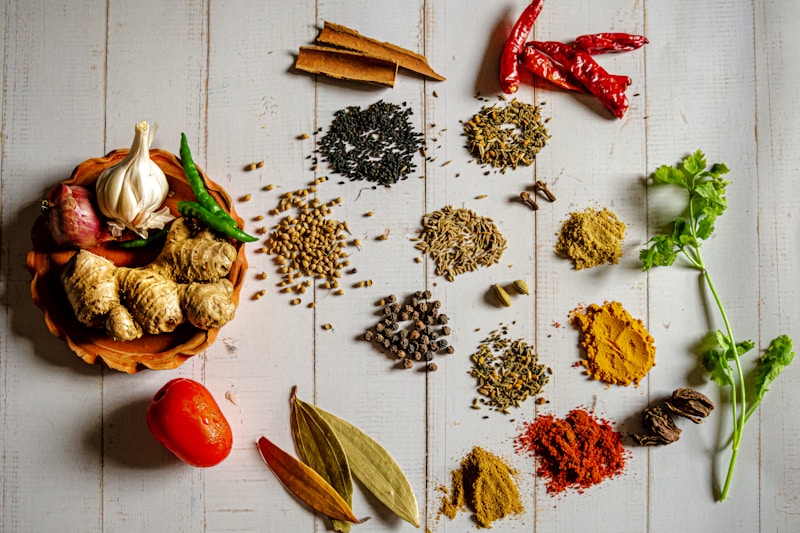
Use contrasting backgrounds: dark slate makes yellow turmeric and red paprika pop. Group spices by color gradient (warm to cool) for visual harmony. Include whole spices alongside their ground versions to show the transformation. Add small props like mortar and pestle, wooden spoons, or vintage tins for context and character.
Camera Settings
Use a wide aperture (f/2.8-f/4) for shallow depth of field that isolates individual spices. Shoot in RAW format to preserve the full color range. White balance slightly warm (5500-6000K) to complement the warm tones of most spices.
More Articles
 How to Toast Whole Spices Without Burning Them: Temperature and Timing Guide
 Spice Measurement Conversion: Whole vs Ground (Quick Reference Chart)
 When to Add Spices During Cooking: Timing Guide for Maximum Flavor
 Spice Drawer Organization: A Visual Guide to Labeling and Arranging
 How to Grind Spices Without a Grinder: 5 Methods That Actually Work
 Measuring Spices: Why Weight Beats Volume (Free Conversion Table Inside)
 How to Grind Spices Without a Grinder: 5 Methods That Actually Work
How to Grind Spices Without a Grinder: 5 Methods That Actually Work
How to Grind Spices Without a Grinder: 5 Methods That Actually Work
 Sichuan Peppercorn: How to Use the Spice That Numbs Your Tongue
Spice Drawer Organization: How to Arrange, Label, and Rotate Your Collection
Sichuan Peppercorn: How to Use the Spice That Numbs Your Tongue
Spice Drawer Organization: How to Arrange, Label, and Rotate Your Collection