Blooming spices — briefly frying them in fat to release flavor compounds — is fundamental to cooking across cultures. But does the choice between butter and oil actually matter? The short answer: absolutely. Here's the food science behind why.
## The Chemistry of Flavor Extraction
Most spice flavor compounds are lipophilic (fat-soluble). When heated in fat, these compounds dissolve and disperse more efficiently than in water. The type of fat affects three things: temperature ceiling, flavor contribution, and compound solubility.
## Smoke Point Comparison
| Fat | Smoke Point | Max Safe Temp |
|-----|------------|---------------|
| Unsalted butter | 302°F (150°C) | 275°F (135°C) |
| Ghee (clarified butter) | 482°F (250°C) | 450°F (230°C) |
| Olive oil (extra virgin) | 375°F (190°C) | 350°F (175°C) |
| Vegetable oil | 440°F (227°C) | 400°F (205°C) |
| Coconut oil (refined) | 450°F (232°C) | 420°F (215°C) |
Most whole spices need 325-375°F to bloom properly. This immediately eliminates regular butter for high-heat tempering — it burns before cumin or mustard seeds can crack.
## When Butter Wins
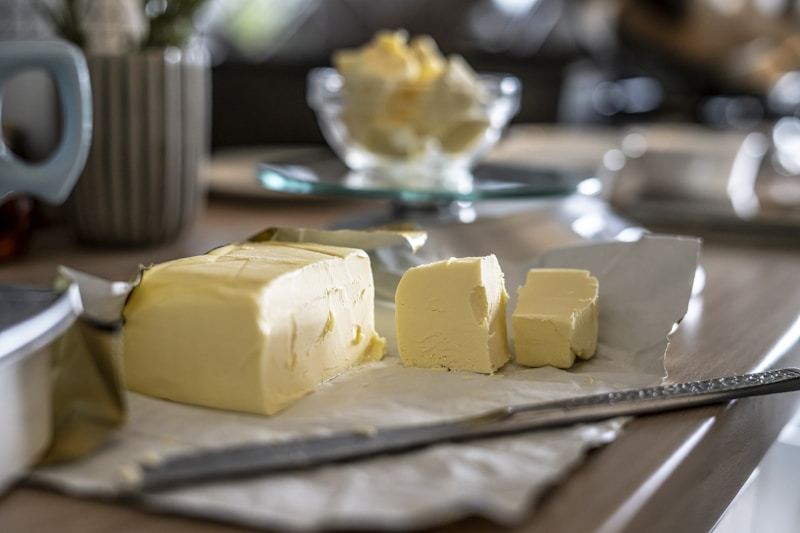
**Ground spices for finishing**: Butter's milk solids add nutty, caramelized notes (Maillard reaction) that complement warm ground spices like cinnamon, nutmeg, and cardamom.
**Best applications**:
- Finishing a butternut squash soup with sage bloomed in butter
- Tossing roasted carrots with cumin butter
- Making a garam masala butter sauce for naan
- Sautéing mushrooms with thyme and black pepper in butter
**The beurre noisette technique**: Brown the butter first (milk solids caramelize at 250°F), then add ground spices. The nutty butter + warm spice combo is unmatched.
## When Oil Wins
**Whole spices for tempering**: High smoke point means you can get mustard seeds popping and cumin seeds crackling without burning the fat.
**Best applications**:
- Indian tadka/chaunk (mustard seeds, cumin, curry leaves)
- Stir-fry aromatics (Sichuan peppercorns, dried chilies)
- Spice-infused oil for drizzling (chili oil, garlic oil)
- Deep-frying spice-coated items
## The Compromise: Ghee
Ghee gives you butter's nutty flavor with oil's high smoke point. It's the traditional fat for Indian tempering and for good reason. The milk solids have been removed, so there's nothing to burn at high temperatures.
## Practical Decision Matrix
| Scenario | Best Fat | Why |
|----------|----------|-----|
| Tempering whole spices | Vegetable oil or ghee | High smoke point |
| Finishing ground spices | Butter | Flavor synergy |
| Making chili oil | Neutral oil | Won't interfere |
| Curry base | Ghee | Traditional, high heat |
| Baking spice butter | Butter | It IS the product |
| Infusing for dressings | Olive oil | Complementary flavor |
 Spice Pairing: Which Spices Go Together
 Blooming Spices in Fat: Unlock Hidden Flavors
 Cumin in Mexican vs Indian Cooking
 Two Spice Blends Compared: A Chef's Deep Dive
 Evidence-Based Cooking Decisions Guide
 5 Spice Blends for Beginners to Make
 Cooking with Lavender: Dos and Donts
Indian Tempering (Tadka): Step-by-Step Guide
Cooking with Lavender: Dos and Donts
Indian Tempering (Tadka): Step-by-Step Guide
 21 Kitchen Tips: Time-Saving, Flavor-Boosting
 Blooming Spices in Oil: A Core Technique