Biber Salcasi Substitute: Exact Ratios (2026)
Biber Salcasi Substitute: What to Use Instead (With Exact Ratios)
You're making a Turkish stew, a kebab marinade, or a traditional menemen — and the recipe calls for biber salçası. You check your pantry and realize you don't have any. Before you abandon the recipe, know this: there are several excellent substitutes that can get you remarkably close to the authentic flavor.
What Is Biber Salçası?
Biber salçası is a thick, concentrated Turkish pepper paste made from sun-dried red peppers (usually a mix of sweet and hot varieties). The peppers are salted, fermented briefly, and then ground into a dense, deeply flavored paste. It comes in two main varieties:
- Tatlı (sweet): Made from mild peppers, rich and fruity with almost no heat
- Acı (hot): Made with spicy peppers, delivering a slow-building warmth alongside the deep pepper flavor
Unlike tomato paste (which it sometimes resembles in color and texture), biber salçası has a distinctly peppery, slightly smoky, and subtly sweet flavor that's central to Turkish, Armenian, and Middle Eastern cuisines.
The Best Substitutes (Ranked by Authenticity)
1. Tomato Paste + Paprika + Cayenne (Closest Overall)
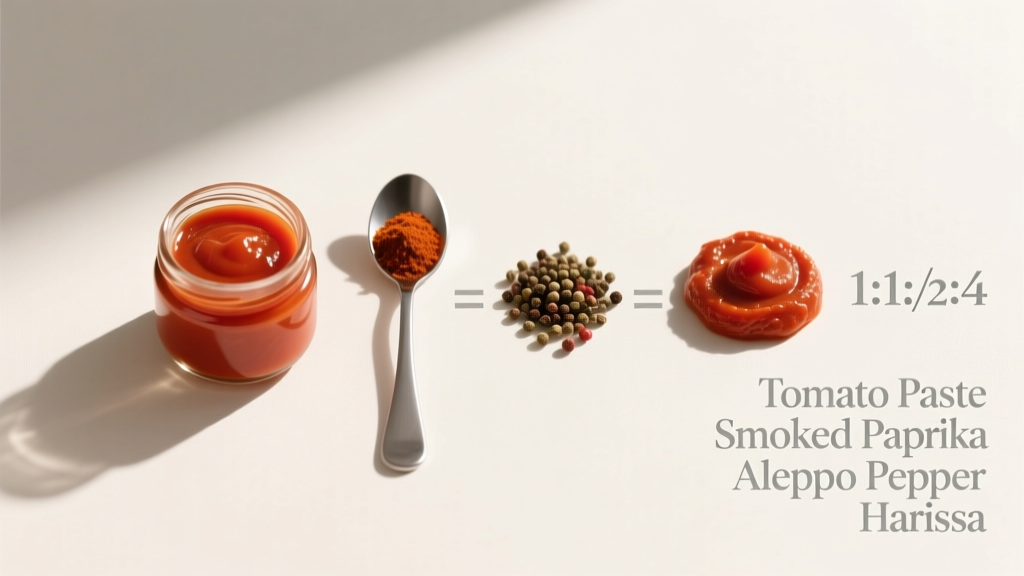
Ratio: 1 tbsp tomato paste + 1 tsp sweet paprika + ¼ tsp cayenne (for hot salçası) OR just paprika (for sweet salçası)
This combination mimics both the body and the peppery character of biber salçası. Tomato paste provides the thickness and umami, while paprika contributes the pepper-forward flavor that makes salçası distinctive.
Best for: Stews, braises, and any cooked dish where the paste is blended into a sauce.
2. Korean Gochujang (Fermented Depth)
Ratio: Use ¾ the amount of gochujang called for salçası (it's more concentrated)
Gochujang is a Korean fermented chili paste that shares biber salçası's fermented complexity and thick texture. It's slightly sweeter and has a different spice profile (it contains rice and soybeans), but in cooked dishes the flavors meld beautifully.
Best for: Marinades, braised meats, and hearty soups where the fermented character is an asset.
3. Harissa Paste (North African Alternative)
Ratio: 1:1 substitution, but reduce other spices in the recipe slightly
Harissa is a North African chili paste made from roasted peppers, garlic, and warm spices like cumin and coriander. It's spicier than most biber salçası and has additional spice complexity that may or may not suit your dish.
Best for: Grilled meats, stews, and any dish that benefits from a spicier, more aromatic profile.
4. Chinese Chili Bean Paste (Doubanjiang)
Ratio: Use half the amount — it's saltier and more intensely flavored
Doubanjiang (especially the non-spicy sweet variety) has a similar fermented pepper character. It's saltier than Turkish salçası and has a bean component, so you'll want to adjust the salt in your recipe accordingly.
Best for: Stir-fries, braised dishes, and any recipe where umami depth is welcome.
5. Roasted Red Pepper Purée + Tomato Paste
Ratio: 2 parts roasted pepper purée + 1 part tomato paste, reduced to thick consistency
This homemade approach gives you the most control over flavor. Roast fresh bell peppers or jarred roasted red peppers, purée them, and cook down with a bit of tomato paste until thick.
Best for: When you have time to prep and want the closest fresh flavor to authentic salçası.
6. Sriracha + Tomato Paste (Quick Fix)
Ratio: 1 part sriracha + 2 parts tomato paste
Not ideal, but in a pinch this gives you pepper heat plus body. Sriracha brings garlic and vinegar notes that aren't present in salçası, so use this only for casual weeknight cooking.
Best for: Quick sauces, weeknight stir-fries, and dishes where perfection isn't the goal.
7. Smoked Paprika + Olive Oil (Dry Alternative)
Ratio: 2 tbsp smoked paprika + 1 tbsp olive oil per tablespoon of salçası
When you need the pepper flavor but don't need the paste consistency, bloom smoked paprika in olive oil over low heat for 30 seconds. This creates an infused oil that carries the smoky pepper essence.
Best for: Sautéing aromatics, finishing dishes, and any application where paste texture isn't critical.
Substitution Quick Reference
| Substitute | Ratio | Heat Match | Flavor Match |
|---|---|---|---|
| Tomato paste + paprika | 1:1 (adjusted) | ⭐⭐⭐ | ⭐⭐⭐⭐ |
| Gochujang | ¾:1 | ⭐⭐⭐⭐ | ⭐⭐⭐ |
| Harissa | 1:1 | ⭐⭐⭐⭐⭐ | ⭐⭐⭐ |
| Doubanjiang | ½:1 | ⭐⭐⭐ | ⭐⭐⭐ |
| Roasted pepper + tomato | 2:1 + reduce | ⭐⭐⭐⭐ | ⭐⭐⭐⭐⭐ |
| Sriracha + tomato paste | 1:2 | ⭐⭐⭐⭐ | ⭐⭐ |
| Smoked paprika + oil | 2:1 | ⭐⭐⭐ | ⭐⭐⭐⭐ |
When NOT to Substitute
Some dishes really demand authentic biber salçası. If you're making:
- Traditional Turkish karnıyarık (stuffed eggplant) — the salçası is the soul of the dish
- Authentic Adana kebab marinade — the specific pepper variety matters
- Turkish breakfast menemen — substitutes change the dish's character noticeably
In these cases, consider ordering biber salçası online (it ships well and keeps for months in the fridge) rather than substituting.
Storage Tip
Once opened, biber salçası keeps in the refrigerator for 6–12 months. Cover the surface with a thin layer of olive oil to prevent drying and mold. This makes buying a jar a worthwhile investment if you cook Turkish or Middle Eastern food regularly.
The Bottom Line
The tomato paste + paprika combination is your best all-purpose substitute for biber salçası, delivering the right balance of body, sweetness, and peppery flavor. For cooked dishes where complexity matters, gochujang is a surprisingly excellent stand-in. And when authenticity is non-negotiable, nothing beats the real thing — keep a jar in your fridge.
More Articles
 Mustard Seeds in Cooking: A Guide
 Sofrito: The Spice Base Behind Every Latin Dish
 Sumac Roasted Vegetables: Tangy Side Dish
Golden Milk: Turmeric Latte Recipe (2026)
Sumac Roasted Vegetables: Tangy Side Dish
Golden Milk: Turmeric Latte Recipe (2026)
 Herbes de Provence: French Herb Blend Guide
 Real Cooking With Spices Essentials: What Every Home Cook Actually Needs
 Sausage Trends 2026
Paprika Guide: Sweet, Smoked, and Hot Varieties
Sausage Trends 2026
Paprika Guide: Sweet, Smoked, and Hot Varieties
 Cumin Rice Pilaf: One-Pot Side Dish
Saffron Substitutes That Actually Work
Cumin Rice Pilaf: One-Pot Side Dish
Saffron Substitutes That Actually Work